


If your child seems constantly on the go, has difficulty taking turns, trouble following simple instructions, or has reactions that seem more intense than the reactions of their peers, you may have started to wonder if their behaviour goes beyond simple childhood activity. For many families, these early challenges are their first clues into understanding attention deficit hyperactivity disorder, one of the most common neurodevelopmental disorders that affects young children and, if undiagnosed, continues to manifest as they age. Early understanding of ADHD in boys helps decrease the frustration around these issues, improves the ability to structure daily routines, and helps the boys go on to develop in healthier ways emotionally.
Because boys show more hyperactivity and impulsive behaviors more often, these symptoms are not only noticed, but their challenges are also apparent and sustained in the environment more. For parents of children who are worried about the early signs of ADHD, you can ask us for help. We’ll be happy to answer your questions to help you decide whether an ADHD assessment is needed.
What ADHD Looks Like in Boys
Most children display behaviours associated with ADHD. However, learning the distinct patterns of behaviours boys with ADHD display helps parents understand ADHD behaviours that go beyond typical patterns in childhood. Unlike other children, boys with ADHD display distinct behaviours across daily routines. school activities, and social activities. Defiant behaviours are not a choice, but are related to how the brain controls focus, movement, and self-regulation.
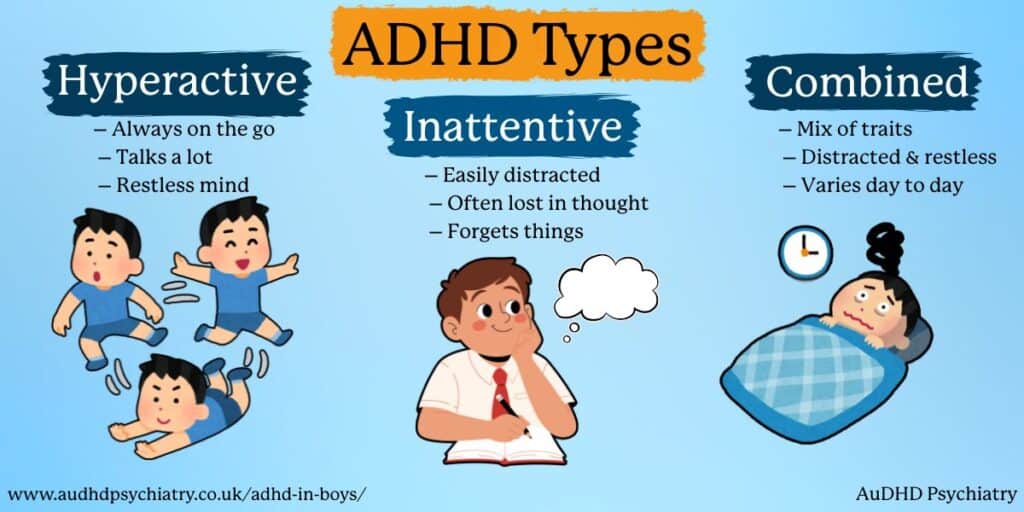
Core ADHD Symptoms Seen in Boys
The key ADHD symptoms in boys are inattentiveness, hyperactivity, and impulsiveness. Hyperactivity can look like non-stop fidgeting, and racing thoughts or actions, with little to no self-regulation. Other signs of inattentiveness can include, but are not limited to, loss of focus and skipping tasks. These behaviours are not due to a lack of motivation, but are part of a larger ADHD profile.
Behavioural Manifestations
Boys with ADHD exhibit certain behaviours that can be particularly problematic in certain environments. Teachers may observe students making careless errors, having trouble remaining in their chairs, and interrupting others. Boys may also be seen at home racing around from one task to another, forgetting instructions soon after being given them, and becoming excessively active in overstimulated states. Emotional self-regulation difficulties may present as loud, reactive, frustrated, and/or quick to anger, while others may interpret this as acting out. These behaviours and actions can be manifestations of ADHD and not of conscious decision-making.
Early Warning Signs Under Age 5
The symptoms of ADHD can appear as early as 3 to 4 years old in preschool-aged children.
Signs can include:
- Having sensory-related sensitivities
- Trouble with quiet activities
- Inappropriate risk-taking
- Being overwhelmed during routine changes
These actions are often painted over as being “normal,” particularly when the child is a boy, which can lead to the early manifestations of ADHD being overlooked.
ADHD in Gifted Boys
Boys, and particularly those gifted academically, may implement coping techniques that camouflage their real struggle areas. Advanced verbal skills and reasoning can offset and cover focus and organisation insufficiency. Teachers may report students as being inconsistent in their performance and, at times, bright. These students may be seen as having high potential but are also said to submit inferior work. Symptoms can be similar to other learning profiles and may result in missing ADHD diagnosis.
Early identification of behaviours enables children to receive assistance long before the academic or emotional problems begin to develop.
Recognising ADHD Across Developmental Stages
ADHD unfolds during childhood; however, the expression of symptoms can greatly vary based on a child’s age, surroundings, and the demands put on the child. Understanding how this attention deficit disorder manifests across different developmental phases aids parents in recognising the absence of concerns early on and distinguishing the difference between the norm and what might need to be examined.
Age Breakdown: Preschool to Early Teens
- Children in preschool (2 to 5 years old) show a few symptoms, like high alertness, challenges with routine-following, and difficulty managing emotions.
- At ages 6 to 10, teachers may see problems with finishing tasks, remembering pieces, disruption, or non-compliant behaviour.
- At ages 11 to 14, puberty can intensify impulsivity, mood changes, frustration, and overall ADHD presentation.
Why Early Recognition Matters
The prospect of achieving favourable outcomes in the long term is a function of early identification and the scope of challenges that are identifiable. Early recognition alleviates academic challenges and emotional distress, and helps families adjust routines and seek assistance.
High-Functioning ADHD in Boys
Not all boys with ADHD are evidently hyperactive. Some present with more subtle or inattentive profiles while appearing calm or well-behaved.
Characteristics of High-Functioning ADHD
High-functioning ADHD is associated with inattentive ADHD. Boys may seem dreamy, slow to start, or preoccupied, expending significant mental energy to stay focused. Younger boys with quieter profiles may not be noticed because their struggles are subtle, often appearing polite but inconsistent.
Why High-Functioning ADHD Is Missed
These children may struggle with:
- Managing homework time
- Staying organised
- Handling multi-step tasks
- Comparing themselves negatively with peers
Delayed recognition leads to overlooked needs. Early help improves school behaviours, mental health, and self-esteem. Organisational tools and memory supports reduce stress.
ADHD and Co-occuring Conditions in Boys
A number of boys who have ADHD face extra difficulties that affect behaviour, mood, and learning.
Differentiating ADHD and Autism
ADHD shows fluctuating attention and impulsivity, while autism shows more consistent social communication and sensory challenges. These are two separate conditions that can co-occur and have similar symptoms, for which we have the term AuDHD.
Common Comorbidities
ADHD often occurs alongside:
- Anxiety disorders
- Sleep disorders
- Conduct disorder
- Oppositional defiant disorder
- Developmental and learning disabilities
- Physical conditions such as hypotonia
These conditions affect emotional development and school engagement.
Social, Academic, and Daily Life Impacts of ADHD in Boys
Some boys show notable differences in their behaviour based on their environment. For example, during classroom settings, some boys contain their emotions and extra energy, saving the release for home. The demands and restrictions of school differ from home, explaining behaviour differences.
Social Interactions and Peer Relationships
Boys may experience challenges in social situations, such as:
- Can’t take turns when playing a game
- Social hints often go missed or are misinterpreted
- Emotions are hard to regulate
- Seen as rude or disrespectful
- Seen as aggressive

Academic Performance and School Engagement
School issues may look like:
- Careless mistakes
- Inability to focus
- Difficulty following directions
- Learning disabilities
- Slow or difficult task completion
As you can see, these experiences can easily be observed by teachers and peers. This is why support from school authorities is also highly valuable for ADHD boys. It’s important to recognise when a trait could be part of ADHD.
Daily Life Challenges at Home
As we’ve mentioned, the condition can show differently depending on the environment. At home, here are some issues that may be noticed:
- Resist routines
- Be upset during transitions
- Lose items
- Struggle to organise schoolwork
- Show overwhelmed, disruptive behaviours
Diagnosing ADHD in Boys
For families who have spent years wondering about their children’s behaviour, a diagnosis is often a turning point. For families, obtaining a diagnosis of ADHD can be validating, allowing them to focus and develop a plan, as well as obtain support.
When to Seek an Assessment
When a child seems to have trouble with attention, trouble with behaviour, and trouble controlling their emotions across various situations, parents might wonder if an assessment should be their next step.
Some factors that can be considered as a sign to go for an assessment include:
- Notable concerns with attention or hyperactivity
- Disruptions at home or at school on a regular basis
- Trouble with making and keeping friends
- Poor grades
- Very strong reaction to emotions
Teachers can also help with identifying these. They can observe behaviour patterns in structured school settings on a daily basis.
The Diagnostic Process
Whether you go for the free NHS ADHD assessment route which may take up to years of waiting, or a paid private assessment that offers flexible scheduling to accommodate your lifestyle, the elements of the process should be similar.
A comprehensive assessment for ADHD should include:
- A medical assessment to remove other possible physical health issues
- Psychoeducational assessment to measure attention, knowledge, and retention
- Surveys for parents and teachers
- Observation of the child
- Screening for possible types of ADHD
- Evaluating the impact of symptoms on daily life
Parents with possible options/paths may want to look into the NHS vs Private ADHD Assessment Guide.
AuDHD Psychiatry’s Diagnostic Process for ADHD in Boys
Careful, organised assessment is an integral part of receiving a qualifying ADHD diagnosis, particularly in individuals presenting without explicit hyperactivity. Considering how symptoms may be displayed, behaviours should be reviewed in various settings, including home, work, and school. At AuDHD Psychiatry, our clinicians have extensive experience identifying more subtle presentations of ADHD, using a measured and evidence-based approach to ADHD assessment.
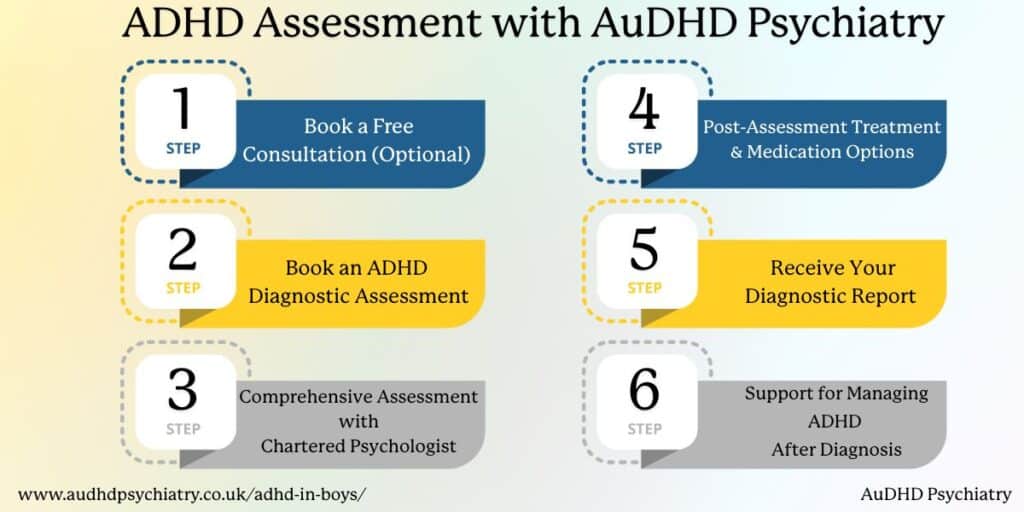
Step 1 – Book a Free Consultation (Optional)
To have the assessment carried out, we recommend starting with a no-obligation call to our clinicians to discuss any concerns, ask questions, and clarify whether an ADHD assessment is appropriate.
Step 2 – Book an ADHD Diagnostic Assessment
In the event that you choose to proceed, you will schedule one of the first of the whole diagnostic evaluations. These will involve gathering some pertinent background information on your situation, the surrounding setting, and your history so that we can assess the impact of ADHD on your daily functioning.
Step 3 – Comprehensive Assessment with a Chartered Psychologist
A chartered psychologist/ psychiatrist will do a detailed interviewing process to comprehend your multitude of circumstances and situations, such as your domicile, employment, or educational institution. They will review the DSM-5 diagnostic standards and will be looking for the symptoms of inattention, problems with executing processes, and any other conditions that may accompany.
Step 4 – Post-Assessment Treatment and Medication Options
In reviewing your results, your Practitioner will consider appropriate schemes of care and treatment. Medication may be needed that includes either stimulant or non-stimulant forms along with cognitive behavioral therapy (CBT) or ADHD coaching so that you will be able to manage your focus and emotional responses.
Step 5 – Receive Your Diagnostic Report
You will have the opportunity to receive your diagnostic conclusions in a comprehensive report describing the aberrations that you experience and the degree of ADHD that you may have, including but not limited to, the inattentive type of ADHD. This accumulation will additionally cover suggestions that could be beneficial in your employment and at an educational institution or the general way you go about your daily activities.
Step 6 – Ongoing Support for Managing ADHD
Following the initial diagnosis, you will have continued access to therapy, coaching, and customised management plans to assist you in implementing effective life strategies. We also provide assistance with accommodations and referrals to educational or occupational supports to facilitate a balanced approach to wellness.
If you have questions about getting your child assessed for ADHD, book an intro call with us.
Professional Support
Coordinating with an ADHD specialist or other qualified healthcare providers is required, as they have the training to recognise the variety of symptoms involved. Specialists also make sure other possible conditions are appropriately ruled out and that families are given actionable next steps
Receiving a diagnosis/label helps children attain the right support, ask for and receive accommodations, as well as gain knowledge of both their strengths and challenge areas.
Peer Support for Boys with ADHD
The best approach to help a child with ADHD in this instance is one with understanding, structure, and compassion that is also based in research. Even though every boy may respond to ADHD symptoms in various ways, the best strategies are the ones that include integration of several supportive and intervention strategies, as well as possible medication, that are personalised for the child.
It is important that the plan/strategy does not focus on subsiding a child’s personality, but rather to help the child grow and improve life with the active use of appropriate tools.
Behavioural Therapy and Parent Training Support
Behavioural therapy is an important first-step intervention for children with ADHD and is focused on teaching behavioural control and skills to reduce frustration and improve healthier adaptive patterns. One part of this process is the training for parents. Parents are provided with systematic strategies that are transferable across home and school environments. Some of the Strategies include:
- Positive reinforcement for desired behaviours
- Setting firm and predictable limits
- Task completion by steps
- Transitions without overwhelm
Research on parent-centred behavioural training is vast and has resulted in clinically significant improvements in children’s regulation of emotions and behaviours. Parents can also help other family members learn how to support their child better.
Educational Support and SEN Collaboration
Boys with ADHD often benefit from consistent and structured school routines. Visual schedules, concise and short directions, and purposeful movement breaks to help children reset and refocus, as required. Schools may collaborate with Special Educational Needs (SEN) teams to help with class modifications such as:
- Providing additional time to process information
- Seating that minimises distractions
- Instructions are provided in structured steps
- Designated quiet areas for assessments
These accommodations help children feel heard and understood, which leads to an optimal learning environment for them. Therapies targeting behaviour, emotional regulation, and social training are great to improve self-esteem and peer interaction. ADHD boys can also benefit from guidance when it comes to turn-taking, conflict resolution, and behaviour recognition. These interventions also provide emotional self-regulation and the ability to cope with frustration, sensory overload, and rejection.
Considerations Regarding Medication
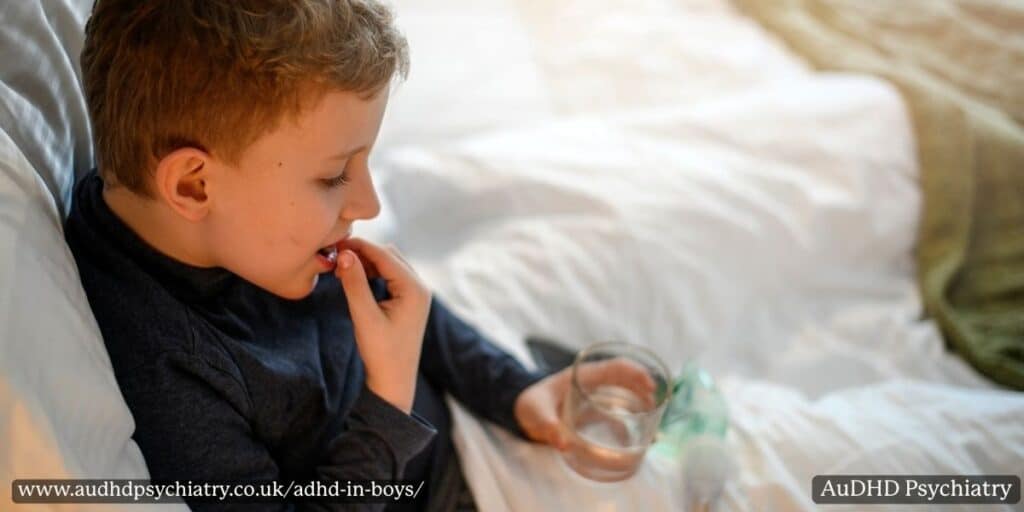
Some children may benefit from the use of stimulant medications and other medications for ADHD in the treatment of the condition’s core symptoms, like inattention and hyperimpulsivity. Medication is never used in isolation and is part of a comprehensive treatment plan, along with appropriate behavioral treatment and educational interventions.
Parents seeking a more comprehensive overview may benefit from ADHD Medication 101. Concerns related to side effects can be managed with appropriate supervision and oversight, and in conjunction with Managing ADHD Medication Side Effects.
Daily Support at Home
Effective support at home centers around small, manageable, and sustainable interventions, including:
- Predictable daily routines
- Scheduled task completions and regular task breaks
- Effort- rather than achievement- based praise
- Direct instruction with the use of visual supports
- Techniques for the prevention and management of disruptive behavior
Digital tools and organisational planning apps are particularly useful, and specific recommendations can be found in Best ADHD Apps. With strong support, boys with ADHD can gain the self-esteem, positive coping mechanisms, and psychosocial skills necessary for a healthy adult life.
ADHD in Boys: Conclusion
It may feel overwhelming to raise a boy who may be showing signs of ADHD, especially when the child’s behavior that you are witnessing, such as hyperactivity, inattention, emotional intensity, or fluctuating performance, appear different from those of other children. ADHD in boys presents in a variety of forms, as has been considered in this guide, including the more typical external indicators of impulsivity and restlessness, as well as the more subtly high-functioning and inattentive symptoms. ADHD can manifest differently in different settings and change over developmental stages, so understanding its symptoms can help in making sure these children get the right kind of help.
A child may also show emotional changes in response to the internal and external stresses regarding ADHD, especially in the context of a co-existing mental health condition. These can be anxiety, sleep difficulties, and other learning differences. ADHD also has a definitive pattern of behavioural changes over time. Early identification assists in understanding the pattern of symptoms and reversing the adverse effects, especially when more subtle, co-occuring, and chronic impairing mental health symptoms may result in a loss of daily adaptive skills as a result of anxiety or other disorders.
The right support can ease the challenges of understanding your child’s behaviour and determining the next steps to take. Resolving these uncertainties can change your everyday life. If you’re unsure as to whether your child’s patterns are typical or may lean towards the early signs of this neurodevelopmental disorder, it is best to seek clarification now.
To address your questions and intended concerns, and to determine whether an ADHD assessment is the next best move for your child and their future, please consider booking your Free Intro Call to consult with a neurodivergent-informed specialist.
Author:


Contact Us
We’re here to answer any questions you might have.
Get in Touch
Opening Hours
Contact Form
We’re here to help. Reach out and we’ll get back to you within 24 hours (Monday – Friday).
Leave a Reply