

If you’re living with autism, have you ever felt like you’re at the end of your rope, even with simple tasks or very small tasks? If so, that may be autistic burnout you’re experiencing.
Burnout is when autistic individuals go through a period of living everything as too much, and they become mentally exhausted and feel they can do nothing anymore. It does not mean they are lazy or lack resilience; it is the build-up of constant stress, sensory overload, and forced social interactions in the world, which is mainly neurotypical. Unlike the standard “work burnout” or depression, autistic burnout is caused by autistic traits (e.g., sensory sensitivities, masking, and executive-function load) and often occurs after long periods of “I am okay.”
You come to it suddenly – it could feel like your capacity dropped overnight – something that you could handle yesterday seems impossible today. With that, you also experience more sensory sensitivity, overwhelm, and you withdraw more. Autistic burnout is not yet an official diagnosis in clinical manuals, but it is a well-known problem in the autistic community.
If you think you may be experiencing autistic burnout, hop on a call with us. We’ll be happy to answer your questions and if needed, provide insights on treatment options.
What Is Autistic Burnout?
Autistic burnout is experiencing a long state of not having enough energy—chronic exhaustion, not being able to execute tasks properly, and withdrawing from sensory stimuli—which is only experienced by autistic individuals. This phenomenon is likely to have an impact on mental processing, emotional capacity, and social energy, as well as the ability to conduct normal routines. Many people report this experience as if the “internal resources” are exhausted, and this happens after a long time of masking, going through the social demands, and operating in environments that do not accommodate sensory needs.

How It Differs from Occupational Burnout and Depression
Occupational burnout mainly occurs due to job stresses and usually resolves with time away from the job. Autistic burnout can happen in different areas of life (e.g., home, school, and community) mainly because the causes are sensory overload, chronic social pressure, and expectation mismatches with the typical neurotypical world.
Clinical depression is having a persistently low mood, lost pleasure in everything, and other symptoms listed in the diagnostic criteria. Autistic burnout can occur at the same time as depression, but the main feature is the loss of capacity due to autistic traits like increased sensitivity to noise and light, decreased executive function, and the need for fixed routines and recovery time.
Why It Happens
For weeks or months, the body and mind exploding sensory inputs, the need to hide self-identity (masking), and the high demands kept on executive functions act cumulatively leading to depletion. This condition features an overworked body, long-term effects of which are chronic fatigue and transient (sometimes dramatic) functional deficits.
Community Recognition vs Clinical Manuals
Even though autistic burnout has not been included in the major diagnostic systems, it has been a great concern and has been well-known within the autistic community. The convergence of self-experience, self-monitoring, and information from the clinicians is the key to the identification and treatment of the disorder. For more direct sex- and gender-related factors that may alter the picture of the condition and ensure recovery as well, check out our article: Autism Symptoms in Girls.
Signs and Symptoms of Autistic Burnout
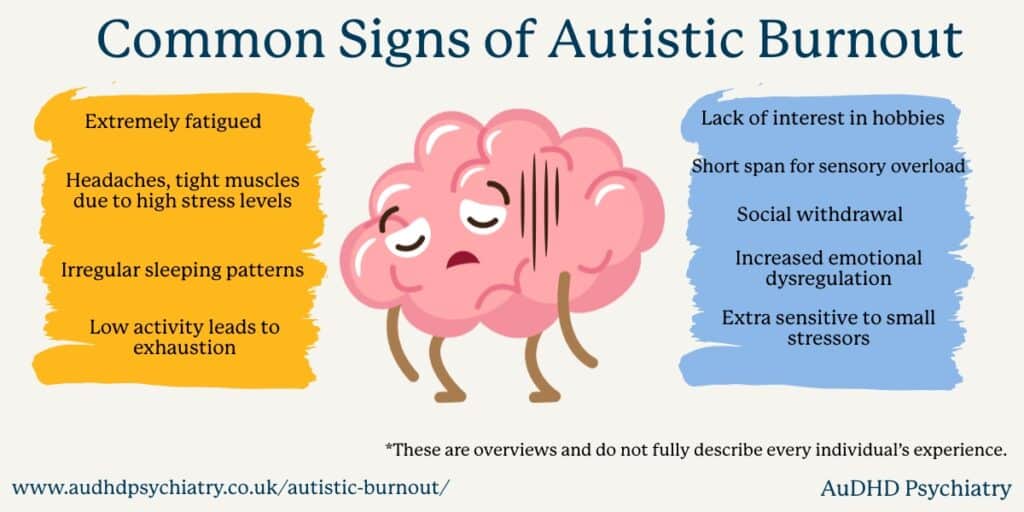
Autistic burnout is a multidimensional problem, so it affects physical, cognitive, and social areas as well. The symptoms of autistic burnout are varied, but some recurring features appear. Here are some of the signs, but keep in mind that these are overviews and may not fully describe each individual’s unique experience:
Physical Symptoms
- Being extremely fatigued that you are still not refreshed after sleep; drained on waking.
- Headaches, tight muscles, upset tummy, or frequent colds due to high stress levels.
- Irregular sleeping patterns — difficulty falling or staying asleep, or oversleep without getting back the energy.
- Low activity level leading to physical exhaustion; low tolerance for workouts or errands.
Mental and Emotional Exhaustion
- Difficulties with decision-making, like what to do next seems impossible.
- Mental fatigue and fog—cognitive slowdown with forgetfulness, and the occasional loss of the thread.
- Emotional exhaustion such as being irritable, overwhelmed, or tearful; feeling fragile after small stressors.
- Lack of interest in previously enjoyable activities, you want to, but your capacity is the problem.
- Increased emotional dysregulation due to stacking demands
Social and Functional Changes
- Social withdrawal: not showing up for plans, avoiding phone calls, minimising social interactions.
- Loss of proficiency or regression; for instance, executive tasks like emails, bills, and food prep that once were simple feel overwhelming now.
- Failure to keep daily routines and personal interests; energy spent on essentials alone.
- Shorter time span for sensory overload: lights, loud noises, mixed conversations, strong smells.
Meltdowns and Shutdowns
Meltdowns (visible loss of regulation) and shutdowns (going quiet, frozen, or non-responsive) may rise in frequency or intensity, particularly after long periods of masking at work or school. These episodes are not behavioral choices; they are the signs of the system which has gone beyond capacity and needs relief.
Overlap with ADHD
If you also live with ADHD, you may notice that distractibility is intensified, or you may have attention tunnel episodes (hyperfocus that crowds out self-care). Understanding ADHD features can clarify the picture. Autism and ADHD are different conditions that can co-occur. Our article, AuDHD Explained, goes in-depth about this overlap.
Causes of Autistic Burnout
A life of chronic stress, social requirements, and the absence of appropriate accommodations in day-to-day environments adds to the autistic burnout. The lasting adaptation of a neurotypical-focused world is a heavy price for many autistics who end up emotionally and physically drained.
Cumulative Stress in a Neurotypical World
Rather than one specific trigger, the autistic burnout is the sum effect of the adaptive stressors. The majority of autistic individuals suppress their behaviors—communication scripts, eye contact, or stimming—so as to meet social norms. This masking causes extreme mental fatigue, which in turn results in chronic tiredness and more difficulty in emotional regulation.
On top of that, daily sensory overstimulation from bright lights, loud noises, or strong smells creates stress on the nervous system. Without enough breaks or reasonable accommodations, the repetitive exposure to these sensory irritants causes total sensory overload.

Common contributing factors include:
- Masking and camouflaging for social acceptance.
- Sensory sensitivities and limited access to quiet, predictable spaces.
- Executive-function overload, such as managing work, communication, and self-care simultaneously.
- Chronic stress from unrealistic expectations or lack of accommodations
- Emotional regulation difficulties intensified by constant self-monitoring.
Executive Functioning and Emotional Strain
Burnout intensifies when executive functioning, which is the brain’s system for planning, prioritising, and time management, becomes compromised. Simple choices like what to eat or how to answer an email become overwhelming. This persistent burden may lead to feelings of irritability, anxiety, and mental fatigue, making recovery much harder.
Many autistic people also suffer from co-occurring mental health problems such as anxiety disorders, which exacerbate the effects of burnout. As emotional reserves are exhausted the chasm widens between what is expected and what is possible.
Academic and Clinical Insights
AASPIRE, the Academic Autism Spectrum Partnership in Research and Education, has significantly reshaped the scientific definition of burnout in autism. The research team of Raymaker et al. (2020) found it to be chronic fatigue, diminished functioning, and loss of skills due to prolonged passing-offs and social pressure. They said it is not mere tiredness; this is the depleting degree of the generic and contrasting environmental factors.
Sociological findings corroborate that autistic burnout is a condition requiring not only rest but also structural change, social load reduction, and environments that adjust to sensory needs. For those who may also have ADHD or issues with maintaining attention, ADHD resources and tools may help.
The Ripple Effects of Autistic Burnout
Autistic burnout affects all areas of life from the everyday issues of energy and executive functioning to relationships and mental health. Many autistic adults, during their recovery period, feel lonely and misunderstood due to healthcare or workplace settings not educating themselves about the condition.

Day-to-Day Functioning and Executive Capacity
During the period of burnout, even the most basic tasks like washing, cooking or responding to messages become unmanageable. Executive functioning is deeply affected, thus making it difficult to plan, prioritise, or even start actions. People frequently say they feel “drained” and that just a minor deviation from their routine can throw the whole day off track.
Energy conservation becomes a coping mechanism. People might cut down on communication, social plans, or chores to save their capacity. This is not avoidance. It’s the essential response to continued tiredness and overload.
Social Interactions and Relationships
Burnout enhances sensory sensitivities and reduces the ability to tolerate social communication. Autistic adults may retreat from family celebrations or seem absent-minded at work as a result of deep mental fatigue. The misinterpretation of this withdrawal can cause tension or feelings of embarrassment, especially when family members or workmates see it as a lack of interest.
Masking throughout the burnout episode only increases exhaustion. Pretending to be “fine” all the time sucks the last bit of energy and postpones recovery. It is essential to build acceptance in relationships. Being honest about limits facilitates understanding that rest does not equal rejection.
Work, Study, and Mental Health
Autistic burnout usually poses threats to professional or academic life. The affected individuals may meet with a hard time finishing their work on time, going to meetings, or concentrating in sensory-heavy environments. In the absence of mental health support or reasonable adjustments, burnout can develop to chronic challenges like:
- Stress-induced anxiety and depression.
- Suicidal ideation or feelings of hopelessness when no support is available.
- Loss of confidence, drive, and identity.
Sometimes, these symptoms are misread by healthcare systems which label them as depression, without the context of autism being provided. Employing the services of occupational therapists and autism-specialist clinicians can help make a difference by resetting routines instead of imposing rigid expectations.
Family and Support Network Dynamics
Familial and peer support is vital in aiding the recovery process. Communication breakdowns may happen during a crisis but patience and consistent routines create safety. Promoting rest, cutting down on extra demands, and helping with sensory triggers will have a positive impact on healing.
- Ideas for practical supports include:
- Providing quiet spaces with soft lighting and no sensory input.
- Simplifying daily chores or delegating them while recovering.
Inserting these very simple things will make the environment supportive as they will allow healing energy to come back and let the self-confidence grow.

Identifying and Managing Autistic Burnout
Catching autistic burnout early can be a game-changer for the recovery process. Unlike normal fatigue, burnout has symptoms like sudden drop in the functioning, high sensory tolerance, and emotional drain which cannot be healed by rest. It takes a higher level of self-awareness to notice these changes, so mostly people also rely on the outside perspective of those they trust to do so.
Recognising Early Signs
The onset of recovery begins by identifying the abnormalities in your usual energy or skills. Burnout symptoms can manifest as:
- Declining interest or ability in the activities of daily living like preparing meals, socialising, or looking after oneself.
- Development of sensory overload—some sounds or lights that were manageable in the past are now simply unbearable.
- Sense of mental cloudiness or slower processing speed, making decisions or communication harder.
- Emotional numbness or irritability triggered by mere small events.
- Feeling alienated from your original self, significantly after long periods of masking.
Though these changes may seem like mental health conditions like depression, autistic burnout is different since it is a product of chronic stress and sensory excess that are specific to the autistic needs. For many, it feels like they have hit a brick wall that neither their mind nor body can accomplish the tasks as a “typical” person does.
Professional Guidance and Support for Autistic Burnout
Even though autistic burnout is not recognised as a formal medical condition, professionals are still bound to recognise and address it.
Mental health professionals and occupational therapists play a huge role in assessing the individual’s unique needs and suggesting reasonable adjustments for their work, home, or educational setting. Practical steps may involve:
- Tweaking daily demands and schedules to allow for recovery.
- Reducing the load on the senses through lighting adjustments, sound control, and the provision of quiet spaces.
- Re-establishing a predictable structure especially useful for those whose executive function has been affected.
- Exploring communication aids or flexible working options through a support network.

The image above shows our comprehensive autism assessment in 4 steps. Seeking assessment through a clinic that is well-versed in neurodivergent issues can also clarify underlying factors. Contact AuDHD Psychiatry and take your first step to recovery.
Understanding is often half of the battle; once burnout is detected, families can reformulate their approach to renew energy and prevent recurrence.
How to Recover from Autistic Burnout
Recovering from autistic burnout requires time and the use of an environment that respects one’s sensory needs and the need to be left alone. There is no magic solution; however, visible changes happen when the real causes of staying sick; chronic stress, overworking, or not enough support, are dealt with.
Rest and Restoration
The path to recovery begins with rest, both physical and sensory. During this time, you will find it beneficial to stay away from overwhelming environments or stimuli and also reconnect with comfort by being in familiar spaces. Many people enjoy the company of familiar distractions, or they will practice self-soothing behaviours like listening to looped music, drawing, or spending quiet time alone.
Building routines around new daily tasks helps not only to regrow predictability but also to reduce anxiety. The gradual speed is very important; reintroducing responsibilities should be done in a slow manner, as opposed to returning to full capacity at once. Setting boundaries with others concerning free time is not avoidance; it is merely a self-preservation tactic.
Practical Approaches for Recovery
- During the recovery phase, some helpful steps are:
- Create a relaxed environment at home or work with as few sensory stimuli as possible.
- Avoid multi-tasking and use visual schedules or phone reminders for structure.
- Spend personal time on rest and creativity—both replenish emotional energy.
- Attend occupational therapy, a place where professionals can join you in dealing with matters like executive functioning or sensory regulation.
- Reconnect with supportive environments, for instance, peer groups, neurodivergent mentors, or online spaces that are friendly towards lived experience.
Make provision for the gradual exposure to previously overwhelming settings, ensuring comfort and control. These approaches promote the regulation of emotion and prevent setbacks. Even little changes like dimmer lighting, shorter working hours, or a predictable schedule could make a huge difference in achieving stability.
A good book might also help you slow down. Viv Dawes’ “The Young Person’s Guide to Autistic Burnout” is a great resource for anyone who is going through recovery or helping someone recover.
Professional and Workplace Support
Occupational therapists can help design spaces and routines to be more accommodating, while therapists who specialise in neurodiversity can help with emotional recovery. Some individuals qualify for adjustments through the UK’s Access to Work scheme, which funds practical supports like sensory accommodations or assistive tools.
Recovery from autistic burnout is seldom straightforward, but with adequate support, understanding, and compassion, it is completely attainable. What is important is creating a supportive environment that respects individuals’ unique rhythms and allows for the restoration of confidence in daily living.
Supporting Autistic People Through Burnout
Autistic burnout impacts not only the individual but also families, workplaces, and communities. The recovery process is much quicker and sustainable when family members, colleagues, and friends empathise with the condition and respond empathetically rather than under pressure.
How Loved Ones Can Help
Support from others is vital during burnout. Many autistic adults report that what helps most is not advice, but understanding. Friends and relatives can make a meaningful difference by:
- Validating experiences: believe the person when they describe exhaustion or overload, even if it’s invisible.
- Reducing demands: offering help with errands or decision-making allows the person to focus on rest.
- Creating a calm, sensory-friendly environment: lower lighting, quieter spaces, and flexible routines promote recovery.
- Encouraging self-care without judgement, respecting downtime, and personal boundaries.
These small changes show respect for autistic needs and prevent further depletion. Recognising burnout as a physical and emotional reality, not a lack of motivation, is the foundation of genuine support.
Community and Professional Support
In broader society, autistic individuals benefit most when mental health support is tailored to their lived experience. Peer-led groups and autistic-led organisations often provide the most relevant advice, as they centre authenticity and inclusion.
Conclusion: Raising Awareness and Encouraging Recovery
Awareness of autistic burnout is an important step toward improving quality of life and long-term well-being for autistic people. It bridges the gap between medical understanding and lived experience, helping professionals, families, and workplaces recognise when autistic individuals are overwhelmed rather than unmotivated.
By acknowledging that autistic burnout shares features with occupational burnout, yet differs in cause and recovery, we can advocate for systems that value rest, predictability, and sensory safety. Building inclusive environments where energy and communication needs are respected benefits everyone, not just those on the autism spectrum.
If you suspect you or someone you love may be experiencing autistic burnout, seeking professional help from clinicians familiar with autism can make a world of difference. Book a free intro call with us today. We’d love to help you rebuild stability through compassion, pacing, and environmental adjustments.
References
Dawes, V. (2025). The Young Person’s Guide to Autistic Burnout. Jessica Kingsley Publishers.
Mantzalas, J., Richdale, A. L., Li, X., & Dissanayake, C. (2024). Measuring and validating autistic burnout. Autism Research, 17(7), 1417–1449. https://doi.org/10.1002/aur.3129
Raymaker, D. M., Teo, A. R., Steckler, N. A., Lentz, B., Scharer, M., Santos, A. D., Kapp, S. K., Hunter, M., Joyce, A., & Nicolaidis, C. (2020). “Having All of Your Internal Resources Exhausted Beyond Measure and Being Left with No Clean-Up Crew”: Defining Autistic Burnout. Autism in Adulthood, 2(2), 132–143. https://doi.org/10.1089/aut.2019.0079
Author:


Contact Us
We’re here to answer any questions you might have.
Get in Touch
Opening Hours
Contact Form
We’re here to help. Reach out and we’ll get back to you within 24 hours (Monday – Friday).
Leave a Reply