

Table of Contents
- The Relationship Between ADHD and Alcohol
- Why People With ADHD Are More Likely to Drink
- How Alcohol Affects ADHD Symptoms
- ADHD and Alcoholism: Understanding the Risk
- Signs of Alcohol Abuse in People With ADHD
- ADHD Medication and Alcohol: What You Need to Know
- Untreated ADHD and Alcohol: A Vicious Cycle
- Treatment Options for ADHD and Alcohol Use
- FAQs
- Conclusion
In Focus:
- People with ADHD are at a high risk of developing alcohol use disorder and are more likely to binge drink.
- Alcohol may initially reduce ADHD-related restlessness, but it worsens symptoms over time, particularly impulse control and executive functions.
- Mixing alcohol with ADHD medications, particularly stimulants, carries serious risks and should be discussed with a healthcare provider.
- Untreated ADHD is a significant risk factor for developing alcohol problems, making early diagnosis and proper treatment crucial.
- If you recognise the signs of alcohol abuse alongside ADHD symptoms, support and effective treatments are available.
The Relationship Between Alcohol and ADHD
The link between alcohol and ADHD is well established in the research. Studies consistently show that people with attention-deficit hyperactivity disorder (ADHD) are more likely to develop alcohol use disorder, engage in binge drinking, and experience greater difficulty recovering from alcohol addiction than people without ADHD.
This isn’t a coincidence. The same neurological differences that characterise ADHD, particularly around dopamine levels, impulse control, and executive functions, also make the brain more susceptible to the rewarding effects of alcohol.
It’s also worth noting that the relationship runs both ways. Heavy drinking can mimic or worsen ADHD symptoms, which can make an adult ADHD diagnosis more complicated, particularly in adults who have gone undiagnosed well into adulthood. New studies continue to explore the possible links between neurological differences in ADHD and vulnerability to substance use, and we’ll discuss some of them in this article.
Why People With ADHD Are More Likely to Drink
Several factors specific to ADHD increase the likelihood of problematic alcohol consumption. These are rooted in how the ADHD brain is wired.
Alcohol as a Means of Self-Medication
Many people with ADHD find that alcohol, at least initially, appears to quiet the mental noise. It can temporarily reduce restlessness, anxiety, and racing thoughts, which are all common ADHD symptoms. This short-term relief can make alcohol a tempting form of self-medication, particularly in those with undiagnosed ADHD who haven’t yet found effective treatments.
Impulsivity and Sensation-Seeking Behaviour
One of the core symptoms of ADHD is impulsivity: acting without fully thinking through consequences. This trait naturally increases the risk of impulsive drinking, taking higher doses of alcohol, and difficulty stopping once started. Combined with a tendency toward sensation-seeking, this can create a pattern where alcohol abuse develops gradually, often without the person fully realising it’s happening. In more severe cases, this pathway can extend beyond alcohol into wider substance abuse or drug abuse, as the same impulsivity that drives drinking can lower barriers to other substance use.
Dopamine Dysregulation
ADHD is associated with lower baseline dopamine levels in the brain. Alcohol temporarily boosts dopamine, creating a sense of reward and pleasure. For someone whose brain is already under-stimulated, this effect can feel more significant than it does for the average person, increasing both the appeal of alcohol and the risk of developing dependence.
Low Self-Esteem and Social Pressure
Years of struggling with ADHD symptoms—all the missed deadlines, relationship problems, and academic challenges—can contribute to low self-esteem. Social situations can feel particularly anxiety-inducing, and alcohol is often used as a social lubricant. Young adults and teenagers with ADHD may also be more susceptible to peer pressure around drinking, especially if they are trying to fit in or mask their difficulties.
How Alcohol Affects ADHD Symptoms
While alcohol may provide brief relief from some ADHD symptoms, its overall negative impact on ADHD is significant. The short-term calm it creates is typically followed by a worsening of the very symptoms it appeared to ease. ADHD affects the brain’s reward and regulation systems in ways that mean alcohol often produces the opposite effect to what someone might hope for.
Quick Facts about Alcohol and ADHD Symptoms
- Alcohol is a depressant; it slows brain activity, which worsens ADHD-related difficulties with focus, memory, and self-regulation.
- The short-term calm alcohol creates is misleading. Once the effects wear off, adhd symptoms typically rebound stronger than before.
- People with ADHD are more sensitive to alcohol’s impact on the frontal lobe – the part of the brain responsible for planning and impulse control.
- Regular drinking can lower baseline dopamine levels further, deepening the very deficit that drives ADHD symptoms.
- Emotional dysregulation, already common in ADHD, is significantly amplified by alcohol, increasing the risk of mood swings and conflict.
- Even moderate alcohol consumption can interfere with sleep quality, which in turn worsens ADHD symptoms the following day.
Impaired Executive Functions
Alcohol is a central nervous system depressant that directly impairs executive functions, the set of mental skills that include planning, organisation, memory, and decision-making abilities. For someone with ADHD, these functions are already challenged. Alcohol compounds the difficulty, making it even harder to manage daily tasks, maintain routines, or respond appropriately to complex situations.
Worsening Impulse Control
Poor impulse control is a hallmark of ADHD, and alcohol makes this considerably worse. This can lead to impulsive behaviour that the person would likely not engage in when sober. In social or professional settings, this can have serious consequences, including strained relationships, poor decisions at work, or risky behaviour.
Effects on Cognitive Function and the Frontal Lobe
The frontal lobe, which governs attention, reasoning, and self-regulation, is particularly affected by alcohol. In people with ADHD, this area of the brain already functions differently. Regular or heavy alcohol intake can therefore have a disproportionate and lasting impact on cognitive function, affecting memory, concentration, and the ability to think clearly under pressure.
Mood, Emotional Regulation, and Mental Health
Alcohol can trigger mood swings and worsen emotional dysregulation, already a common feature of ADHD. For individuals also managing mood disorders, anxiety, or depression alongside their ADHD, alcohol can destabilise what might otherwise be a carefully managed balance. It’s worth noting that conditions such as bipolar disorder and other mental disorders frequently co-occur with ADHD, and alcohol can significantly worsen symptoms across all of them.
People dealing with these overlapping mental health problems and mental health issues often find that reducing alcohol intake is one of the most impactful steps they can take for their overall well-being.
ADHD and Alcoholism: Understanding the Risk
Research consistently shows a strong link between ADHD and alcoholism. People with ADHD are not only more likely to start drinking earlier but also more likely to progress from casual use to alcohol dependence. Studies indicate that ADHD is linked to developmentally inappropriate levels of alcohol use and that people with ADHD have poorer outcomes following addiction treatment compared to those without the condition.
The rate of ADHD among people seeking alcohol treatment is notably higher than in the general population; some estimates suggest it may be two to three times higher. This means that alcohol with ADHD is not rare or niche; it’s a pattern that clinicians working in both addiction and neurodevelopmental settings encounter regularly.
How a Delay in Diagnosis May Increase Risk
Childhood ADHD is a particular risk factor. Young people who grow up with untreated or undiagnosed ADHD often reach their teenage years and young adulthood without the coping tools they need. The teenage years and early adulthood are when alcohol use typically begins, and for those with ADHD, this is also when problematic patterns often take hold.
It’s also important to distinguish between alcohol misuse and alcohol use disorder. The former refers to drinking patterns that cause harm, such as binge drinking or using alcohol to cope, while the latter involves a diagnosed substance use disorder with physical and psychological dependence. Both are more common in people with ADHD, and both deserve attention.
Signs of Alcohol Abuse in People With ADHD
Recognising alcohol abuse can be particularly challenging for people with ADHD, partly because some of the warning signs, such as impulsive behaviour, mood swings, and difficulty maintaining routines, overlap with ADHD symptoms themselves. Being aware of the specific signs is important for both the individual and their family members or support network.
Common signs of alcohol abuse to watch for include:
- Increased tolerance to alcohol; needing to drink more to feel the same effect
- Repeatedly trying to cut back on alcohol consumption but being unable to
- Spending significant time drinking, recovering from alcohol’s effects, or thinking about the next drink
- Neglecting responsibilities at work, home, or school in favour of drinking
- Continuing to drink despite clear negative consequences across multiple areas of life
- Using alcohol as a way to manage ADHD symptoms, anxiety, or low mood
- Withdrawal symptoms when not drinking, such as shakiness, sweating, or irritability
People with ADHD may use alcohol as a form of self-medication, which makes it harder to recognise when drinking has become problematic. The impulsivity characteristic of ADHD can also mean the person is less able to reflect critically on their drinking patterns. If several of these signs resonate, it is worth speaking to a healthcare professional.
If you’re unsure whether your drinking is connected to unmanaged ADHD, exploring a professional ADHD assessment for adults can be a helpful starting point.
Managing ADHD Medication and Alcohol
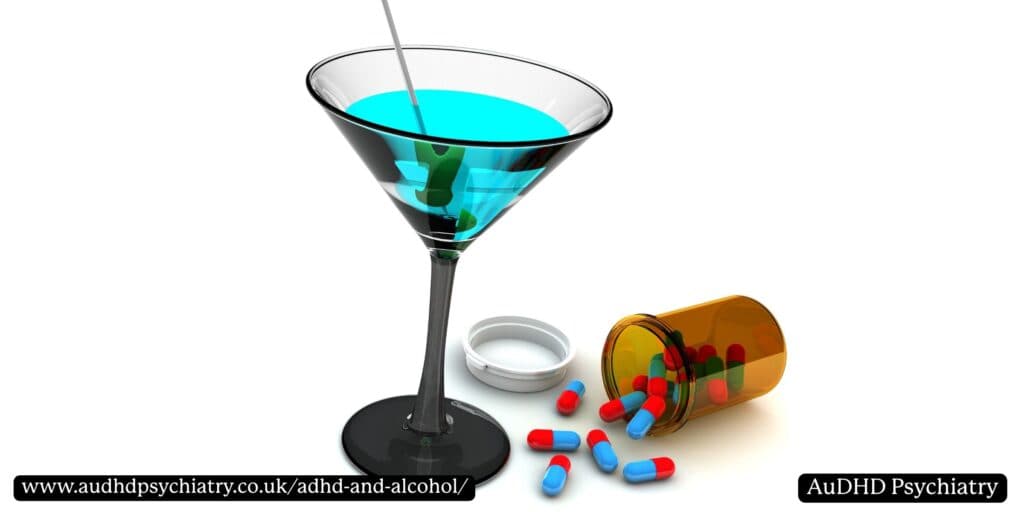
One of the most practically important questions for people managing ADHD is how ADHD medication and alcohol interact. The short answer is that mixing the two is generally not recommended, but the specific risks depend on your medication type, dosage, metabolism, and overall health.
Stimulant Medications and Alcohol
Stimulant ADHD medications such as methylphenidate and amphetamines are the most commonly prescribed prescription drugs for managing ADHD. When combined with alcohol, they can produce serious side effects, including an increased heart rate and blood pressure, heightened anxiety, agitation, and impaired judgment. Because stimulants can partially mask the sedating effects of alcohol, a person may not feel as intoxicated as they actually are, leading them to consume far more than intended.
This masking effect is a key reason why drinking while on stimulant medication can have the opposite effect to what someone might expect—instead of feeling the usual cues to stop drinking, they feel artificially alert, which increases the risk of overconsumption and alcohol poisoning. It is generally not a good idea to drink alcohol while taking stimulant ADHD medication without first discussing it with your prescriber.
If you want to learn more, our Adderall vs Ritalin vs Vyvanse comparison covers the key differences in detail.
Non-Stimulant Medications and Alcohol
Non-stimulant medications such as atomoxetine and guanfacine also carry risks when combined with alcohol. Atomoxetine, in particular, can intensify the sedative effects of alcohol and may increase the risk of dizziness, fainting, or liver strain. Anyone prescribed these ADHD meds should have an open, honest conversation with their healthcare provider about alcohol consumption.
For a broader overview of what to expect, our guide to managing ADHD medication side effects is a helpful starting point.
Individual Factors That Affect Risk
The degree of risk varies depending on several individual factors:
- Tolerance: people respond differently to both ADHD medication and alcohol; some experience stronger reactions at lower doses
- Metabolism: individual differences in how quickly substances are processed can prolong or intensify interactions
- Overall health: underlying conditions such as heart problems, liver disease, or co-occurring mental health disorders can increase risk
- Dosage: higher doses of medication generally carry a greater risk of harmful interactions with alcohol
If you are currently taking ADHD medication and have questions about alcohol interactions, speaking with your prescribing clinician is essential. They will be able to give guidance tailored to your specific medication, dosage, and health profile.
ADHD Medication and Alcohol: Stimulant vs Non-Stimulant Risks at a Glance
Here’s a quick comparison of how stimulant and non-stimulant medications can be affected by alcohol.
| Factor | Stimulant Medications (e.g. Ritalin, Vyvanse) | Non-Stimulant Medications (e.g. Strattera, Guanfacine) |
|---|---|---|
| Masking Effect | High: stimulants can mask intoxication, leading to overconsumption | Lower: less masking, but the sedative effects of alcohol may be intensified |
| Cardiovascular Risk | Elevated: increased heart rate and blood pressure when combined with alcohol | Moderate: risk varies; guanfacine may cause dizziness or low blood pressure |
| Impulse Control Impact | Significant: alcohol undermines the impulse control benefits of stimulants | Significant: alcohol counteracts therapeutic benefits regardless of medication type |
| Liver / Organ Strain | Moderate; both substances are processed by the liver; regular combined use adds strain | Higher for atomoxetine, known risk of liver strain, alcohol worsens this significantly |
| Mood / Anxiety Effects | Can intensify anxiety and agitation, particularly as alcohol wears off | Alcohol may amplify sedation and worsen mood regulation the following day |
Untreated ADHD and Alcohol: A Vicious Cycle
One of the most significant findings in research is the role of untreated ADHD in driving problematic alcohol use. When ADHD goes undiagnosed or unsupported, people are left managing symptoms, such as:
- Distractibility
- Emotional dysregulation
- Impulsivity
- Low self-esteem
Without the tools to do so effectively, managing these can be even more challenging. Alcohol often fills that gap.
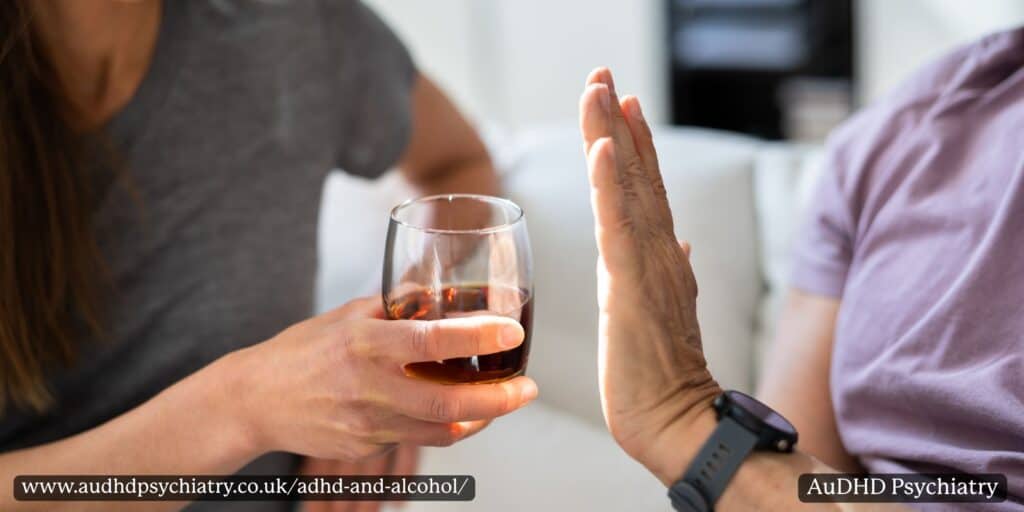
The detrimental effects of this cycle are significant. Alcohol worsens the very ADHD symptoms the person is trying to manage, which leads to increased drinking, which worsens the symptoms further. Over time, this can develop into a vicious cycle of ADHD-related distress and alcohol dependence that becomes increasingly difficult to break without professional support. This pattern shares characteristics with ADHD burnout, where cumulative strain from unmanaged symptoms exhausts a person’s coping resources entirely.
Undiagnosed ADHD in adult alcoholics is more common than many people realise. Research suggests that ADHD may be missed in people presenting for alcohol treatment because their symptoms are attributed to the alcohol rather than to an underlying neurodevelopmental condition. This means that proper treatment for both conditions may be delayed, or that one is treated while the other remains unaddressed.
Our article on adult ADHD and late diagnosis explores why so many adults reach this point without ever having received a formal assessment.
Treatment Options for ADHD and Alcohol Use
Managing both ADHD and alcohol problems requires a comprehensive approach. Treating one without addressing the other is rarely effective in the long term, and effective treatments for co-occurring ADHD and alcohol use disorder do exist. Understanding how ADHD affects the brain’s reward system and impulse regulation is key to designing a plan that genuinely works for the individual.
Getting an Accurate Diagnosis
The first step is ensuring that both conditions are properly identified. A comprehensive ADHD assessment can clarify whether attention deficit hyperactivity disorder is present and inform an appropriate ADHD treatment plan. This is particularly important in adults who have developed alcohol-related problems without ever receiving an ADHD diagnosis, which is more common than many people expect.
Medication Management
For many people with ADHD, appropriate ADHD medications significantly reduce the symptoms that drive problematic drinking. When impulsivity, emotional dysregulation, and executive function challenges are better managed, the need to self-medicate with alcohol often decreases. Any treatment options must be carefully considered by a qualified clinician, especially where alcohol use is also a factor.
The National Institute for Health and Care Excellence (NICE) recommends a structured, evidence-based approach to ADHD treatment. The best treatments combine medication with psychological support, tailored to the individual’s needs. Evidence from clinical trials suggests that adequately treating ADHD can play a crucial role in reducing alcohol misuse, particularly in younger adults and those with a history of self-medication.
Cognitive-Behavioural Therapy
Cognitive-behavioural therapy (CBT) is one of the most well-evidenced psychological approaches for both ADHD and substance use disorders. It helps people identify the patterns of thinking and behaviour that contribute to their difficulties, and develop practical strategies for managing them. CBT can be especially useful for addressing impulsive behaviour, emotional regulation, and the thought patterns that drive self-medicating.
Research into the best treatments for co-occurring ADHD and alcohol use is ongoing. The National Institute on Alcohol Abuse and Alcoholism (NIAAA) and similar bodies have funded clinical trials comparing active treatments against a placebo group to establish what works best. Studies consistently follow a rigorous editorial policy of peer review, ensuring that the evidence informing clinical practice is robust and reliable.
Support Groups and Wider Help
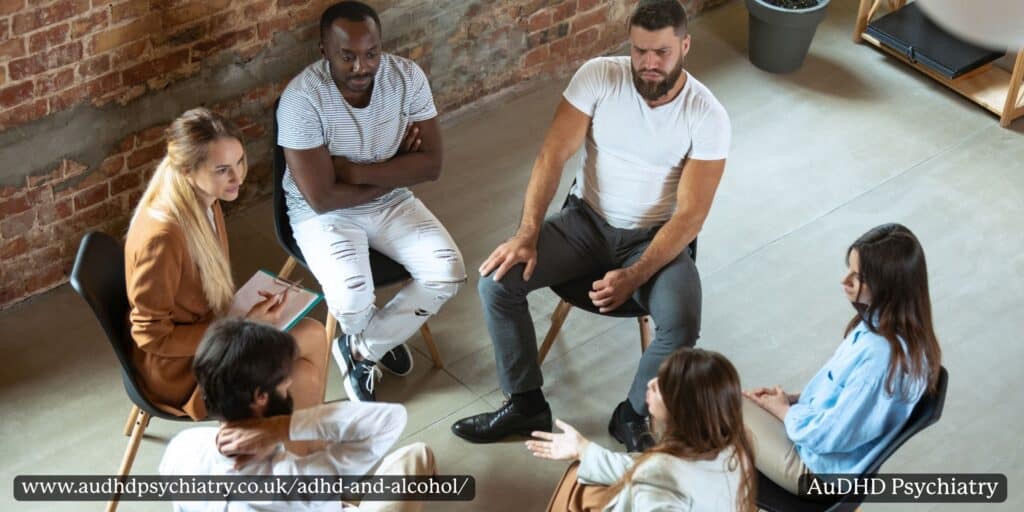
Support groups play a crucial role in providing community and accountability for people managing both ADHD and alcohol addiction. Connecting with others who share similar experiences can reduce isolation and provide practical peer support. Specialist treatment programs that address co-occurring ADHD and alcohol use are available in the UK and are best accessed through professional help via your GP or a specialist neurodevelopmental service.
Individual needs vary considerably, which is why any treatment plan should be developed with the guidance of qualified healthcare professionals who understand both conditions. A one-size-fits-all approach rarely works well when both ADHD and alcohol misuse are present. The information in this guide follows an editorial policy grounded in peer-reviewed research and clinical best practice, but it is not a substitute for personalised medical advice.
Frequently Asked Questions
Does alcohol make ADHD worse?
Yes. While alcohol may initially reduce some ADHD-related restlessness or anxiety, its long-term and even short-term effects worsen most ADHD symptoms. It impairs executive functions, increases impulsivity, disrupts emotional regulation, and negatively affects cognitive function, all of which are areas already affected by ADHD.
Can I drink alcohol if I take ADHD medication?
This depends on your specific medication, dosage, and health status. In general, mixing ADHD medication, especially stimulants, with alcohol is not recommended due to the risk of serious side effects. Always speak with your healthcare provider for personalised guidance before consuming alcohol while on any ADHD medication.
Is there a higher risk of alcohol use disorder with ADHD?
Yes. Research clearly shows that people with ADHD are at an increased risk of developing alcohol use disorder. Factors including impulsivity, dopamine dysregulation, and the tendency to self-medicate all contribute to this elevated risk. Untreated ADHD is particularly associated with problematic alcohol use.
What are the signs that my drinking might be linked to undiagnosed ADHD?
If you drink to manage restlessness, anxiety, or difficulty switching off, and if you’ve always struggled with focus, impulsivity, or emotional regulation, there may be an underlying ADHD component. An adult ADHD assessment can help clarify this. Treating the ADHD properly often reduces the drive to self-medicate with alcohol.
Where can I get help for ADHD and alcohol problems in the UK?
You can speak to your GP, who can refer you to specialist ADHD services or alcohol support. AuDHD Psychiatry can help you with a private ADHD assessment even without a GP referral and can provide a diagnosis and treatment plan more quickly. If you’re concerned about alcohol dependence, please seek medical guidance, as withdrawal symptoms can be serious.
What does the research actually say about treating ADHD to reduce alcohol use?
The evidence is encouraging. Several clinical trials have found that treating ADHD with medication leads to meaningful reductions in alcohol use compared to a placebo group. While not every individual responds in the same way, the overall picture from the research suggests that addressing the underlying ADHD, rather than focusing solely on the alcohol, produces better long-term outcomes for many people.
ADHD and Alcohol: Conclusion
The relationship between ADHD and alcohol is complex, but it’s one that can be addressed with the right support. Understanding why people with ADHD are at greater risk, recognising the signs of alcohol abuse, and knowing how alcohol interacts with ADHD medications are all important steps towards making informed, healthier choices.
If any of this resonates with you, you might be questioning your drinking, managing your ADHD medication, or wondering whether an undiagnosed condition is at the root of your difficulties. Taking the next step is worth it. Book a comprehensive ADHD assessment with us today and find out if your experiences are part of a neurodivergent profile.
References
Wilens, T. E. (2004). Attention-deficit/hyperactivity disorder and the substance use disorders: The nature of the relationship, subtypes at risk, and treatment issues. Psychiatric Clinics of North America, 27(2), 283–301. https://doi.org/10.1016/j.psc.2003.12.006
Biederman, J., Wilens, T., Mick, E., Faraone, S. V., Weber, W., Curtis, S., Thornell, A., Pfister, K., Jetton, J. G., & Soriano, J. (1997). Is ADHD a risk factor for psychoactive substance use disorders? Findings from a four-year prospective follow-up study. Journal of the American Academy of Child & Adolescent Psychiatry, 36(1), 21–29. https://doi.org/10.1097/00004583-199701000-00013
Molina, B. S. G., & Pelham, W. E. (2003). Childhood predictors of adolescent substance use in a longitudinal study of children with ADHD. Journal of Abnormal Psychology, 112(3), 497–507. https://doi.org/10.1037/0021-843X.112.3.497
Rooney, M., Chronis-Tuscano, A., & Yoon, Y. (2012). Substance use in college students with ADHD. Journal of Attention Disorders, 16(3), 221–234. https://doi.org/10.1177/1087054710392536
Ohlmeier, M. D., Peters, K., Te Wildt, B. T., Zedler, M., Ziegenbein, M., Wiese, B., Emrich, H. M., & Schneider, U. (2008). Comorbidity of alcohol and substance dependence with attention-deficit/hyperactivity disorder (ADHD). Alcohol and Alcoholism, 43(3), 300–304. https://doi.org/10.1093/alcalc/agn014
Priory Group. (2024). ADHD and alcohol: Effects and signs of abuse. https://www.priorygroup.com/blog/adhd-and-alcohol
Gateway Foundation. (2024). ADHD and alcohol relationship. https://www.gatewayfoundation.org/blog/adhd-alcohol-relationship/
Author:

Contact Us
We’re here to answer any questions you might have.
Get in Touch
Opening Hours
Contact Form
We’re here to help. Reach out and we’ll get back to you within 24 hours (Monday – Friday).
Leave a Reply