


Table of Contents
- Famous Autistic People (Diagnosed or Suspected)
- Famous Autistic Actors, Comedians & Film or TV Personalities
- Musicians, Singers & Performers
- Scientists, Professors & Academics
- Entrepreneurs, Innovators & Creators
- Activists, Writers & Advocates
- Athletes & Sports Figures
- Historical Figures Widely Believed to Have Been Autistic
- Artists & Visual Creators
- Strategy, Logic & Systems Thinkers
- Frequently Asked Questions
- Famous People with Autism: Conclusion
In Focus
- Autism spectrum disorder spans every field, from film and music to science, sport, and history
- Many influential figures were diagnosed, self-identified, or later recognised through autistic traits
- Autistic strengths often include deep focus, pattern recognition, creativity, and originality
- Success does not erase challenges like masking, sensory overload, or social strain
- Representation can reduce stigma but should never replace a professional assessment
If you’re wondering what high-functioning ADHD looks like, look no further. Here are 115 famous people with autism who broke barriers and achieved massive success in their respective fields. We’ll talk about crowd-favourite filmmakers, actors, artists, philosophers, and so many more. Other than proving that autistic individuals are capable of performing well in their chosen areas of expertise, these icons can be an inspiration for those who are in the spectrum.
If you’ve been diagnosed with autism or suspect you may need an assessment, this article may show you that pursuing your passion and excelling are possible. If you’re the latter, feel free to schedule a consultation with AuDHD Psychiatry for an autism assessment. We’ve been helping individuals with autism and ADHD thrive and improve their quality of life, and we’d love to be of help to you, too.
Famous Autistic People (Diagnosed or Suspected)
While some of these known personalities are speculated or self-identified as having autism, others have been diagnosed. It’s also important to acknowledge that there may be individuals who prefer the term Asperger’s syndrome, which was classified as autism spectrum disorder (ASD) in 2013.

Famous Autistic Actors, Comedians & Film or TV Personalities
Kayla Cromer
Let’s start this conversation with the first actress on the spectrum to take the role of an autistic character, Kayla Cromer. An openly autistic actress, Cromer made history in 2019 by playing Matilda, an autistic teenage girl, in Everything’s Gonna Be Okay. Unlike earlier portrayals shaped by stereotypes and played by non-autistic actors, Cromer brought lived experience to the role, challenging assumptions about who autistic people are.
“People with a difference are fully capable of playing our own type,” she said.
Her casting marked a turning point for authentic autism representation, particularly for autistic women who had never seen themselves meaningfully reflected on screen.
Tim Burton
The well-loved American filmmaker of masterworks such as Halloween favourites A Nightmare Before Christmas and Beetlejuice, and the ongoing Netflix series Wednesday, Tim Burton has acknowledged identifying with ASD traits. Burton has long described himself as introverted, preferring solitary activities like drawing and watching films, which shaped his distinctive creative style. Themes of social isolation, difference and misfits run throughout his films and resonate strongly with autistic experiences.
Dan Aykroyd
Dan Aykroyd is a Canadian actor, comedian and writer best known for Saturday Night Live, The Blues Brothers and Ghostbusters. Diagnosed with Asperger’s in the 1980s after encouragement from his wife, Aykroyd has said autism positively shaped his work. His intense, focused interests (particularly in ghosts, law enforcement and criminology) directly inspired Ghostbusters and informed his character writing. Rather than hindering success, these autistic traits fuelled creativity, originality and deep knowledge, helping him build a distinctive and enduring career in comedy and film.
Courtney Love
Best known as the frontwoman of Hole and a defining figure in alternative rock, Courtney Love is an American signer, songwriter, and actres. Diagnosed with what was then called “high-functioning autism” at age nine, she experienced speech delay, sensory sensitivities and social difficulties. Autism shaped her intense literary hyperfocus and emotionally raw songwriting, with lyrics confronting alienation, bullying and identity.
Love once described herself as “the girl who can’t look you in the eye.” Her autistic traits fuelled fearless creativity, helping her achieve critical acclaim in music and award-nominated success in film.
Curious about the different levels of autism? We talk about them in this article.
Bella Ramsey
If you’ve seen the HBO series Game of Thrones, you might remember Bella Ramsey as the strong-headed Lyanna Mormont. They’re also the lead in the TV adaptation of the popular video game “The Last of Us,” the first season of which she got diagnosed with autism. Ramsey says autistic traits can strengthen their acting through close observation and learned social “manual” skills, while the structure of set life helps: call times, clear instructions, predictable routines. The diagnosis felt “freeing…,” Ramsey recalls.
Anthony Hopkins
Knighted Welsh screen legend Sir Anthony Hopkins (best known for The Silence of the Lambs and Oscar-winning The Father) has said he was diagnosed with Asperger’s syndrome in 2014, and spoke about it publicly in 2017. His account frames autism as shaping a highly analytical approach to acting and role choice. He’s described it as “a great gift.”
Wentworth Miller
Best known as the cool-headed genius Michael Scofield in Prison Break, Wentworth Miller revealed in 2021 that he is autistic, diagnosed in adulthood during the COVID lockdowns. The actor said the discovery was “a shock. But not a surprise,” after years of sensing he saw the world differently. Miller has described autism as “a gift,” helping explain his intense focus, pattern-spotting and emotional depth on screen.
Rather than positioning himself as a spokesperson, he chose honesty and humility, saying he is still “re-examining five decades of lived experience through a new lens.”
Daryl Hannah
Before Hollywood ever felt glamorous, Daryl Hannah was a painfully shy child who “rocked incessantly” and felt she “checked out” at school. Best known for Splash, Blade Runner and Steel Magnolias, Hannah was diagnosed with autism in childhood, at a time when doctors even suggested institutionalisation. Acting became her refuge: “Acting for me was about going to the Land of Oz… It still is.” Autism also made publicity overwhelming. She avoided talk shows and premieres out of fear. Today, she credits self-acceptance with resilience, saying:
“I wasted too much time scared… Life is too short.”
Alfred Hitchcock
Alfred Hitchcock, the English director behind Psycho and Vertigo, is often retrospectively discussed through an autistic lens, though he was never formally diagnosed. He was known for intense focus, preference for written communication, and difficulty with close relationships—traits sometimes associated with autism. These characteristics arguably supported his meticulous control of detail, helping shape one of cinema’s most distinctive and influential styles.
Niall Aslam
Niall Aslam is a former Love Island contestant who left the show after one week, later revealing he is autistic and was diagnosed with Asperger syndrome in childhood. He said the intense social pressure made him realise he had been “suffering in silence” and avoiding the stigma around diagnosis. Autism affected how he experienced relationships and understanding from others, both on and off screen.
Speaking publicly was a turning point: “I am glad that I can now accept who I am.” His openness was widely praised and helped shift conversations about autism and reality TV.
Here’s a list of some more actors, comedians, filmmakers, and TV personalities who may have suspected or been diagnosed with ASD:
- Chris Packham
- Anne Hegerty
- Fern Brady
- Joe Wells
- Bradley Riches
- Ashley Storrie
- Christine McGuinness
- Melanie Sykes
- Tal Anderson
- Kayla Cromer
- Jerry Seinfeld
- Sophie Baverstock
- Chloé Hayden
- Holly Smale
- Mickey Rowe
- Tal Anderson
- Heather Kuzmich
- Rick Glassman
- Coby Bird
Musicians, Singers & Performers
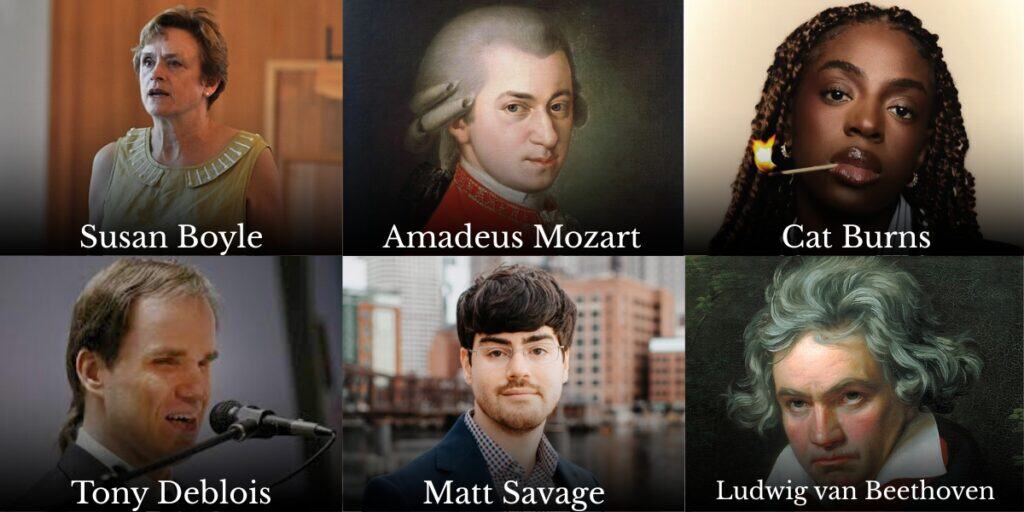
Susan Boyle
Before Britain met her on Britain’s Got Talent, Susan Boyle had spent decades misunderstood. The Scottish singer, who became a global star in 2009, revealed in 2013 that she was diagnosed with Asperger’s syndrome in adulthood after being wrongly labelled “brain damaged” as a child. The diagnosis brought relief: “I feel relieved and a bit more relaxed about myself.”
Autism helped explain lifelong social anxiety and emotional overwhelm, even amid success. Boyle says the label doesn’t define her, but hopes it brings greater understanding of her behaviour and her remarkable talent.
Amadeus Mozart
Centuries before autism was recognised, Wolfgang Amadeus Mozart was already astonishing the world. A child prodigy who composed from age six and produced over 600 works before dying at 35, Mozart is often retrospectively discussed as possibly autistic, though never diagnosed. Accounts describe intense focus, exceptional memory, sensory sensitivity to sound, repetitive behaviours and social differences.
These traits may have supported his extraordinary concentration and rapid learning, including composing complex works in hours. While speculative, viewing Mozart through an autism lens highlights how neurodivergent traits can underpin creativity, innovation and enduring cultural impact.
Gary Numan
Long before “Cars” turned him into a synth-pop icon, Gary Numan already knew he experienced the world differently. Diagnosed with Asperger’s syndrome as a teenager, the British musician has spoken candidly about struggling with eye contact, emotional expression and social intuition. “Being autistic, you react to the world differently,” he has said.
Those same traits fuelled his fiercely individual music—unmoved by peer pressure, formula or trends. Numan credits his wife with helping him learn social cues, while his autism underpins the intense focus, originality and emotional distance that became central to his influential sound.
Cat Burns
British singer-songwriter Cat Burns, known for the hit Go and her emotionally direct lyrics, revealed in 2023 that she is autistic, after previously being diagnosed with ADHD. The late diagnosis helped her understand why life often felt overwhelming and why she experienced the world so intensely. Burns said autism made things “just make sense,” particularly around social exhaustion and emotional processing.
She has spoken openly about masking and the lack of research into autism in women and Black women. By sharing her story, Burns is helping normalise late diagnosis and advocating for greater visibility and understanding.
Tony Deblois
Tony DeBlois is a blind American autistic savant and extraordinary musician whose life inspired the 1997 film Journey of the Heart. He was born blind and was a premature baby. At only two years, he showcased extraordinary talent in music, and later on went to master 20 instruments and memorized 8,000 music pieces. DeBlois graduated from Berklee College of Music with magna cum laude and with incredible performing skills, blended jazz and improvisation, and has performed across the globe.
His story shines a light on how autism and savant talents can coexist with remarkable creative achievement, challenging assumptions about disability and artistic potential.
Matt Savage
Jazz was a part of Matt Savage’s life from an early age and with great strength. Diagnosed with autism at age three, he was professionally performing by age eight, turning his intense focus and sensory sensitivities into musical fluency, and he was even reading music by age six. Today, the American jazz pianist and composer is known for virtuosity, improvisational depth and a career that shows how autism can shape, not limit, creative excellence.
Ludwig van Beethoven
Beethoven was one of the most prominent German composers to influence Western classical music through his enormous catalog of works ranging from symphonies to sonatas. Some retrospective observers have noted that he may have had traits associated with autism, given his intense focus on composition, social challenges, and a tendency to isolate himself while working.
While it’s impossible to diagnose someone who lived centuries ago, these characteristics help us appreciate how diverse ways of thinking and deep concentration can fuel extraordinary creativity and an enduring artistic legacy.
Scientists, Professors & Academics
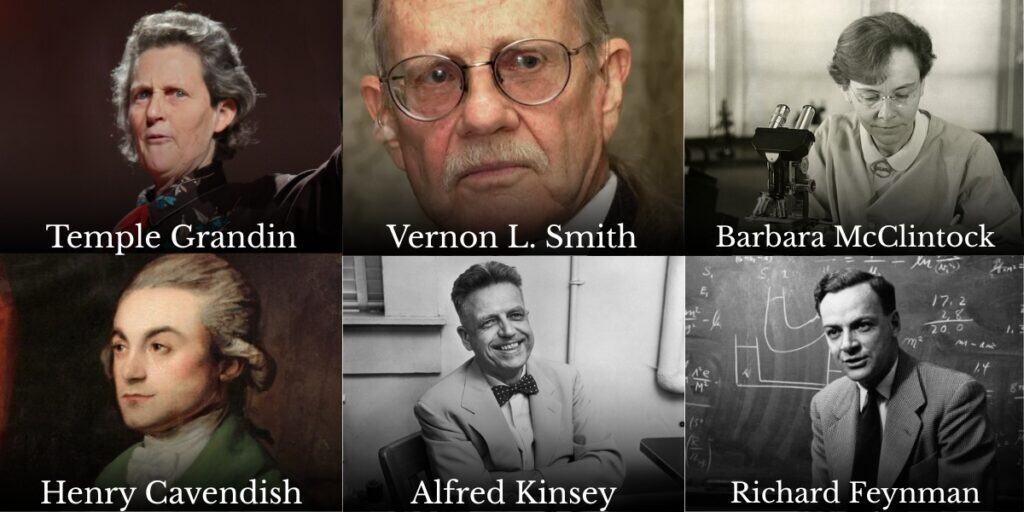
Temple Grandin
Temple Grandin is an American animal scientist, author and one of the most influential autistic voices in the world. Diagnosed with autism as a child when few understood the condition, she later developed breakthrough insights into animal behaviour and livestock facility design, becoming a professor and bestselling author. Grandin has spoken widely about how autism shaped her visual thinking and deep empathy for animals, helping her pioneer more humane handling systems used globally.
Her life and work have transformed public understanding of autism, showing how neurodivergent minds contribute uniquely to science, advocacy and society.
Vernon Smith
While most Nobel laureates are celebrated for brilliance alone, Vernon Smith has spoken openly about how autism shaped his mind. The American economist, who won the 2002 Nobel Prize in Economics, has Asperger syndrome and describes it as having “selective advantages.” Autism gave him the ability to shut out the world and think with extreme focus:
“If I’m writing something, nothing else exists.”
He also credits it with freedom from social pressure, allowing him to think “outside the box” and invent experimental economics. Smith’s story highlights how autistic differences can drive innovation at the highest level.
Barbara McClintock
Barbara McClintock was a pioneering American geneticist whose work on maize rewrote biology and earned her the 1983 Nobel Prize in Physiology or Medicine for discovering mobile genetic elements, or “jumping genes.” Her intense focus, solitary research style and unconventional insights along with social awkwardness and working largely alone have led some modern commentators to suggest she showed traits reminiscent of the autism spectrum. McClintock’s brilliant, independent mind helped her persevere despite early scepticism from peers and ultimately transform our understanding of genetics, highlighting how atypical thinking can drive groundbreaking scientific discovery.
Do these stories about autistic traits resonate with your own experiences? If you’re ready for a professional autism diagnosis, get on a call with us. We’ll answer your questions and guide you every step of the way.
Henry Cavendish
He avoided conversation so completely that he once communicated with his housekeeper using written notes left on tables. Henry Cavendish, the reclusive British scientist who discovered hydrogen and calculated the Earth’s density, is often retrospectively discussed as possibly autistic. Accounts describe intense single-minded focus, literal thinking and profound social withdrawal—traits now associated with autism.
While never diagnosed, these characteristics may have enabled Cavendish’s extraordinary precision and originality, showing how deep cognitive focus can quietly underpin world-changing scientific achievement.
Alfred Kinsey
Long before his work transformed how society talks about sex, Alfred Kinsey was known for extreme social awkwardness, obsessive interests and a near-total immersion in data. A paper published in 1999 in the Journal of Autism and Developmental Disorders argues that Kinsey meets the DSM-IV criteria for Asperger’s syndrome with social reciprocity, literal thinking and rock-like concentration on various subjects, first on insects and later on human sexuality, which qualifies him for the syndrome.
These traits may have fuelled the meticulous, single-minded research that reshaped modern sexology, even as they complicated his personal relationships.
Richard Feynman
He once cracked safes for fun and played the bongos between lectures, yet rewrote modern physics. Richard Feynman, the Nobel Prize–winning American physicist, has been retrospectively described by psychiatrist Michael Fitzgerald as fitting the profile of autism, citing early language delay, social difficulties, literal thinking and intense, visual imagination. These traits may have fuelled his originality, fearless thinking and obsessive curiosity which Feynman himself called “the pleasure of finding things out”, helping him transform quantum physics and science communication.
Curious about celebrities with ADHD, check out our article on Nelly Furtado.

Entrepreneurs, Innovators & Creators
Elon Musk
Autism became part of the mainstream social conversation when Elon Musk disclosed he had Asperger’s syndrome while performing his 2021 Saturday Night Live Monologue. Musk, who is the founder of mulit-billion dollar companies SpaceX and Tesla, is also known for his controversial social media posts. He joked, “I’m actually making history tonight as the first person with Asperger’s to host SNL…,” highlighting how his brain works differently. Musk’s direct communication style, intense focus and unconventional thinking reflect traits often seen on the autism spectrum and have shaped his approach to technology and problem-solving.
Bill Gates
Aged 69 and writing his memoir Source Code: My Beginnings, Bill Gates, the Microsoft co-founder and philanthropist has reflected that if he were growing up today, he would “probably be diagnosed on the autism spectrum,” noting his obsessive interests, missed social cues and early social awkwardness. Gates said such neurodivergent traits weren’t recognised in his youth, but helped fuel his deep concentration on maths, science and programming that ultimately helped shape the modern tech era.
Other brillian minds who are either suspected or diagnosed with autism are:
- Steve Jobs
- Satoshi Tajiri
- Thomas Edison
- Peter Thiel
- Mark Zuckerburg
- Benjamin Franklin
Activists, Writers & Advocates
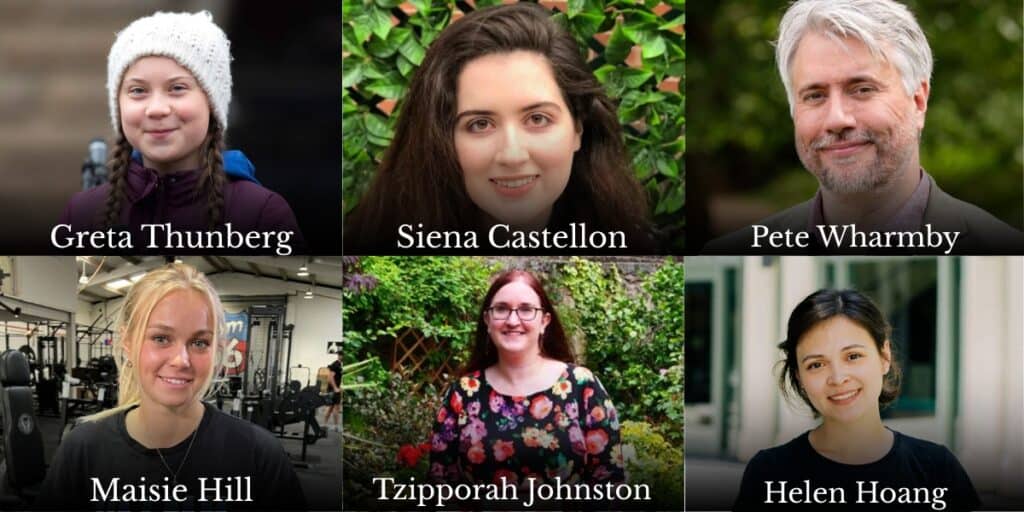
Greta Thunberg
Greta Thunberg, the environmental activist, refers to her Asperger’s diagnosis as not a limitation, but rather as a “superpower.” Her singular focus, intense honesty and laser-sharp awareness of climate science have driven her rise to international prominence, from school strikes in Sweden to speaking before world leaders. Thunberg says her autism helps her see through distractions and rhetoric to “what is true,” giving her the courage to challenge powerful institutions.
By embracing her neurodivergence publicly she has inspired many autistic people, especially young women and girls, to see their differences as strengths rather than deficits.
Siena Castellon
Siena Castellon’s ability to advocate for autistics has been game-changing. Castellon is an autistic advocate herself. Most autistic people, including autistic people, felt the most impacted by the pandemic. Castellon saw how the struggles of the underdiagnosis of autistic girls impacted the most. At 13, she founded Quantum Leap Mentoring. She has also founded Neurodiversity Celebration Week. These initiatives are global in scope and celebrate the strengths of autistic people.
A bestselling author and United Nations Young Leader, Castellon uses her platform to advocate for understanding, acceptance and celebration of autistic voices worldwide.
Pete Wharmby
He spent decades feeling out of step with the world—until a diagnosis finally gave language to his experience. Pete Wharmby is a British autistic author, speaker and trainer who was diagnosed with autism at 34, later also discovering he has ADHD. The diagnosis, he says, was life-changing, allowing self-acceptance and purpose. Shocked by poor mental-health outcomes for autistic people, Wharmby turned his focus to advocacy, writing acclaimed books such as Untypical and What I Want to Talk About.
Through talks, training and social media, he translates lived autistic experience into clarity, empathy and practical change across workplaces and education.
Maisie Hill
Rather than fame or awards, Maisie Hill became known for something deeply personal: her lived experience as an autistic woman. A certified life coach and author, she discovered she was autistic in 2020 after suspecting it in 2019, and has since shared how autism shapes her daily life, from sensory needs and dysregulation to the routines and tools that help her thrive.
These authors have also been diagnosed with ASD and have openly shared their lived experiences:
- Tzipporah Johnston
- Katherine May
- Helen Hoang
- Daniel Tammet
- Ada Hoffmann
Athletes & Sports Figures
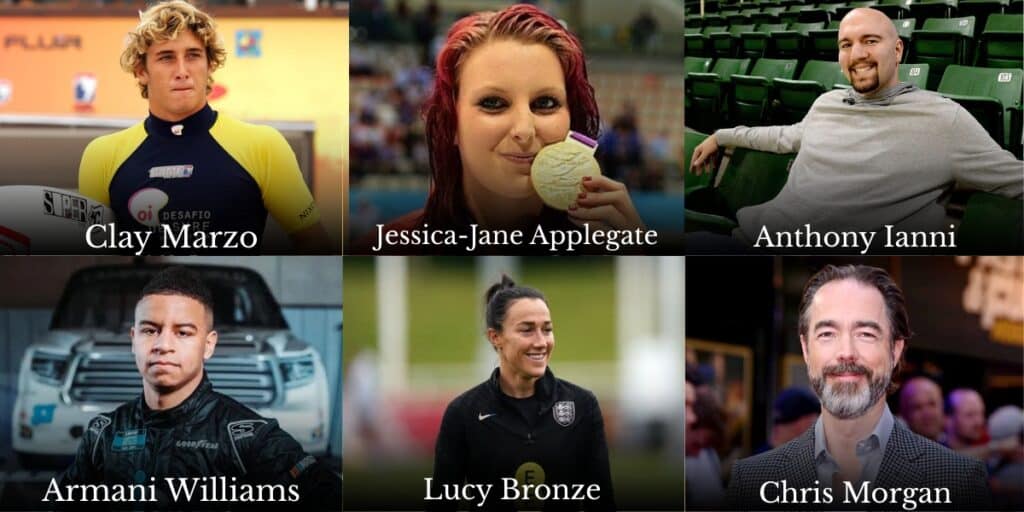
Clay Marzo
Clay Marzo is an American professional surfer celebrated for his fluid style and uncanny wave reading—but his story goes beyond sport. Diagnosed with autism as a child, Marzo “speaks without words” through movement, finding connection and communication in the ocean rather than conventional speech. His intense focus, sensory attunement and ability to read patterns make him uniquely suited to surfing’s ever-changing environment.
If you’d like to learn about the combined autism and ADHD condition, read: AuDHD Explained.
Jessica-Jane Applegate
Eleanor (Ellie) Applegate is a British para-swimmer whose journey highlights both elite sport and autism awareness. As an autistic athlete, she has used her platform to promote understanding of neurodiversity and break down stigma, particularly around sports participation and sensory challenges. Applegate has spoken about how autism affects her experience in and out of the pool, from preparation routines to competition pressures.
Anthony Ianni
On basketball courts dominated by rhythm and instinct, Anthony Ianni rewrote expectations. The former Michigan State University star became the first Division I basketball player openly diagnosed with autism, proving that neurodivergent minds belong at every level of competition. Diagnosed in childhood, Ianni faced early challenges with communication and social interaction but transformed these into strengths that helped him excel in sport and inspire others.
Some key autistic traits shaping his journey:
- intense focus and discipline
- routine-based preparation
- sensory and social challenges
- resilience under pressure
- advocacy for autism awareness
Ianni’s story shows how autism and athletic excellence can coexist, challenging stereotypes and expanding what’s possible in elite sport.
Armani Williams
From karting to stock cars, Armani Williams made history as the first NASCAR driver openly on the autism spectrum. Diagnosed in childhood, Williams found racing a place where focus, pattern-reading and intense concentration fuel success traits often associated with autism that he turned into competitive strength. He has spoken about sensory challenges and how the sport’s routines help him perform at a high level, while also using his platform to raise awareness and acceptance of autism.
The following sports icons have also been diagnosed with ASD:
- Jim Eisenreich
- Lucy Bronze
- Tim Ellis
- David Campion
- Chris Morgan
- Joe Barkdale

Historical Figures Widely Believed to Have Been Autistic
While these individuals we know from history or academic books may only be speculated as having autism, we’ll share some thoughts from experts as to the basis of these speculations.
Albert Einstein
Famously abstract in thought and singular in focus, Albert Einstein has been retrospectively discussed as likely being on the autism spectrum. Historical accounts noted his delayed speech development, intense fascination with numbers and patterns, and a preference for solitary concentration. Scientists analysing his life suggest that his exceptional ability to visualise problems and pursue deep intellectual focus may reflect neurodivergent thinking.
Sir Isaac Newton
He rewrote the laws of the universe while largely avoiding people. Isaac Newton, the English mathematician and physicist behind gravity and calculus, is often retrospectively discussed as possibly autistic, based on historical accounts of his behaviour. While never diagnosed, biographers have noted traits now associated with autism, including:
- extreme social withdrawal and lifelong difficulty with relationships
- rigid routines and intolerance of interruption
- prolonged periods of solitary, obsessive focus
- emotionally flat or literal communication
These characteristics may have supported the sustained concentration behind his revolutionary discoveries, even as they isolated him socially.
Nikola Tesla
Renowned inventor Nikola Tesla revolutionised modern electricity and communication, but his personal habits often puzzled contemporaries. Retrospective analyses suggest Tesla displayed behaviours now associated with autism spectrum differences, including intense, narrow interests; extraordinary sensory sensitivity; deep, solitary focus; and rigid routines. He worked obsessively on ideas like alternating current, sometimes at the expense of sleep or social connection, and was deeply affected by sounds and textures others barely noticed.
Other notable historical figures suggested to have ASD are:
- Thomas Jefferson
- Michael Faraday
- Paul Dirac
- Gregor Mendel
- Blaise Pascal
Artists & Visual Creators
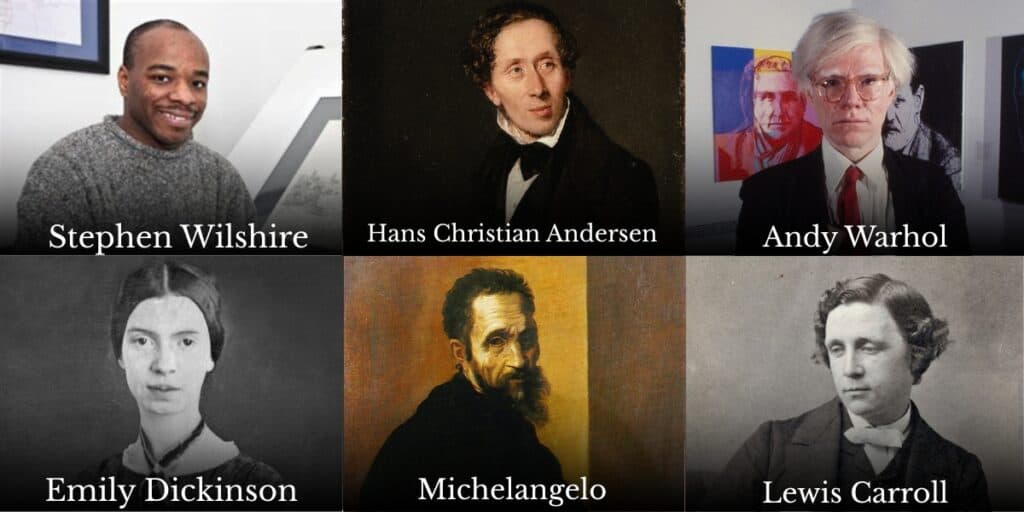
Stephen Wilshire
As a young boy in London, Stephen Wiltshire spoke his first words not in conversation but by asking for “paper”—a hint of the remarkable talent that would soon unfold. Diagnosed with autism at age three, he taught himself to communicate through his art, and by age eight was producing astonishingly detailed architectural drawings from memory. Wiltshire can look at a city once, sometimes from a helicopter and recreate its skyline with stunning precision, leading to global acclaim and an MBE for services to art.
His extraordinary visual memory and focus have made him one of the most celebrated autistic savant artists in the world.
Hans Christian Andersen
He spent much of his life feeling like an outsider—and turned that feeling into timeless stories. Hans Christian Andersen, the Danish author of The Little Mermaid and The Ugly Duckling, is often retrospectively discussed as possibly autistic. Scholars point to lifelong traits now associated with autism, including:
- intense, single-minded focus on storytelling
- difficulty forming and maintaining relationships
- heightened sensory sensitivity and emotional intensity
- strong attachment to routine and familiar environments
While never diagnosed, these characteristics may have shaped both his solitary life and his enduring literary themes of difference, longing and belonging.
Andy Warhol
Rather than a typical art-world story, Andy Warhol’s creative life is often revisited through the lens of neurodiversity. The American pop-art pioneer was intensely focused on repetition, pattern and detail traits that some commentators see as aligning with contemporary descriptions of autism spectrum differences, even though he was never formally diagnosed. Warhol’s meticulous work ethic, extraordinary memory for imagery and preference for predictable routines helped define his unique visual language.
Emily Dickinson
Often described as intensely private and deeply introspective, Emily Dickinson—the 19th-century American poet—has been retrospectively considered in discussions about autism spectrum traits. Although she was never diagnosed, scholars note her lifelong preference for solitude, intense focus on inner experience and unusual patterns of social interaction, including retreat from society and selective communication with correspondents.
Michelangelo
Long before autism was a recognised diagnosis, Michelangelo Buonarroti demonstrated behaviours that some researchers argue fit what we today call high-functioning autism. A 2004 retrospective analysis suggests he showed single-minded devotion to work, limited interests outside his art, unusual lifestyle patterns, and poor social and communication skills, all of which align with modern criteria for Asperger’s or autism spectrum traits.
These deeply focused tendencies fuelled his extraordinary artistic achievements, sculpting David, painting the Sistine Chapel and highlighting how atypical cognitive styles can drive creativity and mastery even without formal recognition in their own time.
These hailed artists were also speculated to have experienced ASD:
- Lewis Carroll
- Virginia Woolf
- Franz Kafka
- Ludwig Wittgenstein

Strategy, Logic & Systems Thinkers
Bobby Fischer
Sometimes genius and solitude walk hand in hand—and Bobby Fischer, the American chess prodigy, is often discussed through that lens. Fischer dominated world chess in the early 1970s with his extraordinary focus and pattern mastery, traits some commentators have retrospectively linked to autism spectrum differences, though he was never formally diagnosed. Observers noted his intense concentration, discomfort in typical social situations and deep preference for structured thinking over small talk.
These characteristics may have fuelled his unparalleled prowess on the chessboard while making everyday relationships and public life exceptionally challenging. Fischer’s story highlights how atypical cognitive styles can underpin brilliance even amid personal struggle.
Alan Turing
Rather than fitting the social mould of his time, Alan Turing the British mathematician and pioneering computer scientist displayed behaviours that some researchers have argued align with what we now call Asperger’s syndrome. Born in 1912, Turing showed precocious talent in maths and logic and became instrumental in breaking the Enigma code during World War II and founding modern computing. Historic accounts note his intense focus, narrow interests and social aloofness, traits that resemble contemporary descriptions of autism spectrum differences.
While retrospective diagnosis isn’t definitive, Turing’s cognitive style helps illuminate how neurodivergent thinking fuels scientific brilliance.
Kurt Gödel
He trusted logic more than people, and it reshaped mathematics forever. Kurt Gödel, the Austrian logician behind the incompleteness theorems, has been retrospectively described by psychiatrist Michael Fitzgerald as fitting the criteria for Asperger’s syndrome
Biographical accounts highlight traits now associated with autism, including:
- Intense, narrow focus on logic and mathematics
- Social withdrawal and few close relationships
- Rigid routines and a strong need for control
- Difficulties with empathy and social reciprocity
- High anxiety, hypochondria and obsessive fears
These characteristics may have enabled Gödel’s extraordinary originality and depth of thought, even as they contributed to profound personal vulnerability.
Other notable thinkers and logicians who are suggested to have had ASD are:
- Garry Kasparov
- John von Neumann
- Magnus Carlsen
- Paul Erdős
Frequently Asked Questions
As this extensive list shows, autistic people have contributed across culture, science, sport and history. Below are some common questions readers often have after exploring famous autistic individuals.
Are all the people listed here definitely autistic?
No. Some individuals have a formal autism diagnosis or have publicly self-identified. Others are discussed retrospectively based on historical accounts of traits that may align with autism. Retrospective speculation is not the same as diagnosis and should be interpreted cautiously.
Does being autistic mean someone will be highly talented or successful?
Not necessarily. Autism is a neurodevelopmental difference, not a predictor of talent or achievement. While some autistic people develop exceptional skills in specific areas, just like neurotypical people, some also lead ordinary lives with strengths and challenges that are less visible.
Is ‘high-functioning autism’ a medical term?
No. It is an outdated, non-clinical term. Clinicians now use autism spectrum disorder (ASD) and focus on individual support needs rather than perceived “functioning”.
Can seeing famous autistic people help with self-understanding?
For some, yes. Representation can reduce stigma and help people feel less alone, but it should not replace professional assessment.
Should I seek an autism assessment if I relate to these experiences?
If lifelong patterns resonate and affect daily life, a specialist assessment may provide clarity and access to appropriate support.
Famous People with Autism: Conclusion
The individuals we’ve highlighted in this article challenge persistent myths about autism and success. Across disciplines and eras, autistic people have shaped art, science, technology and culture in profound ways, often precisely because they thought differently, not despite it. At the same time, their stories also remind us that talent does not remove the need for understanding, accommodation or support.
If reading these examples has prompted reflection about your own experiences, a professional, evidence-based assessment can help you understand your neurotype, strengths and support needs more clearly. We’ll be happy to guide you; simply book a neurodivergent-affirming assessment designed to provide clarity rather than labels alone.
References
- https://www.researchgate.net/profile/Michael-Fitzgerald-6/publication/276062295_Kurt_Godel_The_mathematical_genius_who_had_Asperger’s_syndrome/links/5643ba5908aef646e6c734ee/Kurt-Godel-The-mathematical-genius-who-had-Aspergers-syndrome.pdf
- https://www.chess.com/forum/view/chess-players/did-bobby-fischer-have-aspergers-syndrome
- https://www.autismandliterature.com/profiles/hans-christian-andersen
- https://pubmed.ncbi.nlm.nih.gov/15079170/
- https://pmc.ncbi.nlm.nih.gov/articles/PMC539373
- https://maisiehill.com/being-autistic-1/
- https://theautisticadvocate.com/my-thoughts-on-elon-as-an-autistic-person/
- https://www.researchgate.net/publication/369141555_Richard_Feynman_was_on_the_autistic_spectrum_Introduction/link/640b5c2b92cfd54f84eee2c1/download?_tp=eyJjb250ZXh0Ijp7ImZpcnN0UGFnZSI6InB1YmxpY2F0aW9uIiwicGFnZSI6InB1YmxpY2F0aW9uIn19
- https://www.researchgate.net/publication/12820863_Alfred_Kinsey_Asperger_disorder/link/561ea62b08aecade1acce92d/download?_tp=eyJjb250ZXh0Ijp7ImZpcnN0UGFnZSI6InB1YmxpY2F0aW9uIiwicGFnZSI6InB1YmxpY2F0aW9uIn19
- https://greatergood.berkeley.edu/article/item/temple_grandin_shares_her_journey_with_autism
- https://www.democratandchronicle.com/story/lifestyle/2018/06/17/matt-savage-autistic-savant-and-child-prodigy-plays-jazz-fest-xrijf-rochester-jazz/690534002/
- https://the-art-of-autism.com/journey-of-the-heart-a-film-about-blind-autistic-musical-savant-tony-dublois/
- https://www.bbc.com/news/newsbeat-66174716
- https://www.theguardian.com/lifeandstyle/2018/apr/28/gary-numan-eye-contact-is-something-i-find-incredibly-difficult
- https://www.theguardian.com/music/2013/dec/08/susan-boyle-autism
- https://www.larkmusic.com/news-and-views/celebrating-mozart-this-world-autism-acceptance-week/
- https://rootedinrights.org/kayla-cromer-is-an-autistic-actress-autistic-girls-and-women-have-been-waiting-for-this/
- http://itv.com/news/2018-06-28/love-island-niall-aslam-reveals-real-reason-why-he-left-the-villa-asperger-syndrome
- https://smic.org.au/famous-with-autism
- https://www.levelaheadaba.com/blog/anthony-hopkins-autism
- https://www.vogue.co.uk/article/bella-ramsey-british-vogue-interview
- https://www.nbcnews.com/id/wbna7030731
- https://www.sciencedirect.com/science/article/abs/pii/S0191886909000294
- https://www.researchgate.net/publication/12820863_Alfred_Kinsey_Asperger_disorder/link/561ea62b08aecade1acce92d/download?_tp=eyJjb250ZXh0Ijp7ImZpcnN0UGFnZSI6InB1YmxpY2F0aW9uIiwicGFnZSI6InB1YmxpY2F0aW9uIn19
- https://www.irishtimes.com/science/2024/09/05/geneticist-barbara-mcclintock-was-an-incandescent-genius-why-was-her-work-rebuffed/
Author:
You Might Also Like
Contact Us
We’re here to answer any questions you might have.
Get in Touch
Opening Hours
Contact Form
We’re here to help. Reach out and we’ll get back to you within 24 hours (Monday – Friday).
Leave a Reply