

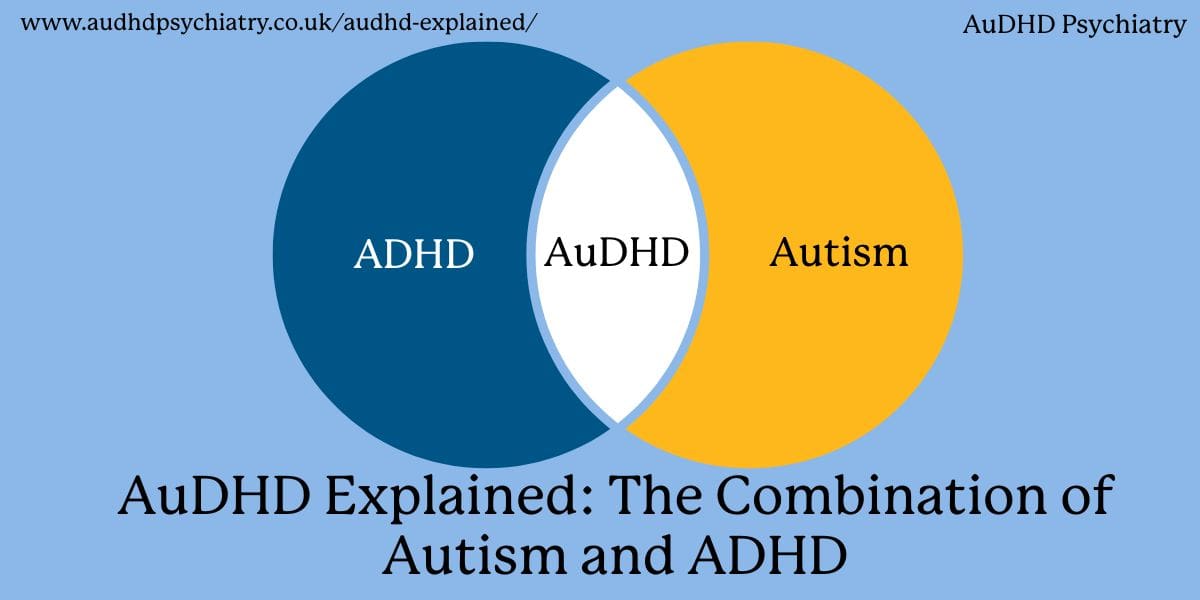
Have you ever tried to capture a thought, but instead end up grappling with a thousand others? Do you want to be organized, but easily lose focus on what you are doing? The combination of these traits can be puzzling to many. This is where AuDHD can help explain these attributes.
AuDHD refers to the case of a person having autism along with attention deficit hyperactivity disorder (ADHD). Both are separate neurodevelopmental disorders, but both can co-exist. Collectively, they can significantly modify the cognitive, emotional, and situational factors a person deals with while simultaneously bestowing certain gifts and challenges. Learning and understanding AuDHD can help you see that what you are experiencing is not a mistake, but a part of your neurotype. Do you suspect having a sensory or focus problem that may be triggered by co-occurring conditions? Educating yourself about autism and ADHD might be the necessary first step.
Additionally, if these traits are significantly affecting work, school, or your overall lifestyle and you’re seeking clarity, book a call with us. We’d be happy to answer your questions and guide you through our comprehensive AuDHD assessment.
What Is AuDHD? Meaning, Definition, and Origins
AuDHD Meaning and Definition
The term AuDHD refers to the comorbidity of Autism and Attention Deficit Hyperactivity Disorder (ADHD)—two separate but overlapping neurodevelopmental disorders that the American Psychiatric Association defines in the Diagnostic and Statistical Manual of Mental Disorders (DSM-5). A person diagnosed as AuDHD exhibits behavioural characteristics of both disorders, combining them into a unique way of thinking, communication, and dealing with life.
While autism is primarily concerned with the areas of social communication, sensory regulation, and behaviour, ADHD typically affects the executive function aspect, including time management, decision making and impulsivity. Their combination can give rise to difficulties in some situations, but also facilitate creativity and in-depth exploration of personal interests.
AuDHD is gaining recognition as part of a wider neurodivergent spectrum in clinical and community settings. This understanding has allowed individuals and professionals to develop integrated approaches that promote both social communication and attention regulation rather than regarding them as separate issues. For further information, feel free to explore how the two differ in our guide on ADD vs. ADHD.

Are Autism and ADHD Related?
There is ongoing research to prove the significant connection between autism and ADHD with traits. Some common features, such as executive dysfunction, challenges in impulse control, and social interaction often responsible for a complicated early diagnosis. Both conditions have been found to have differences in brain circuitry, especially in areas that control emotional regulation, focus, and sensory processing.
Despite their similarities, autism and ADHD are still different illnesses, with distinct diagnostic procedures and therapeutic methods. Understanding both the overlap and the differences helps clinicians to provide more efficient, individualised care according to the distinct needs of each individual.
Is ADHD a Form of Autism?
No, ADHD is not a type of autism. They are different medical conditions that can exist together; each of them has its own terms of diagnosis. Nonetheless, research has shown that there are some genetic similarities between the two conditions, as well as neurobiological alterations in the brain areas that are more functional in executive control and sensory processing.
Both autistic individuals and those children who have ADHD benefit from a structured, educated understanding, and also from a supportive environment that is adaptable to their own experiences. You can deepen your exploration of ADHD symptoms by checking our guide on Common ADHD Symptoms.
How Common Is AuDHD? Prevalence and Research Insights
Observing how often AuDHD is found can help people understand the significant overlap of both autism and ADHD characteristics that individuals experience. Research on children suggests that between 30% and 50% of autistic individuals may also show clinically significant symptoms of ADHD, highlighting how often these two conditions intersect.
In clinical practice, the most frequently observed co-occurred symptoms of neurodivergence included ADHD and autism. Previously, it had been thought that the two conditions were either exclusive—the person diagnosed was with one or the other, but not both. However, with the increasing understanding of neurodevelopmental diversity, the diagnostic systems have indicated that these disorders are indeed coexisting.
Mental health specialists now see AuDHD not only as a clinical marker of a relatively complex neurodiversity but also as a valid description of the neurodivergent experience. Though AuDHD isn’t a medical diagnosis per se, it is important to acknowledge its prevalence in order to reduce stigma and promote better support systems.
Across the UK, educators, healthcare professionals, and employers are becoming more aware. A lot of adults are now realising that their struggles with focus, sensory sensitivities, or social interaction issues were actually caused by undiagnosed autism and ADHD. The understanding of the frequency of AuDHD not only helps early assessment-seeking but also cultivates compassion and connection among the broader neurodivergent community.
Is AuDHD an Official Diagnosis?
Formal vs Non-Clinical Use
Though it is widely known in the neurodivergent community, AuDHD is not officially registered as an independent diagnostic term either in the Diagnostic and Statistical Manual of Mental Disorders (DSM-5) or the ICD-11. Instead, it is a non-clinical term intended for individuals who possess the diagnostic criteria for both autism and attention deficit hyperactivity disorder (ADHD).
In clinical practice, mental health practitioners do not make a diagnosis directly, saying “AuDHD”. On the contrary, they can use the formula autism with ADHD or ADHD with co-occurring autism. The term then becomes a shorthand for people and communities to describe their lived experience in a way status that acknowledges both and the consequent unique interaction.
The Role of Clinical Practice
AuDHD Psychiatry offers neurodivergent assessments, including cases with a dual presentation. We typically employ pre-existing standards for both autism and ADHD, frequently resorting to structured interviews, developmental histories, and standardised instruments. However, even if both conditions are recognised, they are treated as separate diagnoses instead of a single one.
The dual recognition that is possible in a clinical setting can lead to improved treatment practices because the interventions can be designed in a manner that addresses both attention regulation and sensory or social support. For instance, cognitive-behavioural therapy can be utilised for impulsivity and time management, while occupational therapy will tackle the problems associated with sensory processing. If you’re looking for an assessment that takes both conditions into account, book an AuDHD assessment with us today.
The Neurodivergent Community’s Perspective
For a lot of people, AuDHD acts as a bridge between medical and personal identity. The term has been used in the neurodiversity community as a way to spot the specific experience of a person with autism and ADHD characteristics, which the conventional diagnostic machinery fails to capture.
Through using the term AuDHD, one can express the double-pronged executive dysfunction, emotional intensity, and sensory overload, which are relatable for many. For people who are getting to know themselves better, it is worth noting that a professional diagnosis is one thing, while personal recognition has another value. In our guide on Professional vs Self-Diagnosis, you can find out about the benefits and drawbacks of both approaches.
Understanding Autism, ADHD, and AuDHD
Traits of Autism
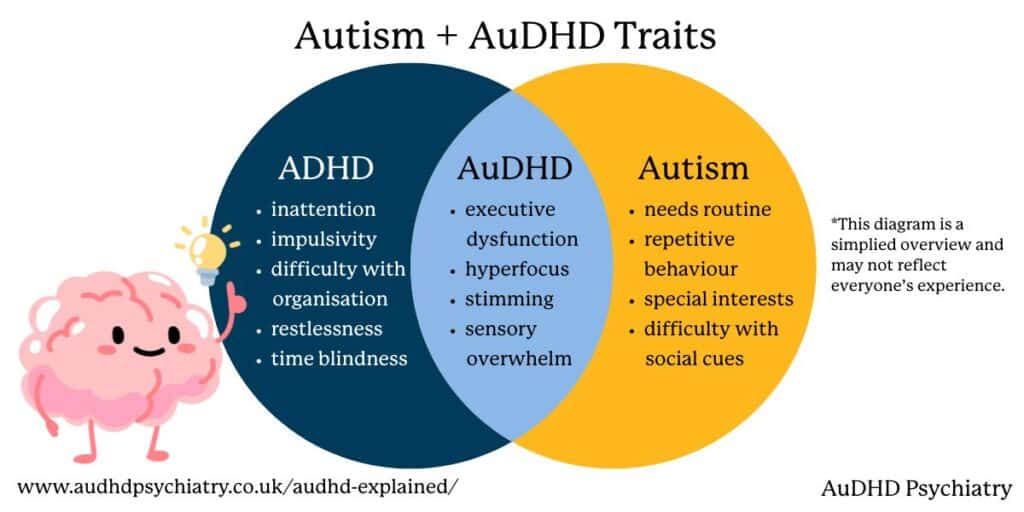
Differences in sensory processing, social communication, and the presence of repetitive or patterned behaviours characterise autism. For instance, an autistic person may not easily be able to interpret facial expressions, tone of voice, or social cues, and is often a structured person in an unpredictable environment. They may also exhibit sensory sensitivities such as being highly sensitive to particular voices, makers, or sounds, and, in some cases, they may replicate movements like fidgeting or hand-flapping for self-regulation.
These autistic traits are not deficits but rather differences in sensory processing and cognitive skills. Autistic individuals often exhibit the following characteristics: remarkable levels of concentration engaged in a particular subject, noticing details that are not obvious to other people, and having a wealth of information in the given area. Autism symptoms in girls may be expressed differently and may even be undetected, as masking might be something they’re used to.
Traits of ADHD
People with ADHD generally have problems with attention, hyperactivity, and impulsivity, which arise from deficits in executive functioning. These ADHD symptoms often include difficulty with time management, concentration, or completing long tasks. Moreover, they tend to have moments of hyperfocus, which is the extreme concentration towards a fidgeting thought alongside their struggles in completing a different task or remembering specifics.
The condition causes ADHD brains to act differently when managing dopamine and motivation, which can result in periods of high productivity followed by burnout or no focus at all.
AuDHD Shared Traits and Internal Contradictions
When autism and ADHD coexist, the intersection creates a complex and sometimes contradictory experience. Most AuDHD experiences an internal struggle between the wish for structure (autism) and newness (ADHD). This back and forth can create daily hurdles, breaking the need for order because of the desire for stimulation.
They can thrive in settings that allow flexibility and routine, such as a structured work environment combined with a creative outlet. Understanding this can help reduce feelings of self-blame and encourage awareness of the needs for focus, rest, and sensory processing.
Brain Functioning and Executive Skills
Neuroscience shows that autistic brains and ADHD brains differ in the way they process sensory input and executive functioning. Autism is more related to sensory issues, while ADHD has problems with attention and reward processing. They both have effects on planning, prioritisation, and emotional regulation.
Knowing and recognising these differences can help mental health professionals and patients to create plans that could help address the concerns.
AuDHD Symptoms and Characteristics
Common AuDHD Symptoms
People with AuDHD typically experience a combination of traits from both autism and ADHD that makes their presentations uniquely layered. Common AuDHD symptoms are executive dysfunction, emotional regulation problems, and hyperfocus, which means getting deeply involved in a task for a longer period.
Social communication issues are also common. Numerous individuals cannot comprehend due to social hints, don’t look at people in the eye, or the give and take of a dialogue for balancing a comment. These experiences do not signify the disinterest of the individuals feeling it, but instead, they reflect the difference in the information processing capacity of the neurodivergent individuals. Other symptoms tied to ADHD symptoms are restlessness, impulsivity, or defective organising.
Musical, sensory angry and sensory joyful are all common emotional states that AuDHD cases experience. For instance, daily life can be emotionally taxing as both autism (the need for routines) and ADHD (the need for new things) fight for their needs to be addressed, especially without proper support or understanding.

Gender Differences and Late Diagnosis
As we’ve briefly mentioned before, autism and ADHD in women are frequently missed. Gender norms and social expectations desire girls to camouflage their differences by imitating their peers, practising their responses, or overcompensating to look socially capable. This masking can lead to being diagnosed when already adults, who are then constantly feeling tired, anxious, and burned out.
These issues are similar to what has been seen in females with both ADHD and autism, where some subtle traits get confused for shyness or perfectionism.
Social Challenges and Sensory Differences
Social situations are powerfully challenging and sometimes lead to the AuDHD individual feeling lost or drained. Also, they may worry about dissecting an interaction, missing a few cues, or they may feel overwhelmed in a conversation or meeting due to sensory stimuli. Sensory overload is especially common in environments with strong lights, background noise, or conflicting stimuli.
In contrast, those AuDHD individuals who are doing activities related to their special interests may experience comfort through expression. Such sensory input and emotional tone distinction often foster compassion and wisdom, which are both strong traits that help families, authorities, and peers provide support for those living with AuDHD.
Treatment Strategies and Assistance for AuDHD
Psychosocial and Behavioural Therapy
The prevalence of AuDHD can be managed in an effective way by the implementation of therapy combined with the introduction of lifestyle-based modifications. Psychosocial intervention approaches, for example, cognitive-behavioural therapy (CBT), will enable you to improve emotional regulation, focus, and self-awareness. For those people who have a hard time with the structured therapy, behavioural coaching, and acceptance-based therapies can provide practical suggestions for coping with executive dysfunction and managing stress.
Therapy is more effective when it is personalised rather than aiming to “fix” behaviours, but rather to improve communication, planning, and sensory needs. Group-based or family sessions can also contribute to developing a better understanding of relationships.
Pharmacological Treatment
In some cases, medications are suggested for alleviating ADHD symptoms like inattention and impulsivity. Stimulant medication (e.g., methylphenidate, lisdexamfetamine) can sometimes deliver results, yet individual reactions can be quite different, especially in cases when there is also autism. In some situations, the non-stimulant alternatives would be a good choice.
Since each person with AuDHD has specific sensitivities, the specialists have to monitor the side effects very carefully and return to a proper dosage as needed. To discover more about available choices, check out these guides:
Lifestyle Changes and Assistance
Apart from therapy and medication, making lifestyle changes is critical in achieving the target of daily functioning. Adopting discipline routines, sleeping well, and exercising regularly can help emotionally. Occupational therapy helps with sensory integration, while peer-led support groups can be helpful in the reduction of isolation, and in the provision of the feeling of belonging.
The combination of professional care, practical tools, and social connection gives the best results. This is how an AuDHD individual gets the chance to build a stable foundation as neurodivergent, with no stigma or pressure to conform.
AuDHD Explained: Conclusion
Recognising AuDHD helps bring clarity to a complex and often misunderstood, unique experience. It acknowledges that some neurodivergent people live with both autistic and ADHD traits—a combination that presents unique strengths as well as distinct challenges. With growing awareness and access to proper assessment, individuals can better understand their needs, manage daily life, and embrace their neurodivergent identity with confidence.
If you believe your experiences might reflect both conditions, reaching out for a formal diagnosis can be the first step towards tailored support and professional guidance. Our clinicians offer comprehensive autism and ADHD assessments designed to uncover the full picture of your neurotype.
For expert-led care, book an AuDHD assessment today. Understanding your AuDHD experience can open the door to greater self-awareness, validation, and long-term well-being.
References:
Craddock, E. (2024). Raising the voices of AuDHD women and girls: exploring the co-occurring conditions of autism and ADHD. Disability & Society, 39(8), 2161–2165. https://doi.org/10.1080/09687599.2023.2299342
Leitner Y. (2014). The co-occurrence of autism and attention deficit hyperactivity disorder in children – what do we know?. Frontiers in human neuroscience, 8, 268. https://doi.org/10.3389/fnhum.2014.00268
Mayes, S. D., Calhoun, S. L., Mayes, R. D., & Molitoris, S. (2011). Autism and ADHD: Overlapping and discriminating symptoms. Research in Autism Spectrum Disorders, 6(1), 277–285. https://doi.org/10.1016/j.rasd.2011.05.009
Author:

Contact Us
We’re here to answer any questions you might have.
Get in Touch
Opening Hours
Contact Form
We’re here to help. Reach out and we’ll get back to you within 24 hours (Monday – Friday).
Leave a Reply