
Is There Medication for Autism? Your Autism Medication Options

Reviewed by: Dr Darren O’Reilly
Published date: February 12, 2026
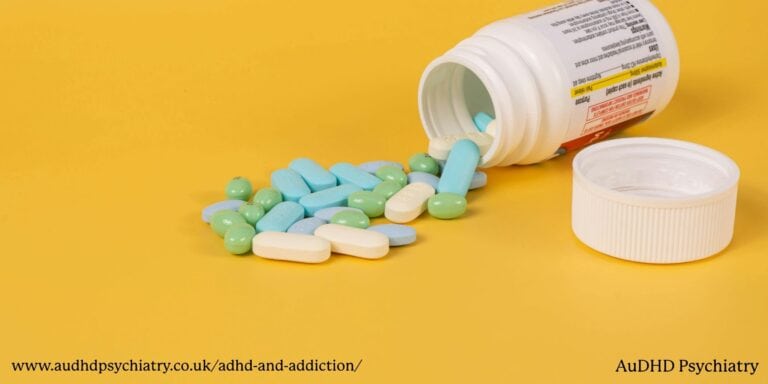
Is there medication for autism? Technically speaking, there is none. However, autism specialists may recommend medication for autism symptoms, specifically to address related behaviours or co-occurring mental health conditions. At AuDHD Psychiatry, a leading specialist-led autism diagnostic clinic in the UK, we may recommend autism medication depending on the result of our specialist’s assessment.
Key Takeaways
- Autism is a neurodevelopmental condition, so it has no cure.
- Autism is primarily managed using behaviour and communication intervention strategies.
- If deemed beneficial, medication treatment for autism may be considered.
- Autism specialists may prescribe autism medication, which is technically medication for autism symptoms secondary to or co-occurring with autism.
- Autism spectrum medications address behaviours related to autism, not the core symptoms of autism itself.
➨ Table of Contents
- What Medications Are Used to Treat Autism?
- How Effective Are Medications in Treating Autism Symptoms?
- What Medications Help With Social Difficulties in Autism?
- What Are the Side Effects of Autism Medications?
- What Non-Medication Treatments Are Available for Autism?
- Frequently Asked Questions
- Can Autism Be Cured With Medication?
What Medications Are Used to Treat Autism?
We reiterate that there are no medications that can cure autism spectrum disorder (ASD) or treat core autism symptoms, such as social communication deficits. However, healthcare providers often prescribe medications to help manage co-occurring conditions and specific behavioural symptoms that can interfere with daily life and learning.
FDA-Approved Low-Dose Antipsychotics: For Irritability and Aggression
Only two medications are currently approved by the U.S. Food and Drug Administration (FDA) to be prescribed to children with autism. These atypical antipsychotics are used specifically to manage irritability and reduce aggression, temper tantrums and self-injurious behaviour.
- Risperidone (Risperdal): Approved for children ages five to 16
- Aripiprazole (Abilify): Approved for children ages six to 17
Medications for Co-occurring Symptoms
Doctors may prescribe other medications off-label in the course of autism treatment to target specific challenges that commonly occur with autism.
For Hyperactivity and Inattention
Attention deficit hyperactivity disorder (ADHD) may co-occur with autism. In this case, a specialist may prescribe:
- Stimulants: Medications like methylphenidate (Ritalin) may be prescribed to treat hyperactivity and impulsivity. However, studies suggest they may be less effective in children with autism than in those with ADHD alone and may cause more side effects.
- Non-Stimulants: Atomoxetine (Strattera), guanfacine (Intuniv, Tenex), and clonidine (Catapres) are alternatives used to manage the hyperactivity, impulsivity, and inattention symptoms of ADHD in individuals with autism.
For Anxiety, Depression, and Repetitive Behaviours
Selective serotonin reuptake inhibitors (SSRIs) are also autism medication options. Drugs such as fluoxetine (Prozac), sertraline (Zoloft), and citalopram (Celexa) are frequently prescribed to help with anxiety and depression.
SSRIs are also sometimes used to target repetitive behaviours (similar to their use in obsessive-compulsive disorder). However, studies on their effectiveness for this specific symptom have shown little to no benefit in children with autism.
Fluoxetine and sertraline may work as a repetitive behaviour medication for autism in adults. A review of medications used in treating the behavioural symptoms associated with autism shows sertraline has a moderate effect against repetitive behaviours in adults. The same review indicates fluoxetine, while ineffective in children, is more effective among adolescents and adults.
For Sleep Disturbances
Medication can also treat or manage sleep disturbances that may co-occur with autism. Melatonin, which is not actually a traditional medicine but a supplement, is commonly used to help children with autism who struggle to fall asleep or stay asleep. It has been shown in controlled studies to improve sleep for some children with ASD.
Other Medications
There is a wide range of medications used to treat behavioural symptoms associated with or co-occurring with autism. Medication for autism-associated symptoms or co-occurring conditions includes antipsychotics and N-methyl-D-aspartate or NMDA-receptor agonists.
- Antipsychotics: Beyond the two FDA-approved options, other antipsychotics like olanzapine, quetiapine, and ziprasidone are sometimes used to manage severe behavioural disturbances.
- Memantine: Some preliminary research has explored the use of the NMDA-receptor agonist, memantine (which is typically used in Alzheimer’s). The results of limited studies show it may be effective in treating social impairment and language function.
Important Considerations
Understand that medication treatment for autism-associated behaviours and conditions carries risks of side effects and adverse reactions. They are also more effective when used alongside other strategies.
- Side effects: Medications can have significant side effects, such as weight gain, sedation, or increased irritability.
- Individualised care: Response to medication varies greatly among individuals. A medication that works for one person may not work for another, or may cause different side effects. This is why we at AuDHD Psychiatry continuously review prescriptions and adjust dosing to ensure medication will provide optimal results.
- Combination with therapy: Medication is most effective when used in conjunction with behavioural therapies and educational interventions.
How Effective Are Medications in Treating Autism Symptoms?
Any medication for autism is primarily effective at managing specific co-occurring symptoms rather than treating the core features of autism itself. The effectiveness of autism medication also varies significantly according to the symptom being treated.
- Irritability, aggression, and tantrums (High Efficacy)
The strongest evidence for medication effectiveness in autism is for the treatment of irritability, which includes aggression, self-injurious behavior, and severe temper tantrums.
The atypical antipsychotics risperidone and aripiprazole, FDA-approved for treating autism-associated irritability in children, have been shown to be effective for irritability, reducing tantrums and aggression in multiple large, controlled studies. For example, studies on risperidone showed a 69% response rate with a significant decrease in irritability scores.
Risperidone is known to be effective among children, adolescents and adults. Aripiprazole is shown to be effective among children and adolescents; there’s limited data on its effect among adults with autism. - Hyperactivity and inattention (Moderate Efficacy)
Medications used to treat ADHD are often prescribed for children with autism who display similar symptoms, though they tend to be less effective than they are in children who have ADHD only.
The stimulant methylphenidate (Ritalin) is moderately effective for hyperactivity in autism, but it’s highly effective in children with ADHD alone. Children with autism are also more likely to experience adverse effects than children with ADHD.
Non-stimulants atomoxetine, guanfacine, and clonidine have shown moderate effects in treating hyperactivity and inattention.
- Repetitive behaviors (Low to Mixed Efficacy)
Treating autism-associated repetitive behaviors (e.g., hand flapping, inflexible routines) with medication has proven difficult.
SSRIs like fluoxetine and citalopram show great success in managing obsessive-compulsive disorder (OCD), but studies in children with autism generally show little to no benefit for these behaviors. However, there is some evidence that SSRIs may be more effective in adults with ASD than in children.
- Social impairment (Minimal/Experimental Efficacy)
There are currently no established medications that improve the social deficits associated with autism. Some, such as D-cycloserine and memantine, show some promise in small studies regarding social withdrawal or interaction, but further research is required to confirm these findings.
- Sleep disturbances (Mixed Efficacy)
Melatonin has been shown in controlled studies to be effective in improving sleep onset and duration for some children with autism.
The above discussion indicates that individuals with autism may be more sensitive to medication side effects than the general population. Furthermore, medications do not alter the core neurological features of autism, but they can be useful in stabilising behavior to allow for better engagement in educational and behavioural therapies.
Get access to life-changing support.
A clinician-led autism assessment provides a clear diagnosis and helps you access the understanding, guidance, and next-step support you may need — fast.
What Medications Help With Social Difficulties in Autism?
There are no medications approved by the FDA specifically to treat the core social communication deficits associated with autism. That said, some medications prescribed for other symptoms have shown preliminary promise or secondary benefits in helping with social difficulties, social withdrawal, and social cognition.
Investigational and ‘off-label’ medications for social impairment research suggest that medication targeting specific neurotransmitter systems (e.g., glutamate) may help alleviate social symptoms. These are still considered experimental and require further study.
- Memantine: Typically used for Alzheimer’s, this drug has been shown in preliminary studies, open-label trials, and case reports to help with social impairment and social withdrawal. One retrospective review noted improvements in social withdrawal in 61% of children and adolescents treated with the medication.
- D-cycloserine: In a small pilot study, this medication (which affects the glutamate system) resulted in statistically significant improvements in social withdrawal, with high doses leading to a 60% decrease in symptom severity.
- Bumetanide: A diuretic medication that, in one study, showed it can significantly improve the severity of ASD symptoms, including those measured in the Social Responsive Scale (SRS).
- N-acetylcysteine: This antioxidant was noted in a study to improve social cognition and social motivation.
- Galantamine: A medication used for dementia that showed parent-rated improvements in social withdrawal in a study of children.
Medications used to treat co-occurring conditions (like ADHD or irritability) can sometimes indirectly improve social functioning by removing barriers to interaction.
- Methylphenidate (Ritalin): While primarily used for hyperactivity and inattention, this psychostimulant may potentially improve social communication, likely by increasing a child’s attention and focus.
- Antipsychotics (Risperidone, Olanzapine, Clozapine): Used primarily to treat irritability and aggression, these drugs have shown benefits for social behaviors in specific contexts. For instance, risperidone was found to be more effective than haloperidol in treating impaired social relations in one comparison study.
- SSRIs (Antidepressants): Although generally less effective in children for repetitive behaviors, some studies in adults (using clomipramine or fluvoxamine) have reported improvements in social relatedness or interaction. Conversely, studies in children have not generally demonstrated these social benefits.
Despite these findings, we must emphasise that pharmacologic treatments for social impairment due to ASD are currently lacking. Behavioral, educational, psychological, and social-relational therapies remain the primary methods for addressing social difficulties in autism.
What Are the Side Effects of Autism Medications?
Medication for autism-associated symptoms or co-occurring conditions can cause a range of side effects. Individuals with autism may also be more sensitive to these side effects than the general population.
Antipsychotics
Antipsychotics carry some of the most significant side-effect risks.
- Weight gain, increased appetite, and metabolic changes in cholesterol or insulin levels
- Sedation (drowsiness, fatigue, and lethargy)
- Movement disorders or extrapyramidal symptoms (EPS), which include tremors, stiffness, restlessness (akathisia), or involuntary muscle movements (dyskinesia)
- Hormonal changes, such as increased levels of the hormone prolactin, which can potentially lead to breast development (gynecomastia) or lactation in both boys and girls
- Other symptoms like drooling, dizziness, and constipation
Stimulants
Medications like methylphenidate (Ritalin) that are often used for inattention and hyperactivity may lead to several side effects.
- Behavioral side effects, such as behavioral activation, which can manifest as increased irritability, emotional outbursts, anxiety, or worsening of repetitive behaviors
- Physical side effects, like decreased appetite, insomnia, and headaches
Non-Stimulants
Drugs such as atomoxetine, guanfacine, and clonidine may cause the following side effects.
- Sedation, which is drowsiness and fatigue (particularly with guanfacine and clonidine)
- Mood and stomach issues, causing nausea, vomiting, decreased appetite, and mood swings or irritability
- Low blood pressure (particularly with clonidine and guanfacine), leading to dizziness
SSRIs
Used for anxiety, depression, and sometimes repetitive behaviors, SSRIs may cause unique reactions, especially in children with autism.
- Behavioral activation or a state of high energy, impulsivity, insomnia, and hyperactivity
- Physical side effects, including an upset stomach, diarrhea, dry mouth, and changes in sleep patterns
Other Medications
Bumetanide, still considered experimental in some contexts, may cause hypokalemia (low potassium levels), polyuria (frequent urination), and loss of appetite. Melatonin, which is generally considered a safe and well-tolerated supplement for sleep, may occasionally cause daytime drowsiness or vivid dreams.
Important: Taking multiple medications simultaneously can increase adverse drug interaction risks and cumulative side effects. Careful monitoring by a healthcare provider is essential to balance symptom relief against potential risks.

Skip the wait.
We’ll help you get the answers you’ve been looking for and ensure you get the right support to move forward.
Talk to our qualified, compassionate team. Get a response in 24 business hours.
What Non-Medication Treatments Are Available for Autism?
Non-medication therapies are considered the primary treatments for autism, particularly its core symptoms. Behavioral therapies have the most evidence supporting their effectiveness in encouraging desired behaviors while discouraging unwanted ones.
Behavioural Approach
Applied behaviour analysis (ABA) is a widely accepted approach that breaks skills down into simple steps to teach positive behaviours. It can be adapted into different styles, such as Discrete Trial Training (DTT), Pivotal Response Training (PRT), Early Intensive Behavioral Intervention (EIBI), and Verbal Behaviour Intervention (VBI).
Developmental Approach
Developmental strategies focus on specific developmental skills, such as language or physical movement. Specific methods include speech and language therapy, occupational therapy, and the Early Start Denver Model (ESDM).
Occupational therapy teaches life skills, such as getting dressed and undressed, eating, and bathing. It can focus on sensory or physical therapy.
Sensory integration therapy helps those who are easily upset by or crave certain sensory inputs cope with sensory stimulation. Physical therapy trains the body to improve physical skills, such as fine motor capabilities.
Educational Approach
Educational approaches are often used in classroom settings to support learning. The Treatment and Education of Autistic and Related Communication-Handicapped Children (TEACCH) is an example, and it uses visual cues (like picture cards) and consistent routines to help children understand their environment and tasks.
Social-Relational Approach
Social-relational treatment modes focus on building emotional bonds and improving social skills. Individual strategies include floor time (developmental, individual differences, relationship-based), social stories, and social skills groups.
Psychological Approach
Cognitive Behavioral Therapy (CBT) remains a popular psychological method of equipping high-functioning individuals to manage co-occurring mental health issues like anxiety and depression.
Alternative Treatments
Many families explore treatments outside of standard medical categories. Alternative treatments include eating a gluten- or dairy-free diet and taking supplements.
Clear answers and timely care. It starts here.
We’ll help you get the answers you’ve been looking for
and ensure you get the right support to move forward.
Frequently Asked Questions
Can Autism Be Cured With Medication?
Autism cannot be cured. Core symptoms of autism, such as the deficits in social communication and interaction, as well as the restricted, repetitive patterns of behaviour, interests, or activities, may be managed using behavioural, developmental, educational, and psychological approaches.
Is there medication for autism? Medication for autism symptoms specifically does not exist. However, medication can help resolve behaviours or conditions that typically co-occur with autism, such as irritability, aggression, temper tantrums, hyperactivity, impulsivity, depression, anxiety, and insomnia.
This is why, upon autism diagnosis, a specialist may prescribe medication. In autism, medication combined with therapy can be particularly effective.
If you believe you or someone you care about has autism, schedule an autism assessment. The sooner you can get assessed and diagnosed, the sooner you can get treated and feel your life change for the better.
References:
American Academy of Child & Adolescent Psychiatry. Autism spectrum disorder: Parents’ medication guide.
https://www.aacap.org/App_Themes/AACAP/Docs/resource_centers/autism/Autism_Spectrum_Disorder_Parents_Medication_Guide.pdf
Bernstein, B. (2025, October 15). Autism spectrum disorder medication. Medscape. https://emedicine.medscape.com/article/912781-medication
Doyle, C. A., & McDougle, C. J. (2012). Pharmacologic treatments for the behavioral symptoms associated with autism spectrum disorders across the lifespan. Dialogues in clinical neuroscience, 14(3), 263–279. https://doi.org/10.31887/DCNS.2012.14.3/cdoyle
Joshi, G. (n.d.). MGH autism spectrum disorderDSM-5 diagnostic symptom checklist. Bressier Program for Autism Spectrum Disorder, Massachusetts General Hospital. https://www.massgeneral.org/assets/MGH/pdf/psychiatry/asd-dsm5-diagnostic-symptom-checklist.pdf
Thabrew, H. (2025, May 1). Which medications are commonly prescribed for autistic people and why?. The Conversation. https://theconversation.com/which-medications-are-commonly-prescribed-for-autistic-people-and-why-251715
U.S. Centers for Disease Control and Prevention. (2024, May 16). Treatment and intervention for autism spectrum disorder. Autism Spectrum Disorder. https://www.cdc.gov/autism/treatment/index.html
Wang, T., Shan, L., Miao, C., Xu, Z., & Jia, F. (2021). Treatment effect of bumetanide in children with autism spectrum disorder: A systematic review and meta-analysis. Frontiers in Psychiatry, 12, 751575. https://doi.org/10.3389/fpsyt.2021.751575
WebMD editorial contributors. (2025, 16 January). What are the treatments for autism?. WebMD. https://www.webmd.com/brain/autism/understanding-autism-treatment
Author:

Request an Assessment
Our clinicians are ready to help you get the complete support you need to manage autism.