

Table of Contents
- Does ADHD Affect Sleep?
- How Does ADHD Affect Sleep? The Brain Science Behind It
- ADHD Sleep Issues: The Most Common Problems
- Insomnia in ADHD: What It Really Looks Like
- ADHD and Sleep Apnoea: Understanding the Risk
- ADHD Sleep Disorders Beyond Insomnia
- Do People With ADHD Need More Sleep?
- ADHD Sleep Medication and Treatment Options
- Practical Tips for Better Sleep With ADHD
- Frequently Asked Questions
- Conclusion
In Focus
- ADHD and sleep problems frequently co-occur, affecting up to 75% of people with the condition.
- The ADHD brain regulates sleep differently, largely due to disruptions in dopamine and circadian rhythm.
- Common ADHD sleep issues include insomnia, delayed sleep phase syndrome, restless legs, and obstructive sleep apnoea.
- ADHD sleep medication, melatonin treatment, and behavioural interventions can all play a role in improving sleep.
- If ADHD is affecting your sleep and daily life, a private ADHD assessment is an important first step.
If you find yourself lying awake for hours, no matter how tired you are, waking repeatedly through the night, or feeling exhausted despite a full night in bed, and you have ADHD, you are far from alone. ADHD and sleep problems are deeply intertwined, affecting a significant proportion of both children and adults with the condition.
AuDHD Psychiatry is a UK-based neurodevelopmental assessment and diagnosis centre specialising in ADHD and autism, and we regularly support people navigating the knock-on effects of their diagnosis—including sleep. In this guide, we explore why ADHD and sleep are so closely linked, what common ADHD sleep disorders look like, and what you can do to start getting better rest.
If sleep difficulties are affecting your daily life and you’re not sure whether ADHD is behind them, consider taking a professional ADHD assessment for adults.
Does ADHD Affect Sleep?
Yes, and quite profoundly. Research consistently shows that ADHD and sleep disturbances are closely linked, with studies estimating that between 25% and 75% of people with the condition experience significant sleep difficulties. This is not simply a matter of having too much energy at bedtime. The links between ADHD and sleep run much deeper, rooted in how the ADHD brain processes time, regulates attention, and manages the neurological systems governing the sleep-wake cycle.
Many people go years (sometimes decades) without an ADHD diagnosis, and those struggling with poor sleep are rarely told it could be connected. This matters because chronic sleep deprivation makes ADHD symptoms considerably worse. When you are not getting enough sleep, attention, impulse control, emotional regulation, and executive function all deteriorate. It becomes a cycle that is very difficult to break without addressing both issues together.
It is also worth noting that poor sleep can mimic ADHD-like symptoms in people who do not have the condition, making an accurate diagnosis all the more important.
How Does ADHD Affect Sleep? The Science Behind
To understand why ADHD and sleep problems so often go hand in hand, it helps to look at what is happening in the brain. Attention deficit hyperactivity disorder (ADHD) is fundamentally a condition of dysregulated brain function, particularly in systems that rely on dopamine and norepinephrine: the same neurotransmitters that regulate alertness, motivation, and the ability to wind down.
Disrupted Circadian Rhythm
One of the most well-documented findings in ADHD sleep research is a disrupted circadian rhythm—the body’s internal clock that governs when we feel awake and when we feel sleepy. In many people with ADHD, this clock runs late. This delayed circadian rhythm means the brain does not begin producing melatonin until much later in the evening than in the general population, resulting in a delayed sleep onset. You simply do not feel tired at a conventional bedtime, even when you know you should sleep.
Dopamine, Neurotransmitters, and Hyperarousal
Dopamine plays a crucial role in the sleep-wake cycle. In ADHD brains, dopamine signalling tends to be lower or less efficient, affecting not just focus during the day, but also the ability to disengage at night. Many people with ADHD describe a state of mental hyperarousal at bedtime: thoughts racing, ideas forming, the brain refusing to switch off. This is closely related to ADHD hyperfocus: the same neurological pattern that makes it hard to disengage from an absorbing task during the day makes it equally hard to disengage from wakefulness at night.
This is a direct extension of the impulsivity and inattention that characterise the ADHD experience during waking hours.
ADHD Sleep Issues: The Most Common Problems
ADHD sleep issues vary from person to person, but several patterns appear repeatedly across both children and adults:
- Difficulty falling asleep: Bedtime resistance is the most commonly reported ADHD sleep problem, driven by an inability to disengage from stimulating activities and a delayed sleep phase that means the brain simply is not ready to sleep at a conventional hour.
- Night wakings and restless sleep: Even when sleep arrives, it is often fragmented. Frequent awakenings and a general restlessness prevent deep, restorative sleep.
- Trouble waking in the morning: Because many people with ADHD fall asleep late and miss early restorative sleep cycles, morning awakenings feel genuinely difficult. This is a physiological consequence of a shifted body clock, not laziness.
- Excessive daytime sleepiness: After a night of poor quality rest, cognitive function, concentration, and emotional regulation all suffer, which can itself look very similar to inattentive ADHD symptoms.
Insomnia in ADHD: What It Really Looks Like
ADHD and insomnia frequently co-occur, and insomnia in ADHD does not always follow a straightforward pattern. It tends to come in a few distinct forms:
- Sleep-onset insomnia: The most common type; the inability to fall asleep even when lying quietly in bed, often for hours. Closely tied to racing thoughts and a delayed circadian rhythm.
- Middle insomnia: Falling asleep without too much difficulty, but waking repeatedly during the night and struggling to return to sleep.
- Early morning awakenings: Waking too early regardless of what time sleep came.
What makes insomnia in ADHD particularly challenging is the vicious cycle it creates: poor sleep worsens ADHD symptoms, and worse ADHD symptoms make it harder to manage the anxiety, restlessness, and hyperarousal that drive insomnia in the first place. Emotional dysregulation and anxiety disorders, which frequently co-occur with ADHD, can deepen this pattern significantly.
Research using actigraphy, wrist-worn devices that objectively measure sleep and wakefulness, has confirmed that the sleep disruption reported by people with ADHD is real and measurable, not simply a subjective perception.
ADHD and Sleep Apnoea: Understanding the Risk
One of the more serious and underappreciated connections is between ADHD and obstructive sleep apnoea (OSA)—a condition in which breathing repeatedly stops and starts during sleep, causing frequent disruptions to sleep quality even when the person has no memory of waking. Studies have found that people with ADHD are significantly more likely to have sleep apnoea than the general population. Sleep apnoea itself causes the kind of cognitive disruption, such as poor attention, impulsivity, and difficulty with executive function, that closely resembles ADHD symptoms.
This creates a real diagnostic challenge: in some individuals, what appears to be ADHD may partly or wholly reflect undiagnosed sleep apnoea. In others, both conditions are genuinely present, and each makes the other worse.
If you or someone you know with ADHD snores loudly, gasps during sleep, or wakes frequently feeling unrefreshed despite adequate time in bed, it is worth raising obstructive sleep apnoea with a healthcare provider. Treating sleep apnoea can sometimes produce a marked improvement in attention and cognitive function. It is also worth noting that iron deficiency, which is more prevalent in people with ADHD, can contribute to restless legs syndrome, another sleep disorder that makes settling at night difficult.
ADHD Sleep Disorders Beyond Insomnia
While insomnia and obstructive sleep apnoea are the most commonly discussed ADHD sleep disorders, they are not the only ones.
Delayed Sleep Phase Syndrome (DSPS)
Delayed sleep phase syndrome is one of the circadian rhythm sleep disorders most closely associated with ADHD, particularly in adolescents and adults. In DSPS, the sleep-wake cycle is shifted significantly later. Someone might naturally fall asleep at 2 am or 3 am and not feel ready to wake until late morning. When work or school demands an early start, the result is chronic sleep deprivation.
People with DSPS are sometimes described as night owls, but it goes well beyond a preference. It is a genuine circadian-rhythm sleep disorder that warrants proper attention.
Restless Legs Syndrome (RLS)
Restless legs syndrome, an uncomfortable urge to move the legs, particularly at night, is more common in people with ADHD than in the general population, and is thought to share some underlying dopaminergic mechanisms with ADHD itself. Iron deficiency is a known contributor to RLS and is worth testing for in those presenting with both ADHD and significant sleep disturbances.
Parasomnias
Some children and adults with ADHD experience more frequent nightmares and night terrors than their neurotypical peers. These parasomnias can further disrupt sleep for the individual and the wider family, and reflect the broader dysregulation of the sleep system that characterises the condition.
If sleep is a persistent struggle and you suspect ADHD may be part of the picture, book an adult ADHD assessment to gain clarity.
Do People With ADHD Need More Sleep?
Not necessarily more sleep, but often better sleep. The recommended 7–9 hours of sleep per night applies to adults with ADHD just as it does to the general population. However, because ADHD brains spend less time in deep, restorative sleep stages, those hours need to be treated as a genuine priority.
Some adults with ADHD do report needing more sleep to function well, likely reflecting the extra cognitive and emotional effort involved in managing ADHD symptoms throughout the day. What is sometimes called ADHD burnout, or the cumulative exhaustion of masking and compensating for the condition, often has disrupted sleep at its core. What is clear is that chronic sleep deprivation is particularly damaging for people with ADHD, directly reducing the brain’s capacity to compensate for the challenges the condition already presents.
ADHD Sleep Medication and Treatment Options
Effective management of ADHD sleep problems typically involves a combination of approaches, developed in partnership with a healthcare provider.
ADHD Medications
ADHD medications, particularly stimulants, have a complex relationship with sleep. When ADHD is well managed during the day, hyperarousal and racing thoughts at night may be reduced. However, ADHD sleep medication taken too late in the day can delay sleep onset and worsen insomnia in ADHD. Timing and dosing are therefore critical, and a prescribing clinician should always be involved in any adjustments.
Melatonin Treatment
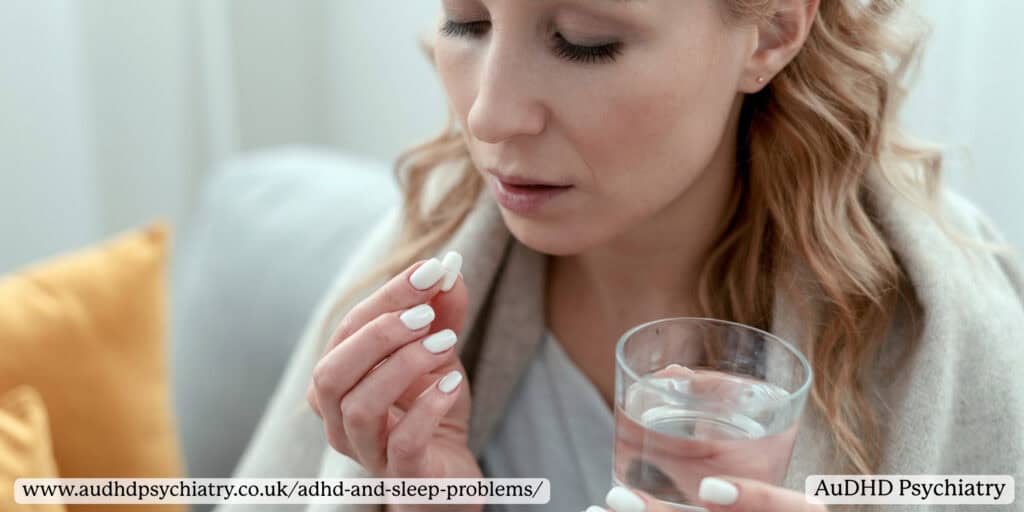
Melatonin treatment is well-supported for ADHD-related sleep problems, particularly in children and adolescents. Supplementing with low-dose melatonin at a consistent time each evening can help shift sleep onset earlier by working with, rather than overriding, the body’s natural sleep systems. In the UK, melatonin is prescription-only and should be guided by a doctor. For more on how different ADHD treatments interact and what to watch for, our guide to managing ADHD medication side effects covers the key considerations in detail.
Cognitive Behavioural Therapy for Insomnia (CBT-I)
CBT-I is widely regarded as one of the most effective treatments for chronic insomnia, with growing evidence for its use in ADHD populations. These behavioural interventions address the thoughts and habits that perpetuate insomnia, like inconsistent bedtime routines, anxiety about sleep, and poor sleep hygiene, and replace them with healthier patterns.
Bright Light Therapy
For those with delayed sleep phase syndrome, morning bright light therapy can help reset the body’s internal clock. Exposure to bright light shortly after waking signals to the brain that the day has begun, gradually shifting the circadian rhythm earlier over time.
Practical Tips for Better Sleep With ADHD
Good sleep hygiene forms the foundation of better rest. Here are evidence-informed strategies that many people with ADHD find genuinely helpful:
- Establish a consistent bedtime routine: Start winding down 30–60 minutes before bed. Keep activities predictable: a warm shower, light reading, or breathing exercises can all have a calming effect. ADHD brains struggle with transitions, so a reliable routine acts as a clear signal that the day is ending.
- Reduce artificial light in the evening: Blue light from electronic devices suppresses melatonin production and delays sleep onset. Limit screen time in the hour before bed, or use blue light filtering settings.
- Keep a consistent sleep schedule: Going to bed and waking at the same time every day, including weekends, helps anchor the circadian rhythm. This is especially important for those with a naturally delayed body clock.
- Optimise your bedroom environment: Keep the room cool, dark, and quiet. White noise, earplugs, or weighted blankets can help those with ADHD who are sensitive to sensory input settle more easily.
- Exercise regularly (but not too late): Regular exercise regulates dopamine levels, reduces anxiety, and promotes tiredness at a natural hour. Aim to finish vigorous activity at least a few hours before bedtime, as late-evening exercise can have the opposite effect on sleep.
Frequently Asked Questions
How does ADHD affect sleep in adults differently from children?
Both groups commonly experience delayed sleep onset, night wakings, and poor quality sleep. In children, behavioural sleep problems, such as bedtime resistance and night terrors, tend to be more prominent. In adults, insomnia in ADHD and excessive daytime sleepiness are more frequently reported, often alongside anxiety disorders.
Can treating ADHD improve sleep?
It can. When ADHD is well managed, hyperarousal and racing thoughts at night may be reduced. However, ADHD sleep medication timing is critical — stimulants taken too late can worsen insomnia. Non-medication treatments such as melatonin treatment and CBT-I are also effective and can be used alongside or instead of medication.
Is there a link between ADHD and sleep apnoea?
Yes. People with ADHD are at a higher risk of obstructive sleep apnoea than the general population. The relationship is bidirectional: sleep apnoea worsens symptoms that look like ADHD, and ADHD is independently associated with higher rates of sleep apnoea. For some individuals, treating sleep apnoea leads to notable improvements in attention and impulse control.
What is the best ADHD sleep routine?
While the best one depends on your lifestyle, a consistent bedtime routine is essential. Begin winding down 30–60 minutes before bed, away from screens and artificial light. Maintain a consistent sleep schedule across all seven days.
ADHD and Sleep Problems: Conclusion
ADHD and sleep problems are not two separate issues; they are deeply intertwined, and understanding that connection is the first step towards doing something about it. Whether you are dealing with insomnia in ADHD, a delayed circadian rhythm, restless nights, or concerns about sleep apnoea, there are real and effective options available.
If you suspect that ADHD may be behind your sleep difficulties, or if a diagnosis has already been made and sleep remains a persistent challenge, taking the next step is worth it. Book a comprehensive ADHD assessment with our team directly—no GP referral required.
References
Cortese, S., Faraone, S. V., Konofal, E., & Lecendreux, M. (2006). Sleep in children with attention-deficit/hyperactivity disorder: Meta-analysis of subjective and objective studies. Journal of the American Academy of Child & Adolescent Psychiatry, 45(7), 787–800. https://doi.org/10.1097/01.chi.0000220316.21530.23
Hvolby, A. (2015). Associations of sleep disturbance with ADHD: Implications for treatment. ADHD Attention Deficit and Hyperactivity Disorders, 7(1), 1–18. https://doi.org/10.1007/s12402-014-0151-0
Kooij, J. J. S., & Bijlenga, D. (2013). The circadian rhythm in adult attention-deficit/hyperactivity disorder: Current state of affairs. Expert Review of Neurotherapeutics, 13(10), 1107–1116. https://doi.org/10.1586/14737175.2013.836301
Konofal, E., Lecendreux, M., & Cortese, S. (2010). Sleep and ADHD. Sleep Medicine, 11(7), 652–658. https://doi.org/10.1016/j.sleep.2010.02.012
Yoon, S. Y. R., Jain, U., & Shapiro, C. (2012). Sleep in attention-deficit/hyperactivity disorder in children and adults: Past, present, and future. Sleep Medicine Reviews, 16(4), 371–388. https://doi.org/10.1016/j.smrv.2011.07.001
Sedky, K., Bennett, D. S., & Carvalho, K. S. (2014). Attention deficit hyperactivity disorder and sleep disordered breathing in pediatric populations: A meta-analysis. Sleep Medicine Reviews, 18(4), 349–356. https://doi.org/10.1016/j.smrv.2013.12.003
Author:


Contact Us
We’re here to answer any questions you might have.
Get in Touch
Opening Hours
Contact Form
We’re here to help. Reach out and we’ll get back to you within 24 hours (Monday – Friday).
Leave a Reply