


ADHD and Anxiety: A Comparison

Reviewed by: Dr Darren O’Reilly
Published date: February 12, 2026
Difficulty concentrating, restlessness, racing thoughts, and sleep problems often lead people to ask the same question: Is this ADHD or anxiety? The two conditions can look similar in daily life, and both can affect attention, mood, work performance, and relationships. This overlap can make it hard to tell them apart without a proper clinical assessment.
At AuDHD Psychiatry, our clinicians specialise in the assessment and treatment of autism and ADHD across the UK. This allows our team to assess ADHD and anxiety carefully and distinguish between them when symptoms overlap. Understanding the relationship between ADHD and anxiety, the differences between them, how they can occur together, and how clinicians diagnose and treat both conditions underscores the importance of an accurate diagnosis for quality patient care.
Key Takeaways
- ADHD and anxiety are separate conditions, but they share some similar symptoms.
- The source of attention problems differs between ADHD and anxiety. ADHD usually involves distractibility and impulsive thinking, while anxiety tends to disrupt concentration through persistent worry or fear.
- ADHD and anxiety often occur together.
- The accurate diagnosis of ADHD, anxiety disorder and ADHD anxiety requires a structured clinical assessment.
- When ADHD or anxiety is properly identified, the right diagnosis can reduce long-term stress.
ADHD and Anxiety: Key Differences and Similarities
Although anxiety disorder and ADHD are separate clinical conditions, they can share several outward signs. Both may involve difficulty concentrating, restlessness, sleep disturbance, and problems managing everyday demands. The difference often lies in what drives those behaviours.
Understanding these distinctions helps clinicians determine if someone has ADHD, a primary anxiety disorder, or both.
What Is ADHD?
Attention-deficit hyperactivity disorder is a neurodevelopmental condition that begins in childhood and often continues into adulthood. It affects the brain systems responsible for attention, impulse control, and activity regulation.
Adults with ADHD may experience:
- Difficulty sustaining attention
- Forgetfulness and losing items
- Poor time management
- Impulsive decisions or interruptions
- Restlessness or feeling mentally ‘on the go’
- Difficulty finishing tasks
Many adults in the UK reach their 30s or 40s before realising their struggles may be linked to ADHD. Work demands, family life, and financial responsibilities can make symptoms more visible.
ADHD is commonly grouped into three presentation types:
Genetics plays a strong role in ADHD. Brain imaging research also shows differences in networks responsible for attention, planning, and impulse control.
What Is an Anxiety Disorder?
An anxiety disorder is a mental health condition marked by persistent worry, fear, or tension that interferes with daily life. Occasional anxiety is a normal human response to stress. Anxiety disorders occur when this response becomes constant or overwhelming.
Common forms include:
- Generalised anxiety disorder
- Social anxiety disorder
- Panic disorder
- Specific phobias
Symptoms of anxiety often include:
- Excessive worry
- Muscle tension
- Racing thoughts
- Irritability
- Sleep problems
- Difficulty concentrating
When anxiety is ongoing, the brain remains in a heightened alert state. This can lead to physical symptoms such as fatigue, headaches, and digestive problems.
Key Differences Between Anxiety and ADHD
The most important distinction between anxiety and ADHD lies in the source of attention problems. In anxiety disorders, attention difficulties come from worry and threat anticipation. The mind focuses on concerns about possible outcomes or problems.
In ADHD, attention shifts easily because of distractibility and impulsivity. The brain struggles to filter competing stimuli. Thoughts move quickly from one idea to another.
Several practical differences can help clinicians separate the two.
- Attention patterns: People with ADHD often struggle to stay focused on tasks that feel boring or repetitive. They may also experience hyperfocus on topics that interest them. People with anxiety can usually focus, but their thoughts repeatedly return to worries or perceived risks.
- Emotional triggers: ADHD emotions often change quickly. Frustration, impatience, or impulsive reactions may appear without prolonged rumination. Anxiety emotions tend to build gradually through repeated worry and anticipation of negative outcomes.
- Motivation and avoidance: ADHD may lead to procrastination due to poor task organisation or difficulty initiating work. Anxiety often causes avoidance because tasks feel threatening or overwhelming.
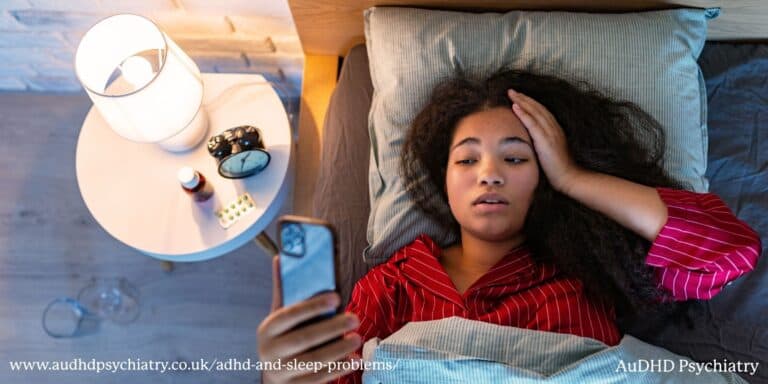
- Sleep difficulties: Both conditions can affect sleep. ADHD may involve a racing mind and irregular sleep routines. Anxiety often involves worry that keeps the mind active at night.
Overlapping Symptoms of Anxiety and ADHD
Although they differ in origin, anxiety and ADHD can look similar on the surface. Several symptoms frequently overlap.
- Difficulty concentrating: Both conditions may cause attention problems. ADHD distractibility stems from reduced attentional control. Anxiety disrupts concentration because worries occupy mental space.
- Restlessness: Adults with ADHD may feel physically restless or unable to relax. Anxiety can produce a similar feeling of tension or agitation.
- Irritability: Sleep problems, stress, and cognitive overload can lead to irritability in both conditions.
- Sleep disturbance: People with ADHD often experience delayed sleep schedules. Anxiety can cause difficulty falling asleep due to worry.
Because these symptoms appear in both conditions, many people search online for explanations about ADHD and anxiety before seeking professional advice. We recommend booking a clinician-led assessment for an accurate diagnosis.
Get access to life-changing support.
A clinician-led ADHD assessment provides a clear diagnosis and helps you access the understanding, guidance, and next-step support you may need — fast.
Can ADHD and Anxiety Occur Together?
Yes. Research shows that anxiety disorders and ADHD frequently occur together. Studies suggest that a large proportion of adults with ADHD meet criteria for at least one anxiety disorder during their lifetime.
Many adults with ADHD develop anxiety at some point in their lives for understandable reasons.
People with undiagnosed ADHD may experience repeated challenges in school, work, or relationships. Missed deadlines, criticism, or feeling “different” from others can lead to chronic stress. Over time, that stress may develop into an anxiety disorder.
Comorbidity can also arise because ADHD affects the brain’s regulation systems, which influence emotional processing.
When anxiety and ADHD occur together, symptoms may interact in complex ways. Anxiety may increase avoidance behaviours, while ADHD may increase impulsive decisions or disorganisation.
Diagnosing ADHD or Anxiety in Adults
Accurate diagnosis requires a structured clinical assessment conducted by a qualified specialist.
ADHD assessment
ADHD diagnosis follows established clinical criteria and typically includes:
- A detailed clinical interview
- Developmental history
- Symptom review across childhood and adulthood
- Standardised questionnaires
- Information from family members or partners, where possible
Clinicians look for a long-standing pattern of inattention, hyperactivity, or impulsivity that begins before age 12.
Anxiety assessment
Anxiety disorders are assessed through a psychiatric evaluation that explores:
- Patterns of worry or fear
- Triggers and avoidance behaviours
- Physical symptoms of anxiety
- Impact on work, relationships, and daily life
The clinician will also assess for other mental health conditions, including depression, trauma-related conditions, and neurodevelopmental disorders.
Why differential diagnosis matters
Some adults assume their symptoms come from anxiety when ADHD is the underlying cause. Others may have both conditions.
Without a careful assessment, treatment may target only part of the problem. For example, therapy focused on anxiety may not address the executive function difficulties associated with ADHD.
Treatment for ADHD and Anxiety
Treatment plans depend on the diagnosis and the individual’s needs. When both ADHD and anxiety are present, clinicians often treat them together.
Psychological therapies
Several evidence-based therapies can support people with anxiety and ADHD.
Cognitive behavioural therapy (CBT) is commonly used to help manage worry, unhelpful thinking patterns, and behavioural avoidance.
For ADHD, therapy may also focus on:
- Time management skills
- Planning and organisation
- Emotional regulation
- Coping with impulsivity
Medication
Medication may be recommended in some cases.
ADHD medications often include stimulant or non-stimulant treatments that support attention and impulse control.
Anxiety disorders may be treated with medications such as selective serotonin reuptake inhibitors (SSRIs) when clinically appropriate.
Treatment decisions always depend on the individual’s health history and symptom profile.
Lifestyle and practical support
Many adults benefit from practical adjustments, such as:
- Structured daily routines
- Workload planning
- Sleep regulation strategies
- Stress management techniques
When ADHD is recognised and supported, anxiety symptoms sometimes improve as well.

Skip the wait.
Get support from experienced ADHD and autism specialists who understand real-life challenges and can help you access care sooner.
Talk to our qualified, compassionate team. Get a response in 24 business hours.
Frequently Asked Questions About ADHD and Anxiety
Clear answers and timely care. It starts here.
We’ll help you get the answers you’ve been looking for
and ensure you get the right support to move forward.
Finding the Right Diagnosis for ADHD and Anxiety
ADHD and anxiety can share many outward symptoms, but they arise from different mechanisms in the brain. A careful clinical assessment can help identify the root cause of attention difficulties, restlessness, and emotional stress.
At AuDHD Psychiatry, our clinicians specialise in the assessment of autism and ADHD across the UK. A structured evaluation can clarify whether a client’s symptoms reflect ADHD, anxiety, or both, so treatment can focus on the areas that matter most for daily life.
References:
D’Agati, E., Curatolo, P., & Mazzone, L. (2019). Comorbidity between ADHD and anxiety disorders across the lifespan. International Journal of Psychiatry in Clinical Practice, 23(4), 238–244. https://doi.org/10.1080/13651501.2019.1628277
Faraone, S. V., & Newcorn, J. H. (2026). Rethinking the role of non-stimulants in ADHD treatment. Nature Mental Health, 4, 9–12. https://doi.org/10.1038/s44220-025-00564-7
Fu, X., Wu, W., Wu, Y., Liu, X., Liang, W., Wu, R., & Li, Y. (2025). Adult ADHD and comorbid anxiety and depressive disorders: A review of etiology and treatment. Frontiers in Psychiatry, 16, 1597559. https://doi.org/10.3389/fpsyt.2025.1597559
Gosmann n.p., et al. (2021). Selective serotonin reuptake inhibitors, and serotonin and norepinephrine reuptake inhibitors for anxiety, obsessive-compulsive, and stress disorders: A 3-level network meta-analysis. The Lancet Psychiatry. https://pmc.ncbi.nlm.nih.gov/articles/PMC8224914/
Melegari, M. G., Bruni, O., Sacco, R., Barni, D., Sette, S., & Donfrancesco, R. (2018). Comorbidity of attention deficit hyperactivity disorder and generalized anxiety disorder in children and adolescents. Psychiatry Research, 270, 780–785. https://doi.org/10.1016/j.psychres.2018.10.078
National Institute for Health and Care Excellence. (2018). Attention deficit hyperactivity disorder: Diagnosis and management (NG87). https://www.nice.org.uk/guidance/ng87
National Institute for Health and Care Excellence. (2011). Generalised anxiety disorder and panic disorder in adults: Management (CG113). https://www.nice.org.uk/guidance/cg113
Nazarova V.A., et al. (2022). Treatment of attention-deficit/hyperactivity disorder: Drugs, psychological therapies, devices, complementary and alternative methods, and trends in clinical trials. Frontiers in Psychiatry. https://pmc.ncbi.nlm.nih.gov/articles/PMC9713849/
Selective serotonin reuptake inhibitors (SSRIs). (n.d.). ResearchGate. https://www.researchgate.net/publication/376079664_Selective_Serotonin_Reuptake_Inhibitors_SSRIs
Author:

Request an Assessment
Our clinicians are ready to help you get the complete support you need to manage ADHD.