



Table of Contents
- A Brief History of the Autism Symbol
- The Puzzle Piece: Origins and Controversy
- The Autism Infinity Symbol: What It Means
- The Gold Infinity Symbol
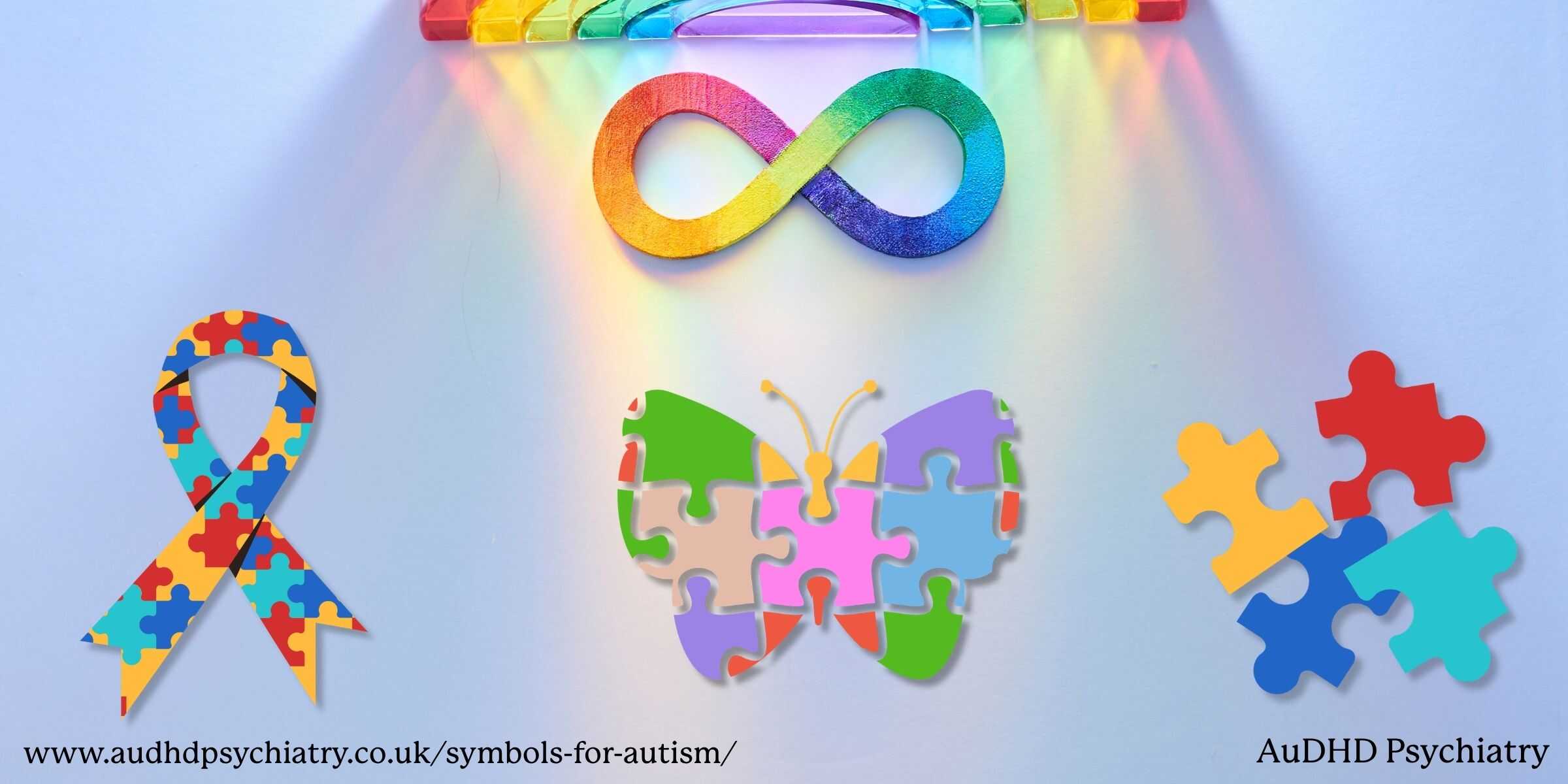
- Other Symbols Used in the Autism Community
- Autism Awareness vs. Autism Acceptance: Why the Distinction Matters
- Why Symbols Matter
- FAQs
- Conclusion
In Focus
- The traditional puzzle piece symbol was the original autism symbol, but many autistic people now find it controversial.
- The autism infinity symbol, a rainbow-coloured infinity symbol, has become the preferred symbol within many autistic communities.
- The gold infinity symbol is also widely used. It represents the unique qualities and value of autistic individuals.
- These symbols play a significant role in shaping how autism is perceived in daily lives and in public culture.
- Understanding these various symbols helps you engage more respectfully with the autistic community.
If you have ever looked up symbols for autism and found multiple different answers, such as the puzzle piece, the infinity loop, or even a gold symbol, keep reading. Many people feel confused about what each symbol means and which one is considered respectful today. This is not just a design question. These symbols reflect deeper shifts in how autism is understood, discussed, and supported.
Historically, the puzzle piece dominated autism awareness. However, many autistic people now challenge its meaning. In its place, newer symbols such as the rainbow infinity loop have emerged, representing acceptance, neurodiversity, and the value of different ways of thinking.
At AuDHD Psychiatry, a UK-based neurodevelopmental assessment and diagnosis centre, we regularly support adults and families who have the same questions. In this guide, we explain what each autism symbol means, why opinions have changed, and how to engage with the autistic community in a respectful, informed way.
If you are exploring whether autism may apply to you or someone you care about, you can learn more or begin the process with an autism assessment.
A Brief History of the Autism Symbol
Symbols carry meaning far beyond their visual form. They can build community, challenge stigma, or reinforce harmful ideas. The history of autism symbols reflects a broader shift in how we understand autism from a mystery of autism to be solved to a natural part of human neurological diversity.
For decades, the multi-coloured puzzle piece dominated autism awareness campaigns and charity merchandise alike. But over time, many autistic people spoke out. They explained why that image did not represent them or their experience. In response, newer symbols emerged. Chief among them was the infinity loop: a symbol that better reflected the values of acceptance, diversity, and neurodiversity.
Today, there is no single agreed-upon symbol for autism. Different advocacy groups and individuals use different visual representations depending on their values. Understanding each one can help you engage more thoughtfully with ongoing conversations around autism.
Could this be part of your story?
Try Our Free Autism Test Book a Screening CallOur specialist clinicians are here to help you understand yourself better.
A Timeline of Change: How Autism Symbols Have Evolved
Here is a quick overview of how autism symbolism has changed over the decades:
- 1963: The puzzle piece logo is introduced by the National Autistic Society in the UK.
- 1994: Autism Speaks adopts and globalises the multi-coloured puzzle piece.
- Early 2000s: The neurodiversity movement gains momentum. Autistic self-advocates begin calling for new representation.
- 2010s: The infinity symbol is adopted by autistic-led communities. It becomes one of the most recognised symbols of autism acceptance.
- Present day: The rainbow infinity symbol is now widely seen as a more positive alternative to the puzzle piece by many autistic people worldwide.
The Puzzle Piece: Origins and Controversy
Where Did the Puzzle Piece Symbol for Autism Come From?
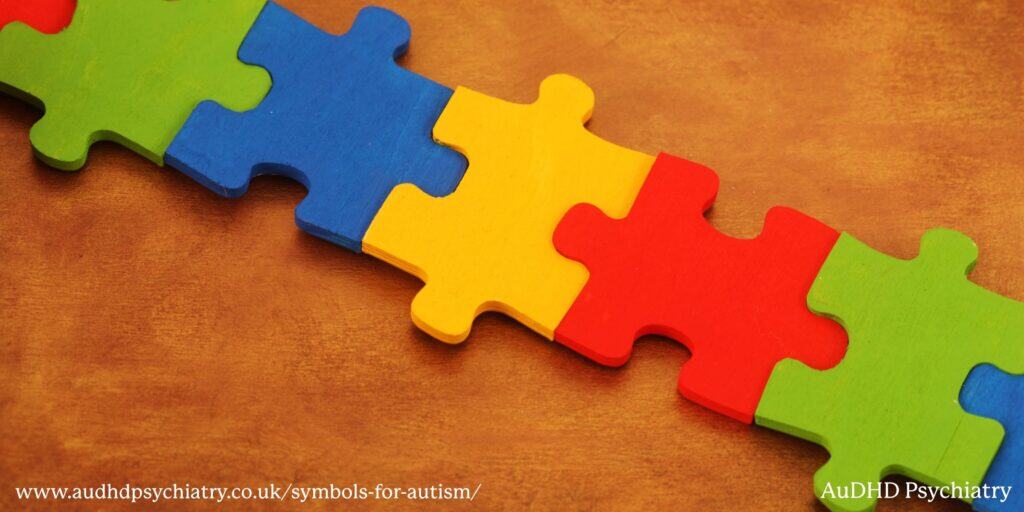
The puzzle piece logo for autism was introduced in 1963 by the National Autistic Society in the United Kingdom. The original design featured a puzzle piece with a weeping child at its centre. The idea was that autism reflected the complexity of autism, a condition not yet fully understood.
Over the following decades, the multi-coloured puzzle piece spread globally. Autism Speaks in the United States adopted it and made it famous. It appeared on ribbons, T-shirts, car stickers, and autism awareness campaigns, especially throughout April, the month of World Autism Awareness Day.
Why Is the Puzzle Piece Controversial?
Despite its widespread use, many autistic people and allies object to the puzzle piece. The criticisms fall into three key areas:
- It implies incompleteness. The imagery suggests something is missing from autistic people. It fails to acknowledge their unique strengths and qualities. Autism is not a problem to be solved.
- It carries negative connotations. The puzzle piece logo is linked to negative stereotypes and organisations that have historically treated autism as a disorder to be cured.
- It was designed without autistic input. It was created by non-autistic people, for non-autistic audiences. This is part of a broader pattern that the autistic community has pushed back on.
This does not mean everyone who uses the puzzle piece is causing harm. Many parents, carers, and professionals have used it in good faith. But its history explains why newer symbols and more positive alternatives have emerged in recent years.
The Autism Infinity Symbol: What It Means
The Origins of the Infinity Symbol
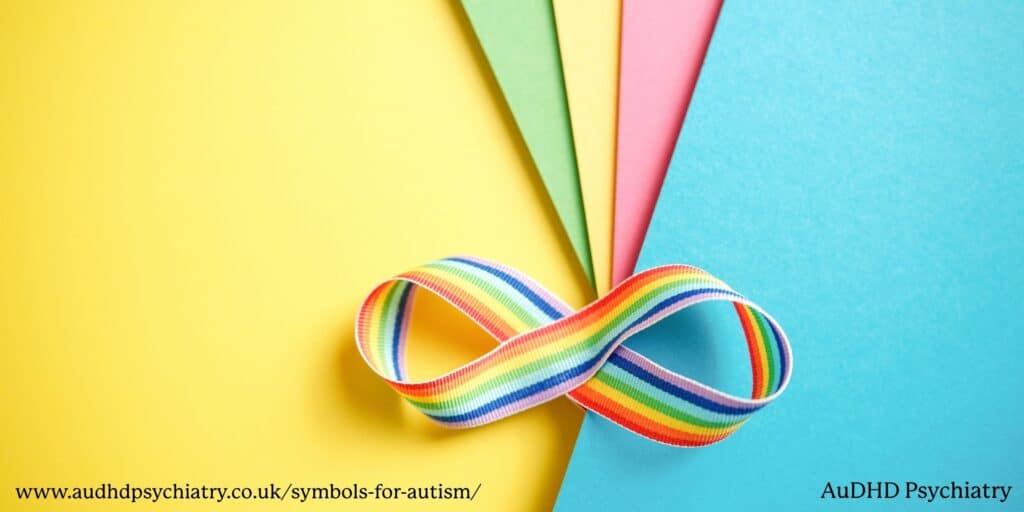
The autism infinity symbol emerged from the neurodiversity movement. It has become the most widely embraced of the various symbols used within autistic communities. It takes the form of an infinity loop, a figure-of-eight on its side, rendered in rainbow colours or gold.
The symbol was popularised in part by the Autistic Self Advocacy Network (ASAN). It has been embraced by many autistic-led organisations globally. Unlike the puzzle piece, autistic people chose this symbol themselves. That is central to its significance.
What Does the Infinity Symbol Represent?
The infinity symbol carries several layers of meaning. The loop represents the idea that autistic ways of thinking and experiencing the world are not lesser; they are simply different. It speaks to the limitless potential of autistic individuals. This stands in direct contrast to the incompleteness implied by the puzzle piece.
The rainbow spectrum of different colours represents the wide diversity of the autism spectrum. Autism looks different in every person—in how it presents, how it is experienced, and what support is needed. The vibrant colours acknowledge this diversity. They serve as powerful symbols and visual representations of the autistic experience.
For many autistic people, using the infinity symbol is a deliberate act of self-advocacy. It says: we are not a puzzle to be solved. We are whole people with unique contributions to make — something countless famous autistic people throughout history have demonstrated. We deserve to be understood on our own terms.
The Infinity Symbol and the Neurodiversity Movement
The rise of the infinity symbol is closely tied to the broader neurodiversity movement. This movement holds that neurological differences, including autism, ADHD, and dyslexia, are natural variations in the human genome, not deficits. It plays an important role in shifting the focus from cure to accommodation and acceptance.
For families navigating an autism diagnosis, this shift in perspective is genuinely meaningful. It reframes what a diagnosis means: not a limitation, but a starting point for personal growth and understanding. If you are concerned about a child and wondering what to look for, our guide to child autism signs is a helpful starting point, as is our guide on the types of autism is a good place to start.
The Gold Infinity Symbol
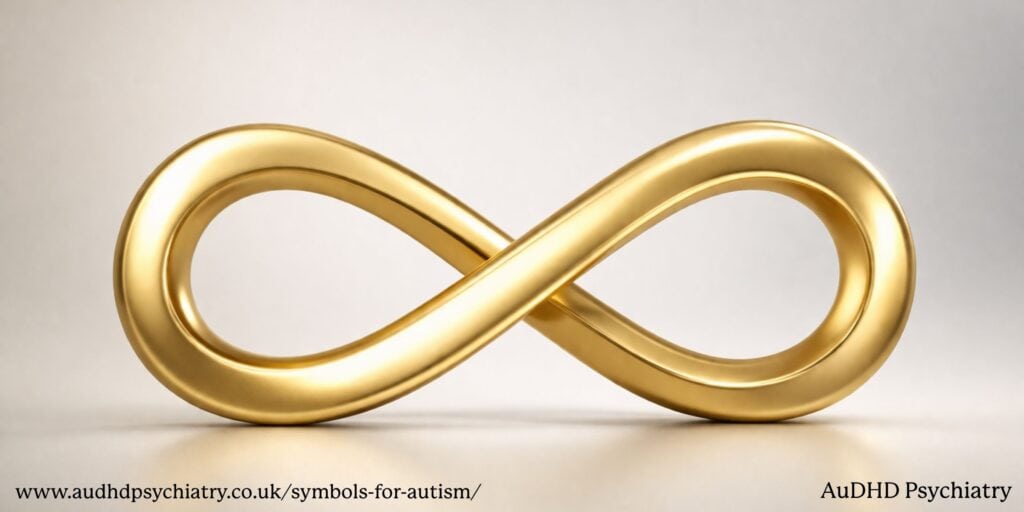
Alongside the rainbow-coloured infinity symbol, the gold infinity symbol has gained significant traction, particularly in the UK. Gold connects to the chemical symbol for gold, Au, which is also the beginning of the word ‘autism’. For many, gold carries connotations of value and worth. It quietly acknowledges the unique contributions of individuals with autism.
The gold infinity symbol is frequently used on World Autism Awareness Day: April 2nd. It is worn as a pin badge or incorporated into clothing, jewellery, and fundraising materials. It has become especially popular in online autism communities, where it appears as a profile picture overlay or emoji.
Like the rainbow version, the gold symbol is associated with autistic-led advocacy. It reflects a neurodiversity-affirming approach to autism. Many autistic individuals consider it more respectful than the puzzle piece.
Rainbow vs. Gold: Is There a Difference?
Both versions carry the same core message: autism is a natural and valued part of human diversity. The choice between them comes down to personal preference. Some use the gold symbol to honour the Autism connection. Others prefer the rainbow hues as visual cues that capture the diversity of the autism spectrum.
Neither is more ‘correct’. What matters most is the values behind the symbol: acceptance, respect, and the understanding that autistic people with different abilities deserve support, not a cure.
Other Symbols for Autism Used in the Community
The Spectrum Wheel
Some individuals and advocacy groups use a spectrum wheel or colour wheel to represent autism. This visual acknowledges that autism is not a linear spectrum from ‘mild’ to ‘severe’. Instead, it is a complex constellation of traits that varies enormously from person to person — encompassing presentations such as pathological demand avoidance that do not fit neatly into traditional categories.
The Butterfly Symbol
In some communities, the butterfly symbol represents transformation and identity. It is a positive reframing of what it means to experience the world differently. It reflects ideas of personal development and growth. Whilst not as widely recognised as the infinity symbol, it is used in certain autistic-led creative and advocacy spaces.
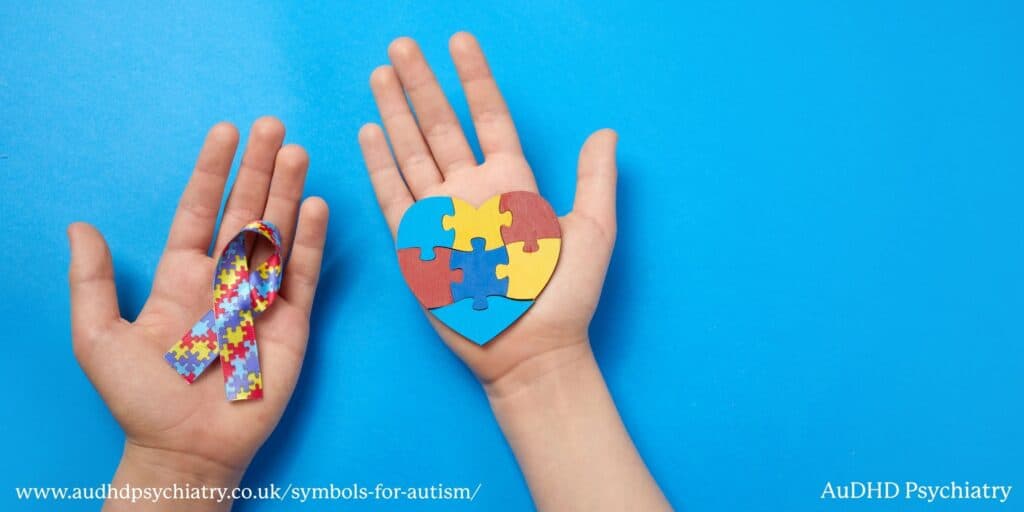
The Autism Awareness Ribbon
The autism awareness ribbon, typically in bright colours or as a rainbow ribbon, has been used as a visual marker of support. Like the puzzle piece, it is more commonly associated with awareness than acceptance. Its meaning varies depending on context.
The Blue Ribbon, Blue Lights, and the “Light It Up Blue” Campaign
You may have seen blue lights on buildings or the colour blue used prominently during April. This is linked to the “Light It Up Blue” campaign—a major autism awareness campaign promoted by Autism Speaks. Supporters describe blue as a calming colour and a primary colour of autism awareness.
However, this campaign has been criticised by many in the autistic community. The blue ribbon and blue lights are associated with the same pathologising approach as the puzzle piece. Many autistic people and advocacy groups prefer the rainbow colours of the infinity symbol. They see it as a more respectful and empowering representation.
A Quick Comparison of Autism Symbols
Here is a summary of how the most common symbols for autism ompare:
- Multi-coloured puzzle piece: Traditional and widely known, but carries negative connotations within many autistic communities.
- Rainbow infinity loop: Neurodiversity-affirming and autistic-led. Increasingly, the widely recognised symbol of autism acceptance.
- Gold infinity symbol: Connects to the Au chemical symbol. Especially significant in the UK and online autistic communities.
- Butterfly symbol: Represents personal development and identity. Used in creative and advocacy spaces.
- Autism awareness ribbon: A visual marker of support. Meaning varies by context.
- Blue ribbon / blue lights: Associated with the “Light It Up Blue” campaign. Controversial within many autistic communities.
Autism Awareness vs. Autism Acceptance: Why the Distinction Matters
You may have noticed that some organisations speak of autism awareness. Others speak of autism acceptance. This is not just a matter of semantics. The two terms reflect quite different approaches to understanding autism spectrum disorder.
Autism awareness campaigns have often focused on the challenges of autism, such as raising money for research into causes and treatments. Acceptance of autism, by contrast, focuses on understanding, accommodating, and valuing autistic people in their own way. This includes their social interaction styles, sensory needs, and daily lives.
How Do Symbols Fit Into Autism Advocacy?
The puzzle piece logo has historically been associated with awareness. The rainbow infinity sign is strongly associated with acceptance. When you choose which symbol to use, or which organisations to support, you signal which approach you align with.
This is essential for families, schools, employers, and healthcare providers. The autistic people you support or work with will likely notice which symbol you use. It can affect how safe and understood they feel, particularly those who experience sensory overload or anxiety in environments that do not feel affirming.
What the Research and Autism Society Says
Research carried out by autistic-led organisations consistently shows that autistic adults prefer acceptance-focused language and symbolism. Many report feeling dismissed when awareness-focused framing is used. Listening to these voices is part of providing genuinely supportive care.
In recent years, a growing movement within the autism society and broader community has emerged. It moves away from awareness-only framing and towards genuine acceptance of individuals with autism: recognising their unique qualities, different abilities, and the value they bring to a more inclusive society.
If your experiences resonate with the symptoms of autism, book an autism assessment with us. We’ll be happy to answer questions and guide you to clear answers.
Why Symbols Matter: Powerful Tools for Change
It might be tempting to think that symbols are superficial. A logo on a T-shirt does not change lived experience. But symbols are powerful tools that communicate values and values shape culture.
When an autism awareness campaign uses the puzzle piece, it sends a message about how autism is understood. When an autistic person wears a gold infinity pin, they make a statement about identity and self-acceptance. When a school chooses one symbol over another, it influences how students, teachers, and families foster understanding of autism in their daily lives.
The Practical Impact of Autism Symbols
These symbols play a vital role in the experiences of individuals who have recently received a diagnosis or who are exploring whether an assessment might be right for them. They represent different perspectives of individuals within the autistic community, and different visions of what a truly supportive environment looks like.
Here are some practical ways that symbol awareness makes a difference:
- In schools: Acceptance-focused symbols and visual cues help autistic students feel respected and included. They support the development of social skills in an affirming context.
- In healthcare: Providers who use neurodiversity-affirming symbols build trust with autistic patients and families. This is especially important when discussing early intervention and ongoing support.
- In the workplace: Employers who use the infinity symbol signal that they value the unique contributions of autistic employees, understanding autism as a difference, not a deficit.
- In personal relationships: Being aware of which symbol a loved one prefers shows that you are listening to their experiences. It helps create a supportive environment in daily lives.
Visual representations carry real weight in the daily lives of autistic people. Choosing symbols thoughtfully is one small but meaningful way to foster understanding and build a more inclusive society.
Frequently Asked Questions
What Is the Symbol for Autism?
There is no single official symbol for autism. The most recognised symbols are the puzzle piece and the infinity loop. The puzzle piece has a long history, but now carries negative connotations for many autistic people. The rainbow infinity symbol, particularly in rainbow or gold, is increasingly preferred.
What Does the Autism Infinity Symbol Mean?
The autism infinity symbol represents the idea that autism is not a deficiency but a natural variation in human neurology. The infinite loop reflects the limitless potential of autistic individuals. The rainbow colours acknowledge the wide diversity of the autism spectrum.
Why Is the Puzzle Piece Controversial?
The puzzle piece logo implies that autistic people are incomplete or that something is missing from them. It carries negative connotations and is associated with organisations that have historically taken a pathologising approach to autism. It was also designed without meaningful input from autistic individuals.
What Does the Gold Infinity Symbol Mean in Autism?
The gold infinity symbol connects to the chemical symbol for gold, Au, which echoes the beginning of the word ‘autism’. Gold represents value and worth. Like the rainbow infinity sign, it reflects the values of acceptance of autism.
Should I Use the Puzzle Piece or the Infinity Symbol?
Follow the preferences of autistic people themselves. Many autistic adults and advocacy groups prefer the rainbow infinity sign because it reflects values of acceptance and the acceptance of individuals with autism. If you are working with or supporting autistic individuals, always ask them which symbol they feel comfortable with.
What Colours Are Associated with Autism?
Several different colors are linked to autism. The colour blue is associated with the “Light It Up Blue” campaign promoted by Autism Speaks. However, many autistic people prefer the rainbow colours of the infinity symbol. Gold is also widely used. Each solid colour or combination carries different meanings and aligns with different values within the autism society.
Ready to get clarity?
Try Our Free Autism Test Book a Screening CallGet a comprehensive assessment from a specialist who understands neurodiversity.
Symbols for Autism: Conclusion
The evolution from the traditional puzzle piece symbol to the rainbow-coloured infinity symbol tells a broader story. Our understanding of autism spectrum disorder has changed from a mystery of autism to be solved, to a difference to be understood and embraced. Whether you are a parent, a professional, or someone exploring your own neurodevelopmental profile, understanding these various symbols and their meanings is part of engaging respectfully with the autistic community.
These powerful tools, these visual representations, shape the acceptance of autism in schools, workplaces, healthcare settings, and personal relationships. They play a crucial role in building a more inclusive society that recognises the unique contributions of every autistic individual.
If any of this resonates with you, or if you are wondering whether an autism assessment might be right for you or someone you love, you do not have to figure it out alone. Book an adult autism assessment today and take the first step towards understanding yourself more fully.
References
Armstrong, T. (2010). Neurodiversity: Discovering the extraordinary gifts of autism, ADHD, dyslexia, and other brain differences. Da Capo Press.
Autistic Self Advocacy Network. (2021). About ASAN. https://autisticadvocacy.org/about-asan/
Jaarsma, P., & Welin, S. (2012). Autism as a natural human variation: Reflections on the claims of the neurodiversity movement. Health Care Analysis, 20(1), 20–30. https://doi.org/10.1007/s10728-011-0169-9
Kapp, S. K., Gillespie-Lynch, K., Sherman, L. E., & Hutman, T. (2013). Deficit, difference, or both? Autism and neurodiversity. Developmental Psychology, 49(1), 59–71. https://doi.org/10.1037/a0028353
Kenny, L., Hattersley, C., Molins, B., Buckley, C., Povey, C., & Pellicano, E. (2016). Which terms should be used to describe autism? Perspectives from the UK autism community. Autism, 20(4), 442–462. https://doi.org/10.1177/1362361315588200
Pellicano, E., & Stears, M. (2011). Bridging autism, science and society: Moving toward an ethically informed approach to autism research. Autism Research, 4(4), 271–282. https://doi.org/10.1002/aur.201
Find the Right Assessment
Our clinicians are ready to help you get the complete support you need.
Author:




Contact Us
We’re here to answer any questions you might have.
Get in Touch
Opening Hours
Contact Form
We’re here to help. Reach out and we’ll get back to you within 24 hours (Monday – Friday).
Leave a Reply