

ADHD medication side effects: what to expect, and how to manage them

Reviewed by Dr Darren O’Reilly, Chartered Psychologist and Clinical Director
Review and publication details
Clinically reviewed by Dr Darren O’Reilly, DPsych, Chartered Psychologist (CPsychol), HCPC registered practitioner psychologist, registration number PYL041661 (check the HCPC register).
AuDHD Psychiatry is the trading name of ADHDdegree Ltd, a company registered in Scotland, company number SC822923. Registered office: 3f1 Third Floor, Hill Street, Edinburgh, EH2 3JP. Registered with the ICO, number ZB823033.
In this article
Page summary
ADHD medication side effects include common, mild ones: reduced appetite, trouble sleeping, headache and dry mouth. A few need a call to your prescriber, 111 or 999 straight away. Methylphenidate, lisdexamfetamine and the non-stimulant atomoxetine each have their own list of side effects. Heart rate, blood pressure and weight are checked during treatment, as is a child’s height. Everyday steps include taking a dose with or after food. Changing, switching or stopping is agreed with your prescriber, unless your leaflet says to stop at once. AuDHD Psychiatry assesses adults online, and our prescribers check side effects during treatment.
Noticing a side effect after you start ADHD medication can feel worrying. It doesn’t mean you’ve done anything wrong. A side effect is information your prescriber needs. Telling them about it is part of treatment, not a complaint.
At a glance
- Most common: reduced appetite, trouble sleeping, headache and dry mouth.
- Get help straight away: chest pain, a racing or irregular heartbeat, seeing or hearing things that aren’t there, fits, or thoughts of harming yourself.
- Children: height is checked every six months, and weight every three months at age 10 and under.
- Checks for everyone: heart rate and blood pressure are measured before and after each dose change, and every six months.
- Stopping: don’t stop suddenly without talking to your prescriber first.
Why does ADHD medication cause side effects?
ADHD medicines change brain activity, and that change reaches more than attention alone. Stimulants such as lisdexamfetamine (Elvanse) work by raising activity in certain parts of the brain [1]. Atomoxetine isn’t a stimulant. It raises noradrenaline, one of the brain’s chemical messengers [2]. Many listed side effects affect appetite, sleep, heart rate and mood [1][2][3]. With methylphenidate (Ritalin), your side effects also depend on the type and brand you take [3].
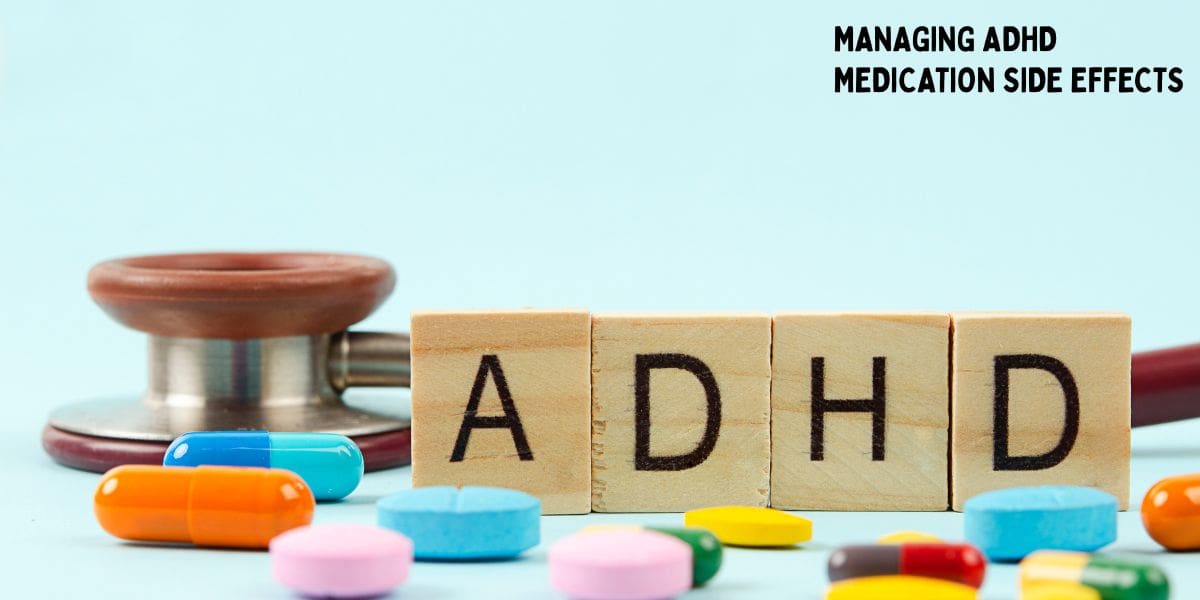
Titration is the way a dose is found: it starts low and goes up in steps. NICE guidance says titration should be slower, with more frequent checks, when autism, anxiety or depression is also present [4]. A slower start gives each step time to be checked before the next one. Our guide to starting ADHD medication covers the early steps in more detail.
What are the common side effects of ADHD medication?
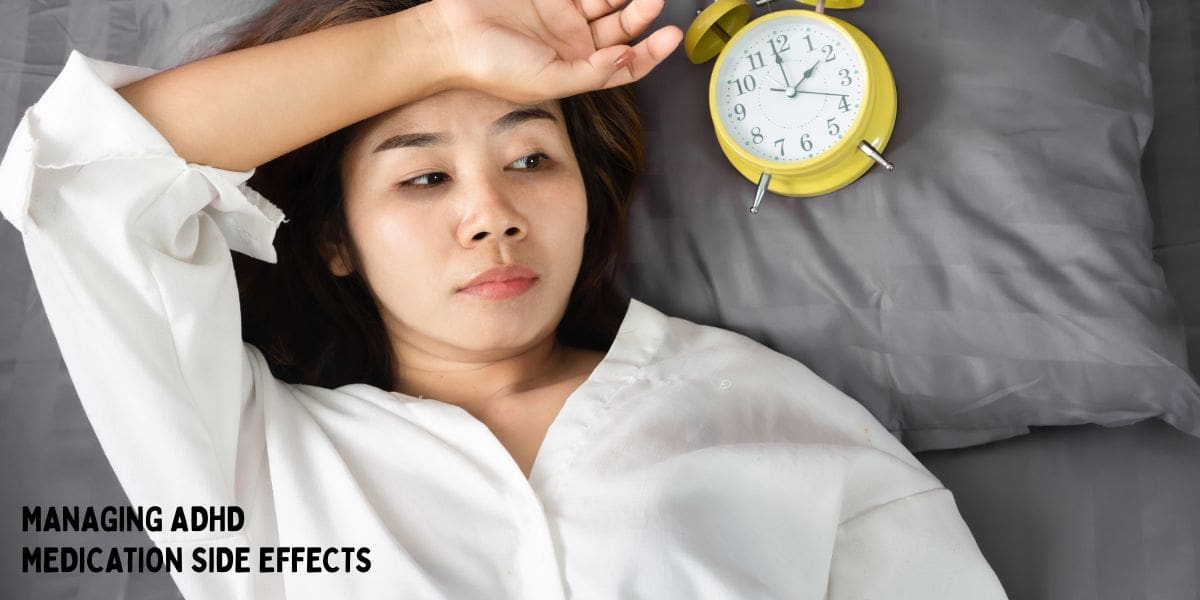
Appetite loss, poor sleep, headache and dry mouth appear on every medicine’s list. The table shows what the NHS or each patient leaflet lists as common, in the source’s own terms.
| Medicine | Common side effects, as the source lists them |
|---|---|
| Methylphenidate | More than 1 in 100 people: headaches, trouble sleeping, loss of appetite, stomach ache, dry mouth, feeling or being sick [3] |
| Lisdexamfetamine (Elvanse) | More than 1 in 10 people: decreased appetite, being unable to sleep, dry mouth, headache. Up to 1 in 10 people: feeling agitated, anxious, irritable or low, mood swings, tiredness, dizziness, tics, a fast heartbeat, raised blood pressure, weight loss, sweating, changes in sex drive [1] |
| Atomoxetine, in adults | More than 1 in 10 people: feeling sick, dry mouth, headache, decreased appetite, sleep problems, raised blood pressure and pulse [2] |
A leaflet lists everything that has been reported, so a long list doesn’t mean you’ll have every item on it. “More than 1 in 10” is the leaflet’s way of saying very common, and “up to 1 in 10” means common. Some side effects ease with time. Dry mouth usually gets better quite quickly [3]. Weight loss can happen in the first few months, and your weight usually comes back once you’re used to the medicine [3]. Keep taking your medicine, but tell your doctor if side effects bother you or don’t go away [3].
Which side effects need help straight away?
Serious side effects are less common, affecting fewer than 1 in 100 people taking methylphenidate [3]. With methylphenidate, call your doctor or 111 for any of these [3]:
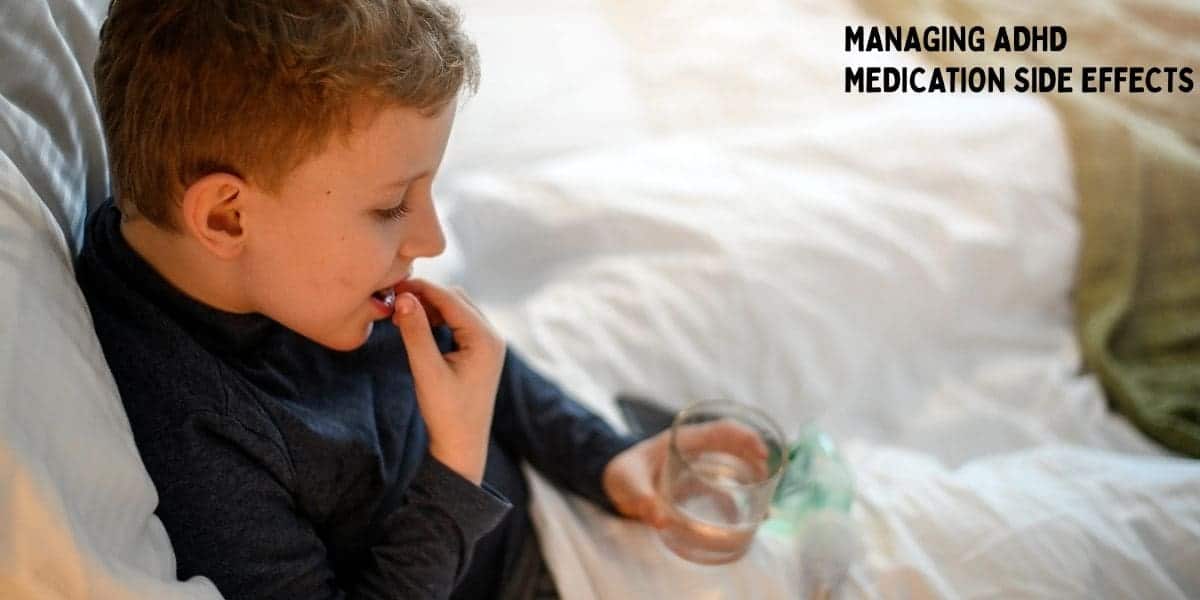
- Changes in mood or personality, such as feeling aggressive, irritable, depressed, anxious or tense.
- A fast or irregular heartbeat, or new tics in your face.
- Seeing, feeling or hearing things that aren’t real.
Call 999 or go to A&E for thoughts of harming yourself or others [3]. The same applies to chest pain, signs of a stroke, or a fit [3]. Call 999 for a serious allergic reaction, such as a swollen mouth or throat [3].
On lisdexamfetamine, see a doctor at once for psychosis, fits, an abnormal heart rhythm, breathlessness or swollen legs [1]. On atomoxetine, stop and call your doctor at once for dark urine, yellow skin or eyes [2]. Tenderness under the right ribs, or unexplained sickness, tiredness or itching, count too [2].
What side effects can children have on ADHD medication?
Children share many adult side effects, and their growth is checked as well. Methylphenidate taken for more than a year can slow a child’s growth, which happens in fewer than 1 in 10 children [5]. For children aged 10 and under, NICE guidance adds a weight check every three months, with growth plotted on a chart [4]. If a child’s height is significantly affected, NICE guidance allows for a planned break over the school holidays [4]. The specialist decides whether a break is needed. If sleep is a problem on methylphenidate, ask the prescriber about the timing of your child’s last dose [5]. The NHS suggests it’s at least 6 hours before bedtime [5].
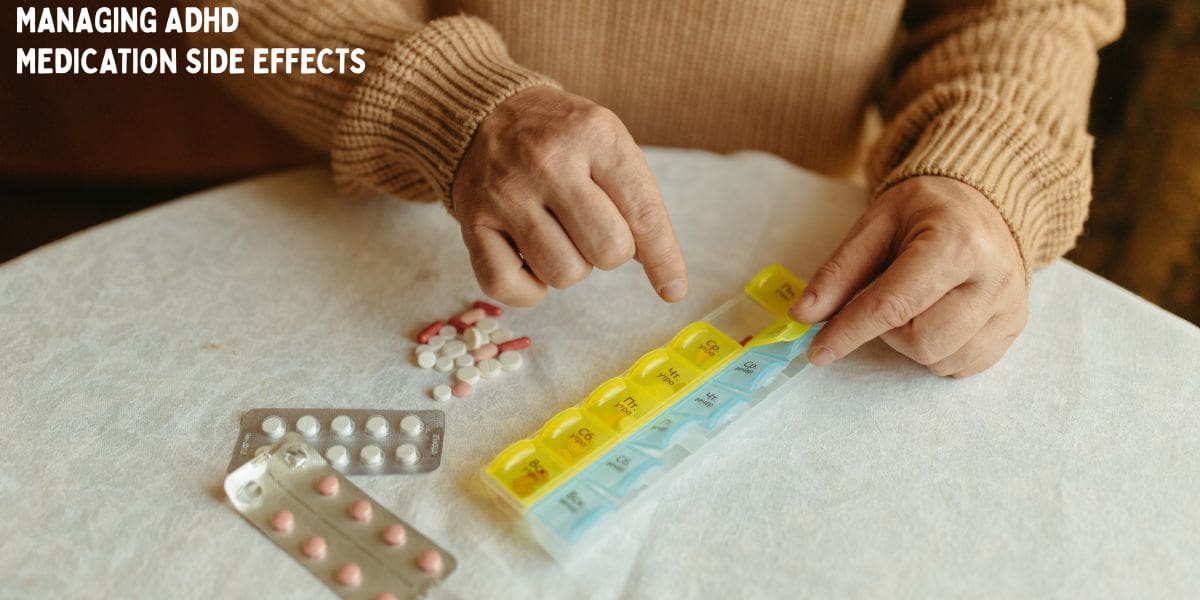
With lisdexamfetamine, weight loss and stomach pain are very common in children [1]. The atomoxetine leaflet lists thoughts of suicide as uncommon, affecting up to 1 in 100 people [2]. Under-18s taking atomoxetine have a higher risk of mood changes and of those thoughts [2]. If you notice this in your child, tell their prescriber straight away [2]. Children are assessed on a separate route from adults, through our child ADHD assessment.
How can you manage common side effects?
Small changes to meals, timing and routine help with many common side effects. The table sets out what can help, and who to tell if it doesn’t.

| Side effect | What can help | Who to tell |
|---|---|---|
| Poor appetite or weight loss | Take the medicine with or after food. Add meals or snacks early in the morning or late in the evening, once the effects have worn off. Choose high-calorie foods that are still nutritious [4]. | Your prescriber, and ask about dietary advice [4] |
| Trouble sleeping (insomnia) | Ask your prescriber about taking the last dose of methylphenidate more than 6 hours before bedtime [3]. Keep a sleep diary to track changes [4]. | Your prescriber, if sleep doesn’t improve |
| Headache | Rest and drink plenty of fluids. Paracetamol can help [3]. | Your doctor, if it’s severe or doesn’t go away [3] |
| Dry mouth | Take sips of water [3]. | Your prescriber, at your next review |
| Stomach ache or feeling sick | Eat smaller, more frequent meals. Avoid rich or spicy food, and take the medicine with or after food [3]. | Your prescriber, if it carries on |
A simple record of side effects makes each review more useful. Recording your own side effects, for example on a checklist, is something NICE guidance encourages [4]. Note what you felt, when it started and how long it lasted, then bring the record with you. If weight loss is a concern, your prescriber may suggest a planned break or a change of medicine [4]. Alcohol can increase the effects of methylphenidate and make side effects more likely [6]. Our guide to ADHD and addiction says more. Tics aren’t something to manage at home, so tell your prescriber about them.
How are heart rate, blood pressure and weight checked?
Heart rate and blood pressure are checked before and after each dose change [4]. They’re checked again every six months while you take ADHD medication [4]. Routine blood tests and ECGs (heart traces) aren’t needed unless there’s a clinical reason [4]. NICE guidance names three findings that lead to action, each confirmed on two checks [4]:
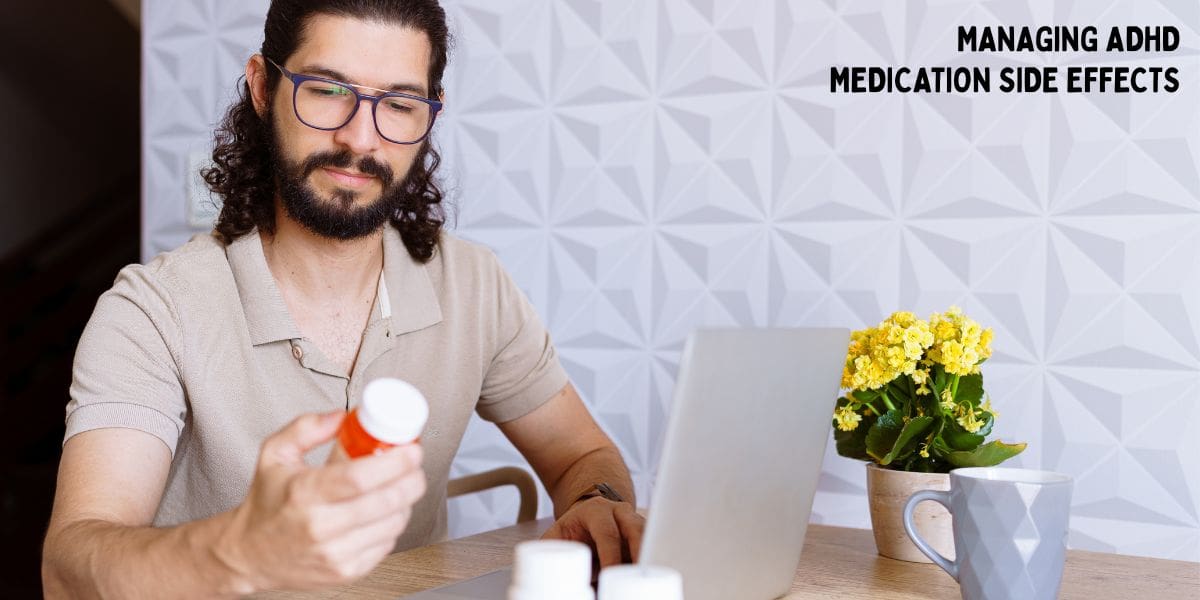
- A resting heart rate that stays over 120 beats a minute.
- An irregular heart rhythm.
- A clinically important rise in blood pressure.
If any is found, the dose is lowered and you’re referred to a doctor for your heart and physical health [4]. Adults have their weight checked every six months, and the medicine’s effects and side effects are reviewed and recorded [4].
At AuDHD Psychiatry, our prescribers follow NICE guidance on dose changes and monitoring. During titration, a prescriber checks how you’re responding and any side effects. We review adults’ medication every 6 months, and children’s every 3 months. A GP can later take over prescribing under a shared care agreement [7]. That’s always the GP’s decision.
When to call your prescriber about side effects
Call your prescriber before changing, switching or stopping ADHD medication for a side effect. The one exception is when your leaflet says to stop at once, as the atomoxetine leaflet does for liver signs [2]. Only stop methylphenidate if your doctor tells you to, because stopping suddenly can cause withdrawal symptoms such as low mood [6]. If tics appear on a stimulant, the prescriber first considers whether the medicine is the cause [4]. They may then reduce the dose, change to another medicine or stop it [4]. New fits are another reason to review the medicine, and so is a weight change that lasts [4].
Your prescriber makes each of these calls with you, based on your own checks. Separate guides cover whether your dose is right, switching ADHD medication, how ADHD medicines compare and pausing or stopping ADHD medication.
Is medication the whole answer?
Medication is one option, and not everyone with ADHD needs or wants it [7]. Changes to your lifestyle and at work can also help you manage ADHD [7]. NICE guidance says people with ADHD should have review and follow-up whether or not they take medication [4]. Our guide to alternatives to ADHD medication sets out the options beyond medicine. ADHD coaching is one of them, and you don’t need a diagnosis to start coaching.
Talking to us may help if:
- you think you have ADHD and haven’t been assessed.
- you’d like to understand whether medication could be an option before you decide.
- you want a prescriber who checks side effects with you during titration.
It might not be right today if:
- you have an urgent side effect: contact your prescriber, 111 or 999 straight away.
- you need urgent help now. Call NHS 111 and choose the mental health option, or in Northern Ireland call Lifeline free on 0808 808 8000, any time. In an emergency, call 999 or go to A&E [8].
- you want advice on a medicine another service prescribed: ask the prescriber who knows your history.
AuDHD Psychiatry assesses adults living in the UK online, and no GP referral is needed. You can read about our private ADHD assessment for adults and ADHD medication at AuDHD Psychiatry. The first step is a free 15-minute call, which is an information call and not an assessment.
Questions people ask
How long do ADHD medication side effects last?
No single timeline fits every side effect: dry mouth usually settles quite quickly, and early weight loss usually comes back once you’re used to the medicine [3]. If a side effect bothers you or doesn’t go away, tell your prescriber rather than waiting for it to pass [3]. A note of when each side effect started helps your prescriber see whether it’s easing.
What are the side effects of Elvanse?
Decreased appetite, trouble sleeping, dry mouth and headache are very common with Elvanse, affecting more than 1 in 10 people [1]. Elvanse is a brand name for lisdexamfetamine, a stimulant. Its leaflet also lists grinding of the teeth as a common side effect, affecting up to 1 in 10 people [1]. Tell your prescriber about any side effect that worries you. For an urgent sign, don’t wait for a review.
What are the side effects of methylphenidate (Ritalin)?
Methylphenidate’s side effects depend on its type and brand, such as Ritalin, Concerta, Delmosart, Equasym or Medikinet [3]. More than 1 in 100 people get headaches, poor sleep, less appetite, stomach ache, dry mouth or sickness [3]. Serious side effects are less common, affecting fewer than 1 in 100 people [3].
Can ADHD medication change your personality?
It shouldn’t change who you are, and NICE guidance asks clinicians to explain that [4]. But a change in mood or behaviour can be a side effect [3]. If you feel aggressive, low, anxious or unlike yourself, call your prescriber or 111 straight away [3]. That’s a reason to act, not a sign that you’ve changed as a person.
Can side effects affect your driving?
Yes, some can: dizziness and tiredness are listed side effects of lisdexamfetamine [1]. You must tell the DVLA if your ADHD, your ADHD medicine or both affect your driving [7]. Notice how you feel before you drive, especially after a dose change. If you’re unsure whether it’s safe, don’t drive until you’ve spoken to your prescriber.
How do I report a side effect?
Tell your prescriber first, and anyone can also report a side effect to the MHRA Yellow Card scheme [9]. The MHRA runs the scheme to spot new safety issues with medicines as early as possible [9]. Always read the leaflet that comes with your medicine, because it lists the known side effects [9].
In short
Many ADHD medication side effects are common, and small changes to meals, timing and sleep habits can ease a lot of them. A short list of signs needs urgent help, at any hour. Before you change, switch or stop anything, talk to your prescriber first. If you haven’t been assessed yet, a short free information call with our team is the place to begin.
Related
- taking ADHD medication daily or as needed
- ADHD and sleep problems
- our clinical team
Sources
- Electronic medicines compendium, Elvanse capsules: patient information leaflet, https://www.medicines.org.uk/emc/product/14091/pil (read 30/09/2026).
- Electronic medicines compendium, Atomoxetine 10 to 100 mg capsules: patient information leaflet, https://www.medicines.org.uk/emc/product/12571/pil (read 30/09/2026).
- NHS, Side effects of methylphenidate for adults, page last reviewed 25/03/2025, https://www.nhs.uk/medicines/methylphenidate-adults/side-effects-of-methylphenidate-for-adults/ (read 30/09/2026).
- National Institute for Health and Care Excellence (NICE), guideline NG87, Attention deficit hyperactivity disorder: diagnosis and management, published 14/03/2018, last updated 13/09/2019, https://www.nice.org.uk/guidance/ng87 (read 30/09/2026).
- NHS, Side effects of methylphenidate for children, page last reviewed 12/03/2025, https://www.nhs.uk/medicines/methylphenidate-children/side-effects-of-methylphenidate-for-children/ (read 30/09/2026).
- NHS, Common questions about methylphenidate for adults, page last reviewed 25/03/2025, https://www.nhs.uk/medicines/methylphenidate-adults/common-questions-about-methylphenidate-for-adults/ (read 30/09/2026).
- NHS, ADHD in adults, page last reviewed 19/03/2025, https://www.nhs.uk/conditions/adhd-adults/ (read 30/09/2026).
- nidirect, Mental health emergency: if you’re in crisis or despair, https://www.nidirect.gov.uk/articles/mental-health-emergency-if-youre-crisis-or-despair (read 29/09/2026).
- Medicines and Healthcare products Regulatory Agency (MHRA), Yellow Card scheme, https://yellowcard.mhra.gov.uk/ (read 30/09/2026).
About AuDHD Psychiatry
AuDHD Psychiatry is the trading name of ADHDdegree Ltd, a company registered in Scotland. The company number is SC822923. Our registered office is 3f1 Third Floor, Hill Street, Edinburgh, EH2 3JP.
Registered with the ICO, number ZB823033.
Last updated: 13 October 2026
Where to go from here
A private online screening for ADHD traits, with your results at the end. No commitment.
Take the free testA free, no-obligation call with our team to ask questions and find the right assessment for you.
Book a free callDarren is a Chartered Psychologist and specialist in ADHD and autism, with over 11 years of experience working in mental health and neurodevelopmental services. He holds a Doctorate in Counselling Psychology and has presented research at the British Psychological Society Annual Conference.
Read Darren’s full profileThis article is for general information and does not replace a clinical assessment. If you are struggling with your mental health right now, please contact your GP or NHS 111.